





The Search for Darkness
In most Indian cities, a combination of atmospheric and light pollution has rendered the cosmos nearly invisible. The persistent glow from streetlights, buildings, and advertising creates a 'skyglow' that blots out all but the brightest celestial objects.
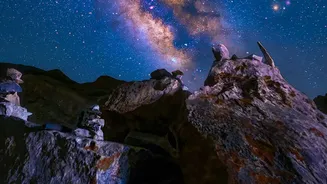
This has sparked a desire among city dwellers to escape the urban glare and reconnect with the universe, driving the demand for astrotourism—travel experiences centred on appreciating the night sky. This niche form of tourism is not just a holiday; it is a quest for a natural wonder that has become increasingly scarce.
The Astro-Village Blueprint
The transformation from a quiet hamlet to a bustling astro-destination follows a careful blueprint. It begins with identifying a location with naturally dark skies, typically in high-altitude or remote regions with minimal light pollution. Success hinges on community participation. Initiatives like Astrostays, pioneered by the Global Himalayan Expedition, empower villagers by training them to become astronomy guides, telescope operators, and homestay hosts. This model ensures that economic benefits are retained locally, creating sustainable livelihoods that can help curb rural-to-urban migration. The process involves a blend of top-down support from government or tourism boards and bottom-up community involvement.
From Telescopes to Homestays
Developing an astro-village requires specific infrastructure. This includes acquiring telescopes, binoculars, and astrophotography equipment. Many locations are building dedicated observation decks and interpretation centres to provide visitors with information about celestial phenomena. For instance, the Uttarakhand government is developing Benital in the Chamoli district as India's first 'Astro Village' with an investment of around ₹5 crore, which includes building large telescopes, a night-vision dome, and tourist cottages. Local homestays are upgraded to accommodate tourists, offering them an immersive experience that combines stargazing with local culture, cuisine, and folklore.
Spotlight on India’s Starry Havens
Hanle in Ladakh is India's most prominent example, officially designated as the country's first Dark Sky Reserve in 2022. Situated at an altitude of over 4,250 metres, it hosts the Indian Astronomical Observatory and offers some of the clearest skies in the world. The local community is deeply involved, with residents trained as 'Astronomy Ambassadors' to guide tourists. Similarly, villages in Spiti Valley, the Rann of Kutch, and Coorg are also emerging as popular destinations. In Madhya Pradesh, the tourism board has launched a project across six tribal villages, training local youth as astro-guides to create new employment opportunities.
A Win-Win for Communities and Travellers
Astrotourism creates a powerful symbiosis. For travellers, it offers a profound, educational, and awe-inspiring escape. For rural communities, it provides a vital new source of income that is both sustainable and empowering. Projects like Astrostays have already generated significant revenue for participating villages, which is then reinvested into community infrastructure like solar water heaters and greenhouses. It’s a model that diversifies local economies beyond traditional agriculture and pastoralism, while also preserving cultural heritage and fostering a scientific temperament among locals and visitors alike.