


1. Amaranth Leaves (Chaulai Saag)
Often overshadowed by spinach, amaranth leaves, or 'chaulai', are nutritional powerhouses. Rich in iron, vitamin C, and protein, these vibrant greens are staging a comeback. Traditionally cooked as a simple 'saag'—stir-fried with garlic, onions, and a hint
of spice—chaulai offers a slightly sweeter, earthier alternative to other greens. Home cooks are rediscovering it not just for its health benefits, which include being great for digestive health, but for its versatility in dals and stir-fries. This revival is part of a larger movement towards nutrient-dense, indigenous foods that are naturally resilient and packed with flavour.
2. Banana Flower (Vazhaipoo/Mochar)
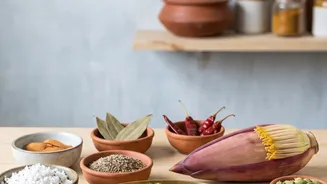
The banana plant is celebrated for its fruit, but its flower is a culinary gem that demands a bit more effort. Known as 'vazhaipoo' in the South and 'mocha' in Bengal, preparing this vegetable involves a patient cleaning process. However, the reward is a unique, subtly astringent flavour and a texture that works beautifully in dishes like 'Vazhaipoo Poriyal' (a South Indian stir-fry with coconut) or the Bengali 'Mochar Ghonto'. Rich in fibre and antioxidants, cooks are embracing it for its health benefits and its ability to transform into delicious vadas, cutlets, and curries.
3. Raw Jackfruit (Kathal)
Long before it became a global vegan sensation, raw jackfruit, or 'kathal', was a beloved staple in Indian homes, prized for its meaty texture. Often called the 'vegetarian's meat', it's the star of dishes like 'Kathal ki Sabzi', a robust North Indian curry where the tender jackfruit chunks absorb spices beautifully, mimicking the texture of slow-cooked meat. The process involves marinating and then slow-cooking the jackfruit with onions, tomatoes, and a host of aromatic spices. As people look for more plant-based alternatives, they're not looking for foreign substitutes but rediscovering traditional gems like kathal that have been part of our culinary heritage for centuries.
4. Colocasia Leaves (Arbi ke Patte/Pathrode)
Colocasia leaves, or 'arbi ke patte', are the heroes of several regional delicacies, most famously 'Pathrode' from coastal Karnataka and 'Alu Vadi' in Maharashtra. These dishes involve smearing the leaves with a spiced paste of rice flour or gram flour, rolling them, and then steaming or frying them. The process is intricate, but the result is a multi-layered snack that's savoury, tangy, and utterly unique. While handling the leaves requires care to avoid throat irritation from calcium oxalate crystals, cooks are reviving this art, driven by a desire to preserve regional culinary traditions.
5. Moringa Leaves (Murungai Keerai)
While the drumstick (the pod of the moringa tree) is a sambar staple, its leaves have been somewhat neglected despite being a superfood. 'Murungai keerai', as it's known in Tamil, is packed with vitamins, minerals, and antioxidants. It is now being celebrated in simple, delicious preparations. A 'Murungai Keerai Poriyal' is a quick stir-fry with coconut, shallots, and mild spices that brings out the leaves' unique, slightly pungent flavour. As wellness becomes a bigger priority, home cooks are looking to ingredients like moringa leaves that offer immense nutritional benefits without compromising on taste.
6. Purple Yam (Kand)
Vibrant and earthy, the purple yam, or 'kand', is a winter speciality that often appears in the famous Gujarati dish 'Undhiyo'. However, this striking tuber is much more versatile. Rich in antioxidants due to its purple hue, it's being used to make crispy fritters ('Kand Ke Kaap'), patties, and simple stir-fries. Its slightly sweet flavour and starchy texture make it a comforting and nutritious choice. As home cooks experiment more with seasonal and local produce, the beautiful and beneficial 'kand' is finding its way back to the centre of the plate.
7. Fiddlehead Ferns (Lingri)
A delicacy from the Himalayan regions of Himachal Pradesh and Uttarakhand, fiddlehead ferns, known locally as 'lingri' or 'kasrod', are the coiled fronds of a young fern. Foraged from the wild during their short season, these greens have a unique, earthy flavour, often compared to asparagus or green beans. A simple 'Lingri ki Sabzi', cooked with mustard oil, onions, and local spices, is a rustic and delicious way to enjoy them. The renewed interest in foraged foods and regional Himalayan cuisines is bringing this seasonal, nutrient-packed green to the attention of adventurous home cooks.
8. Water Caltrop (Singhara)
Often eaten roasted or boiled as a snack, the water caltrop, or 'singhara', is less commonly seen as a main vegetable. However, this aquatic tuber, with its crunchy texture and sweet taste, makes a wonderful 'sabzi'. A simple curry made with 'singhara', onions, tomatoes, and everyday spices is a nutritious and surprisingly delicious meal. Rich in potassium and low in calories, it's another example of a traditional food being revisited for its health benefits and its potential to bring new textures and flavours to the family dinner table.