




Meet Shukrayaan: India's Venusian Dream
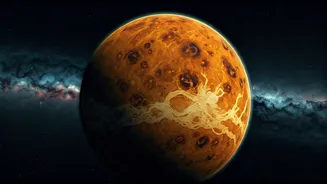
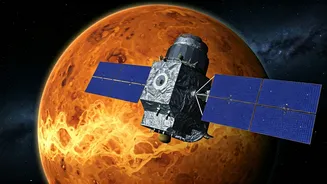
The Indian Space Research Organisation (ISRO) is charting a course for our closest planetary neighbour with its Venus Orbiter Mission, tentatively named Shukrayaan. Following formal government approval in late 2024, the mission is now slated for a 2028
launch. This ambitious project will be India’s second interplanetary venture after the celebrated Mars Orbiter Mission (Mangalyaan). The plan involves placing a sophisticated orbiter, weighing around 2,500 kg and packed with approximately 100 kg of scientific instruments, into a four-year-long orbit around Venus. This spacecraft will serve as India's eyes and ears, peeling back the thick, acidic clouds that have kept the planet’s surface a tantalizing mystery.
Earth's Hot, Toxic Twin Sister
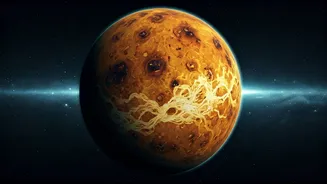
Venus is often called Earth's twin due to its similar size, mass, and density, but the comparison ends there. It is an inferno, with surface temperatures soaring to 470°C — hot enough to melt lead. Its atmosphere, 90 times denser than Earth's, is a crushing blanket of carbon dioxide and clouds of sulfuric acid. Yet, scientists believe Venus may have once been habitable, possibly with oceans, before a runaway greenhouse effect turned it into a cautionary tale. This makes Venus a perfect natural laboratory. By studying why our 'twin' took such a disastrously different evolutionary path, we can gain invaluable insights into climate change, atmospheric dynamics, and the very conditions that make a planet habitable. In a way, studying Venus is about understanding Earth's own long-term sustainability.
Unlocking Ancient Secrets
Shukrayaan's primary goal is to solve some of the biggest puzzles about Venus. The mission aims to map the surface and subsurface in high resolution, investigate the strange geology and volcanic activity, and study the complex dynamics of its atmosphere. The orbiter will be equipped with powerful tools like a Synthetic Aperture Radar to see through the dense clouds and a thermal camera to map atmospheric features. These instruments will search for evidence of active volcanoes, investigate how solar wind interacts with the Venusian ionosphere, and analyze the composition of its atmosphere. By gathering this crucial data, ISRO hopes to piece together the planet's history and understand the forces that transformed it into the hostile world it is today.
A New Chapter in India's Space Saga
A successful mission to Venus is about more than just scientific discovery; it's a powerful statement of India's growing technological prowess and global ambition. Exploring Venus is incredibly challenging due to the extreme environment. Overcoming these hurdles would place India in an elite club of nations with advanced planetary science capabilities and cement ISRO's reputation as a world-class space agency. The mission also serves a broader strategic purpose. It inspires a new generation of scientists and engineers, drives innovation in fields from advanced materials to robotics, and creates opportunities for international collaboration. As the US, Europe, and China also plan their own missions to Venus, India’s presence underscores its role as a key player in the new global space race.