



The Science of a Clearer Sky
The secret to November's brilliant night skies lies in one key factor: humidity. After months of monsoon rains, the atmosphere across most of India begins to dry out. This drop in airborne moisture is a game-changer for stargazing. Water vapour molecules,
while invisible, have a significant impact on what we see. High humidity creates atmospheric haze, which scatters light from stars and other celestial objects, making them appear dimmer and less defined. This scattering effect also amplifies light pollution from cities, washing out fainter stars. When the air is dry, there are fewer water particles to interfere with the light travelling millions of years to reach your eyes, resulting in a darker background and sharper, more brilliant stars.
Seeing vs. Transparency
In astronomy, 'transparency' refers to the clarity of the sky, which is directly affected by humidity and dust. The post-monsoon period offers peak transparency because the rains have washed pollutants and dust from the atmosphere, and the subsequent drop in humidity keeps it clear. Another term astronomers use is 'seeing', which describes the stability of the atmosphere. Turbulent air, often caused by temperature differences in atmospheric layers, makes stars twinkle excessively and blurs details on planets or the Moon. While very humid air can sometimes be stable (good 'seeing'), the loss of transparency is a bigger problem for beginners wanting to see faint objects like galaxies or the Milky Way. November in India typically offers a sweet spot of both good transparency and stable seeing.
What to Spot in November 2026
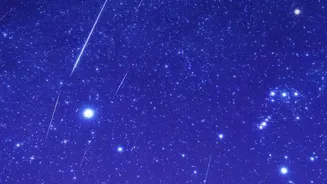
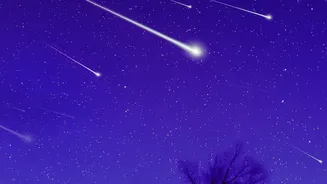
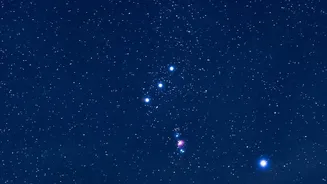
November's clear skies provide a canvas for some spectacular celestial sights. The famed constellation Orion, the Hunter, begins its prominent winter appearance, making it easy to spot. For those looking for a challenge, the Andromeda Galaxy, the most distant object visible to the naked eye, is well-positioned high in the sky. A major event this month is the Leonid meteor shower, which peaks on the night of November 17-18. While not a 'meteor storm' year, you can still expect to see around 10-15 fast, bright meteors per hour after midnight from a dark location. Look towards the east, from the constellation Leo, but meteors can appear anywhere in the sky. Additionally, planets Mercury, Jupiter, and Mars will be visible, with Jupiter and Mars having a close approach on November 15-16.
Essential Gear for Beginners
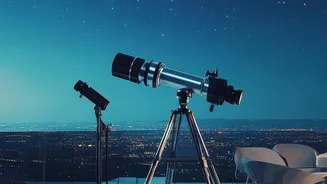
You don't need expensive equipment to start your astronomical journey. The best tool is your own eyes, allowing you to learn the basic layout of the constellations. To enhance the experience, a good pair of binoculars (7x50 or 10x50 models are recommended) will reveal stunning details on the Moon, the moons of Jupiter, and bright star clusters. A stargazing app on your smartphone can act as a real-time map of the sky, helping you identify what you're looking at. Just be sure to use its 'red light mode' to preserve your night vision. A red-filtered torch is also helpful for seeing your surroundings without ruining your eyes' adaptation to the dark.
Tips for Your First Outing
To make the most of the November sky, planning is key. First, get away from city lights. Even a short drive to a rural area with a wide, open view will dramatically increase the number of stars you can see. Second, give your eyes time to adjust. It takes about 20–30 minutes for your pupils to fully dilate and become sensitive to faint light. Avoid looking at bright screens during this time. Third, get comfortable. Stargazing involves a lot of looking up, so a reclining chair or a blanket on the ground is essential. Finally, dress warmly. Even if the day was pleasant, post–monsoon nights can get surprisingly chilly, especially in northern India or at higher altitudes.