







A Murky, Tangled Problem
When discussing environmental challenges in India, air pollution and water scarcity often get bundled together under the large, overwhelming umbrella of 'climate change'. It's an understandable impulse. Both issues are urgent, visible, and deeply affect
our daily lives, from the smog we breathe in our cities to the water shortages that plague our communities. This lumping together, however, can create a fog of confusion. It makes the problem seem so massive and interconnected that individual and community actions feel futile. We see headlines about Delhi's smog and Chennai's water crisis and feel a sense of despair. But by treating these distinct crises as one monolithic catastrophe, we dilute our focus and hinder our ability to demand and create specific, targeted solutions.
The Air We Breathe: A Unique Crisis
Let's isolate the air. India's air pollution is a public health emergency, responsible for over 1.6 million premature deaths in a single year. The primary culprits are fine particulate matter (PM2.5) from vehicle emissions, industrial output, construction dust, and seasonal stubble burning. This is not an abstract environmental issue; it is a direct cause of asthma, respiratory infections, heart disease, and even reduced cognitive function in children. The solutions to air pollution are equally specific: enforcing stricter emission standards for industries and vehicles, transitioning to cleaner energy sources like solar and wind, better urban planning to reduce traffic congestion, and finding viable alternatives to crop burning for farmers. These are measurable goals that require focused policy, investment, and public pressure, all of which are harder to achieve when air quality is just one part of a vaguely defined 'environmental problem'.
The Water We Drink: A Different Challenge
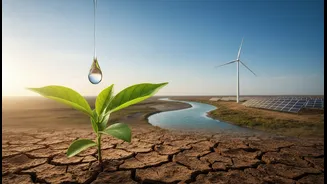
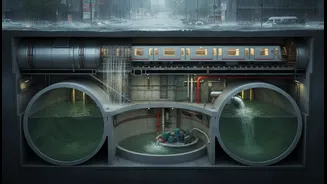
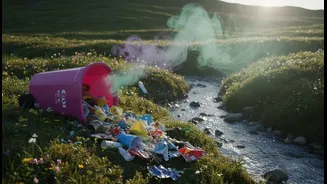
Now, let's turn to water. India is home to 17% of the world's population but has only 4% of its freshwater resources. Our water crisis is defined by two distinct problems: scarcity and pollution. Scarcity comes from the over-extraction of groundwater—India is the world's largest user—and the increasingly erratic monsoons due to climate change. Pollution, on the other hand, stems from untreated industrial effluents and sewage contaminating our rivers and lakes. The solutions are as distinct as the causes. Tackling scarcity requires massive investment in rainwater harvesting, watershed management, and promoting agricultural practices like drip irrigation that use less water. Addressing pollution requires enforcing regulations on industrial discharge and building effective wastewater treatment plants. Mixing these issues with air pollution distracts from the specific interventions needed to ensure our taps don't run dry and our rivers don't turn into toxic drains.
Why Clarity Creates Powerful Action
Separating air from water is a strategic act. It allows us to move from a place of overwhelming anxiety to one of focused purpose. When we can clearly identify a problem and its specific cause, we can demand a precise solution. You don't solve groundwater depletion with an electric vehicle subsidy, and you don't clear smog by building a rainwater harvesting system. By untangling these issues, we can better hold local and national governments accountable. Citizens and activists can ask targeted questions: What is the PM2.5 level in my city today, and what is the municipality doing about it? Why is our local lake polluted, and which factories are being allowed to discharge waste into it? This clarity is the first step toward creating tangible change and moving beyond reactive crisis management.
Telling a Better, Sharper Story
For the young readers, students, and storytellers this message is for, this separation is your most powerful tool. A vague story about 'climate change' is forgettable. But a story about a child in Delhi whose asthma is triggered by Diwali firecrackers, or a farmer in rural Maharashtra who has to walk an extra five kilometres for water, is visceral and unforgettable. Effective storytelling, like effective action, is rooted in specifics. By separating air and water, you can tell human-centric stories that highlight the direct impact of these distinct crises. These are the narratives that cut through the noise, build empathy, and inspire a specific desire for change. Your stories can make people see that while the problems are large, they are not abstract, and the solutions, when clearly defined, are within our grasp.