


A Sweet Discovery in a Cosmic Cloud
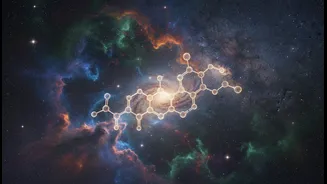
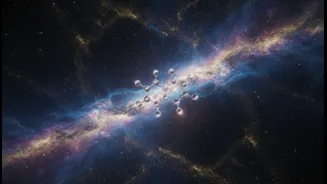
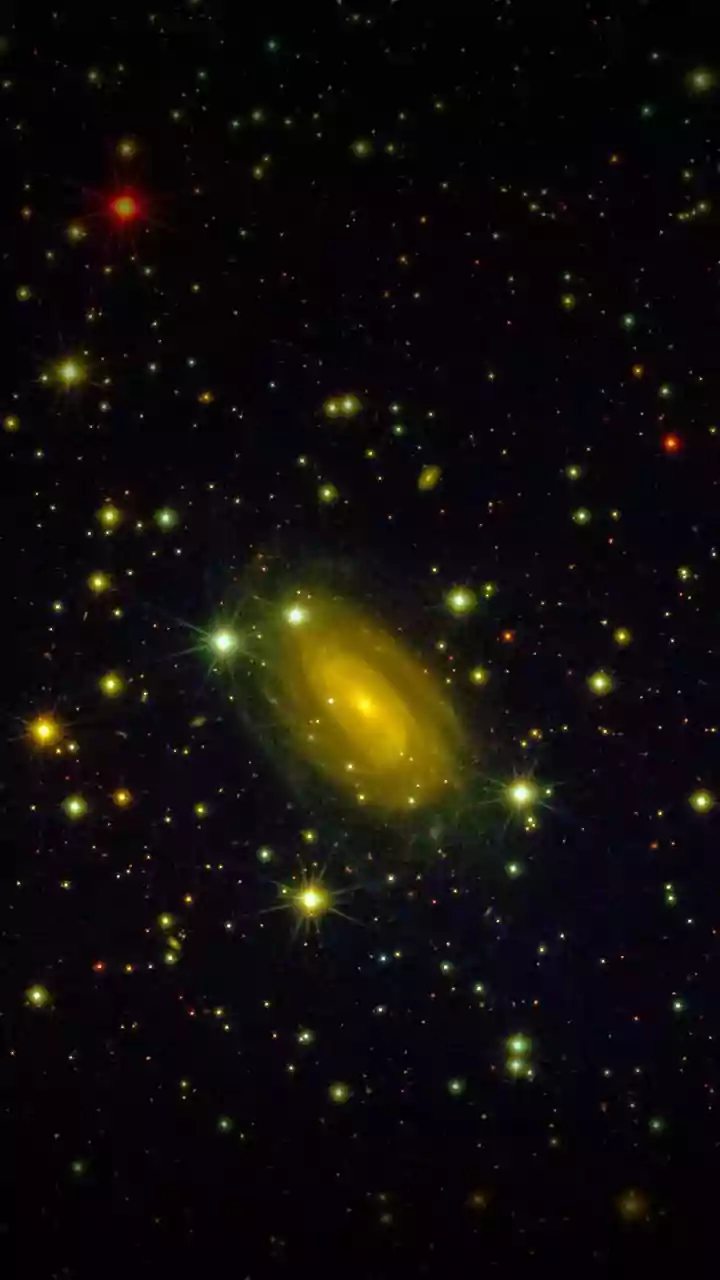
Scientists have detected a four-carbon sugar called erythrulose floating in a massive molecular cloud known as G+0.693-0.027, located roughly 27,000 light-years from Earth. An international team led by researchers at Spain's Centre for Astrobiology used
two radio telescopes in Spain to spot the unique radio-wave signature of the molecule. While on Earth, erythrulose is found in small amounts in fruits like raspberries and is used in some self-tanning products, its presence in deep space is a landmark finding. Although simpler organic molecules have been found before, this is the first direct detection of a true, complex sugar in the interstellar medium—the vast, cold space between stars. This confirms that surprisingly advanced chemistry is happening in these stellar nurseries, long before stars and planets are even born.
Why This Sugar Is a Big Deal
The discovery of erythrulose is significant because sugars are fundamental to biology as we know it. They are the backbone of RNA and DNA, the molecules that carry genetic instructions. Finding a four-carbon sugar is a crucial step up in complexity from the two-carbon molecules previously detected, like glycolaldehyde. Scientists have long wondered how the first sugars formed on early Earth, as conditions were likely not ideal for their creation in large quantities. This discovery provides a compelling answer: the ingredients didn't necessarily have to form on Earth. They could have been forged in space and delivered to our young planet via asteroids and comets during a period known as the Late Heavy Bombardment. Researchers estimate that millions of tonnes of erythrulose could have reached Earth this way.
A Cosmic Recipe for Life
So, how does sugar form in a place with temperatures around -250°C? Scientists believe it happens on the surfaces of icy interstellar dust grains. Simpler organic compounds, which are abundant in these clouds, combine in the extreme cold to form more complex structures like erythrulose. The finding was actually unexpected; the research team was initially looking for simpler three-carbon sugars but found no trace of them. This suggests that the process of building complex molecules in space might happen in bigger leaps than previously thought. The molecular cloud G+0.693-0.027 acts as a giant cosmic factory, a rich reservoir of prebiotic chemicals that are the precursors to the building blocks of life. This includes not just sugars but also the components for amino acids and fats.
From Stardust to Planets and Life
This discovery reshapes our understanding of how life might begin. It suggests that the raw materials needed for biology are not a rare local phenomenon but are widespread throughout the galaxy. If these building blocks are readily available in the gas and dust that eventually collapses to form new solar systems, then it's plausible that many young planets are seeded with these life-giving ingredients from the very start. The detection of erythrulose opens the door for finding even more complex sugars, like ribose—the five-carbon sugar that is a key component of RNA. Finding ribose floating in interstellar space would be the next holy grail for astrobiologists, bringing us one step closer to understanding our own origins and the potential for life elsewhere in the universe.