





Safety First: The Non-Negotiable Lifesaver
In human spaceflight, there are no second chances. The moments after liftoff are among the most dangerous, with the rocket under immense stress as it punches through the atmosphere. If a critical failure occurs, astronauts have only seconds to escape
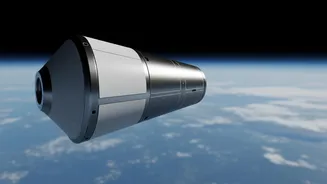
the malfunctioning launch vehicle. This is where the Crew Escape System (CES) comes in. It's an astronaut's lifeboat, designed to detect a problem, fire powerful motors, and pull the Crew Module—the capsule carrying the crew—away to a safe distance with incredible speed. For the Gaganyaan programme, making this system foolproof is not just a goal; it is the fundamental promise ISRO makes to its Vyomanauts.
Simulating Disaster: The TV-D1 Mission
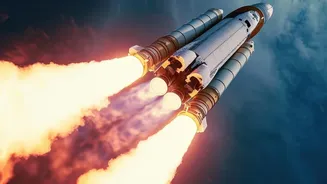
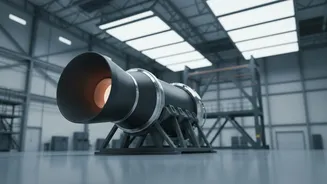
Engineers can't wait for a real disaster to see if the escape system works. Instead, they create one under controlled conditions. This is the purpose of missions like the Test Vehicle Abort Mission-1 (TV-D1). ISRO developed a special, cost-effective single-stage rocket for these tests. During the TV-D1 flight, this rocket carried a version of the Gaganyaan Crew Module to a specific altitude of about 17 km and a speed of Mach 1.2—slightly above the speed of sound. This phase is known as the transonic period, one of the most aerodynamically stressful points of any flight. At this precise moment, ISRO engineers deliberately triggered the abort sequence to simulate a mid-flight emergency.
The Mechanics of Separation
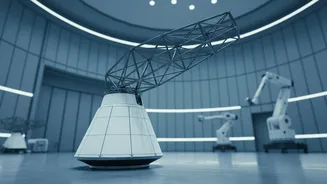
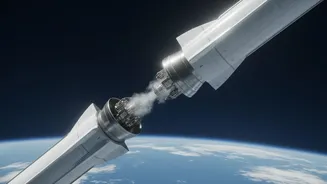
Once the abort is triggered, a breathtakingly fast sequence of events unfolds. The Crew Escape System, which is a tower-like structure fixed to the top of the Crew Module, fires its powerful, quick-acting solid motors. These motors generate immense thrust, pulling the capsule away from the test rocket with an acceleration far greater than the rocket itself. Once the module is a safe distance away, the escape tower jettisons. This entire explosive separation happens in milliseconds. To verify this works, engineers rely on hundreds of sensors packed into the test vehicle and the crew module, which stream telemetry data back to the control centre. This data provides a second-by-second account of the forces, velocities, and trajectory, confirming the separation was clean and powerful.
From High Altitude to a Gentle Splashdown
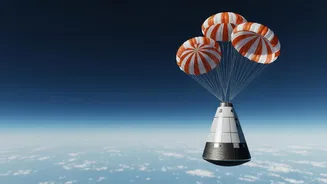
Getting away from the rocket is only half the battle. The Crew Module must then return to Earth safely. The verification process continues by tracking the module's descent. After the CES detaches, a series of parachutes deploy automatically in a precise sequence. First, smaller drogue parachutes open to stabilise the capsule and slow its descent while it's still at high altitude. Then, the three main parachutes unfurl to gently lower the module for a soft splashdown in the ocean. Throughout this process, every event—from the apex cover separation to the main chute deployment—is timed and monitored. The final proof of success comes when the Indian Navy recovers the floating capsule, allowing engineers to physically inspect the hardware for stress and performance, completing the verification loop.