




Embrace the Constraint
First, let's reframe the 7kg limit. Many budget airlines in India and across Asia enforce this carry-on weight, making it a practical hurdle for many travellers. Instead of seeing it as a restriction, think of it as a ticket to freedom. Travelling with
only a light carry-on means no baggage claim queues, no risk of lost luggage, and the agility to navigate airports and cities with ease. The key isn't to pack less, but to pack smarter. Every item must justify its weight and earn its place in your bag. A lightweight bag is your first win; aim for one that weighs under 2kg, leaving you a solid 5kg for your belongings.
Think Like an Onion
The single most important strategy for handling changing weather is layering. One bulky jacket is less versatile than three lighter layers that can be combined or worn separately. Your goal is to create a system that can adapt from a warm afternoon to a chilly, rainy evening. A base layer, a mid-layer, and an outer shell give you multiple options. For example, a t-shirt works for a sunny day. Add a fleece or a lightweight sweater when it gets cooler. Top it with a waterproof and windproof rain jacket for protection against the elements. This approach gives you a range of outfits and temperature controls without the bulk of heavy winter wear.
Build a Versatile Capsule Wardrobe
A capsule wardrobe is a small collection of items that can be mixed and matched to create multiple outfits. For a one-week trip, stick to a simple formula. Aim for four interchangeable tops, two pairs of bottoms, and one flexible item like a dress or an extra shirt. Choose a neutral colour palette (like black, navy, grey, or beige) for your main items and add a pop of colour with accessories or one or two tops. This ensures everything goes with everything else, maximizing your outfit combinations. For instance, a pair of dark, lightweight jeans can be dressed down for daytime exploration and paired with a nicer top for dinner.
Choose Your Fabrics Wisely
The right fabric is crucial for a lightweight, adaptable wardrobe. Merino wool is a travel superstar; it’s lightweight, regulates body temperature in both hot and cold conditions, and is naturally odour-resistant, meaning you can wear it multiple times without washing. Technical fabrics, like those used in activewear, are also excellent choices as they are moisture-wicking and quick-drying. A lightweight, packable rain jacket made of nylon or polyester is non-negotiable for unpredictable weather. While comfortable, cotton can be bulky, slow to dry, and holds moisture, making it less ideal for layering or wet climates. Linen is a great option for hot weather, as it is breathable and light.
Master Strategic Packing Techniques
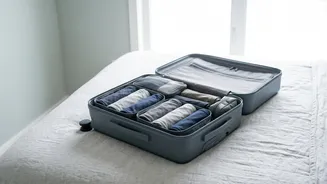
How you pack is as important as what you pack. Rolling your clothes, especially casual items, can save a significant amount of space compared to folding. Packing cubes are a game-changer for organization and compression, allowing you to separate items by category (e.g., tops, bottoms, underwear) and squeeze out excess air. Wear your heaviest and bulkiest items on the plane, such as your hiking boots, jeans, and jacket. This single move can save you one to two kilos of luggage weight. Finally, utilize every inch of space; stuff socks and other small items inside your shoes to maximize your bag’s capacity.
Shrink Your Essentials
Toiletries and electronics can be surprisingly heavy. Decant your liquids into reusable, travel-sized (under 100ml) bottles. Better yet, switch to solid toiletries. Shampoo bars, conditioner bars, and solid toothpaste tabs eliminate the risk of spills and are much lighter. For electronics, pare down to the absolute essentials. A single power bank and a universal adapter with USB ports can charge your phone, headphones, and other gadgets, eliminating the need for multiple heavy plugs.