







A Shoreline That Breathes Light
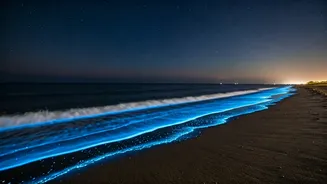
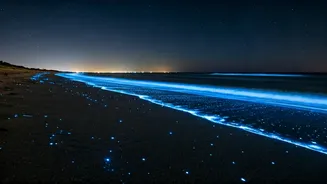
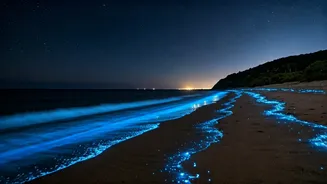
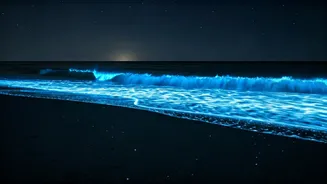
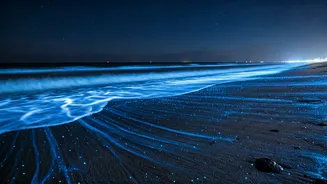
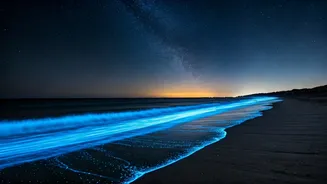
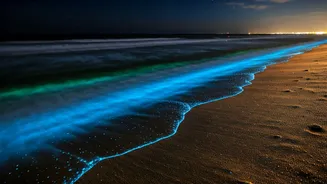
On certain nights along the coast of Karnataka, a state in southwestern India, the Arabian Sea puts on a mesmerizing light show. Travelers and locals alike are making their way to beaches like Mattu and Padukere near the city of Udupi, drawn by word of a surreal
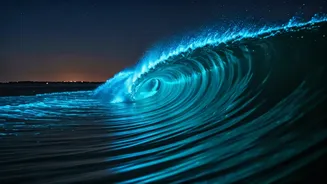
natural event known as bioluminescence. Here, the water itself seems to glow with an otherworldly blue-green light. As darkness falls and the moon is hidden, the magic begins. Each wave that rolls onto the shore glitters, and the disturbance caused by a footstep or a hand trailing in the water creates a fleeting, sparkling trail. The effect is often described as “sea sparkle,” a fitting name for a sight that feels like walking through a liquid constellation. For those who experience it, the silent, glowing tide transforms a simple beach walk into an unforgettable, almost spiritual encounter with nature.
The Science Behind the Sparkle
This ethereal glow isn’t magic, but biology. The phenomenon is caused by a type of marine plankton called dinoflagellates, specifically a species named *Noctiluca scintillans*, which translates to “sparkling night light.” These single-celled organisms are a natural part of the marine ecosystem, but when they bloom in high concentrations, their collective light becomes visible to the naked eye. They produce light through a chemical reaction when they are physically disturbed—by a breaking wave, a swimming fish, or a human footstep. The agitation triggers a flash of light, a defense mechanism intended to startle potential predators. While each organism’s flash is tiny, millions of them lighting up at once create the sweeping, brilliant displays that illuminate the shoreline. It’s a beautiful, living light, a stark reminder of the unseen world teeming just beneath the ocean’s surface.
Where and When to Find the Glow
For adventurous travelers hoping to witness this spectacle, timing and location are everything. The bioluminescence in Karnataka is most frequently reported between September and March, after the heavy monsoon rains have subsided. The key is to go on a night with as little ambient light as possible. A new moon phase, far from the light pollution of major cities, offers the best chance of seeing the glow in its full glory. The beaches near Udupi, particularly Mattu Beach, have become hotspots for this activity. However, it's crucial to manage expectations. Bioluminescent blooms are a natural and somewhat unpredictable event. They can appear for a few nights and then vanish with a change in current or water temperature. Local guides and fishermen are often the best source of real-time information, but for many, the thrill lies in the possibility—the chance to be in the right place at the right time for one of nature’s most enchanting displays.
A Beautiful, Complicated Phenomenon
While the glowing beaches offer a stunning visual, marine biologists add a layer of important context. The proliferation of *Noctiluca scintillans* blooms, while beautiful, can sometimes be an indicator of changing ocean conditions. These blooms thrive in water with high levels of nutrients, often from agricultural runoff, which can lead to oxygen-depleted “dead zones” that are harmful to fish and other marine life. Not all *Noctiluca* blooms are toxic, but their increasing frequency in some parts of the world has raised concerns among scientists. This doesn't diminish the beauty of the experience, but it adds a compelling dimension. The glowing tide is a potent symbol of the ocean’s delicate balance—a breathtaking spectacle that also serves as a subtle barometer for the health of the marine environment. It’s a reminder that nature’s most beautiful moments are often its most complex.