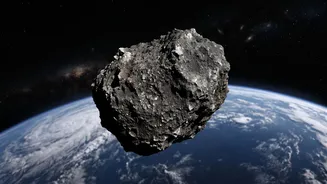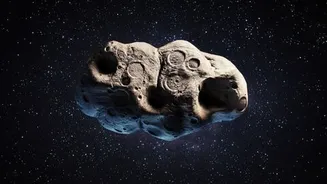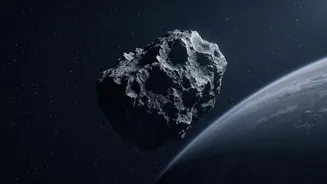


In the vastness of space, a tiny asteroid named 1998 KY26 is causing a big stir. This near-Earth object is moving in unexpected ways, and a new study is challenging one of the leading theories explaining its mysterious acceleration.
Meet Asteroid 1998 KY26
First discovered in
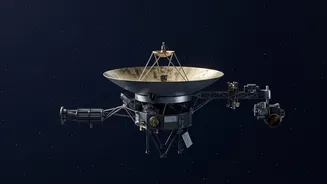
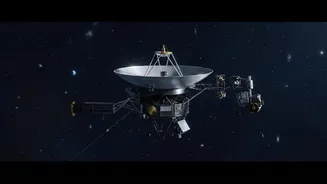
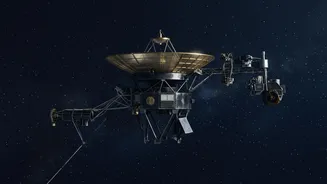
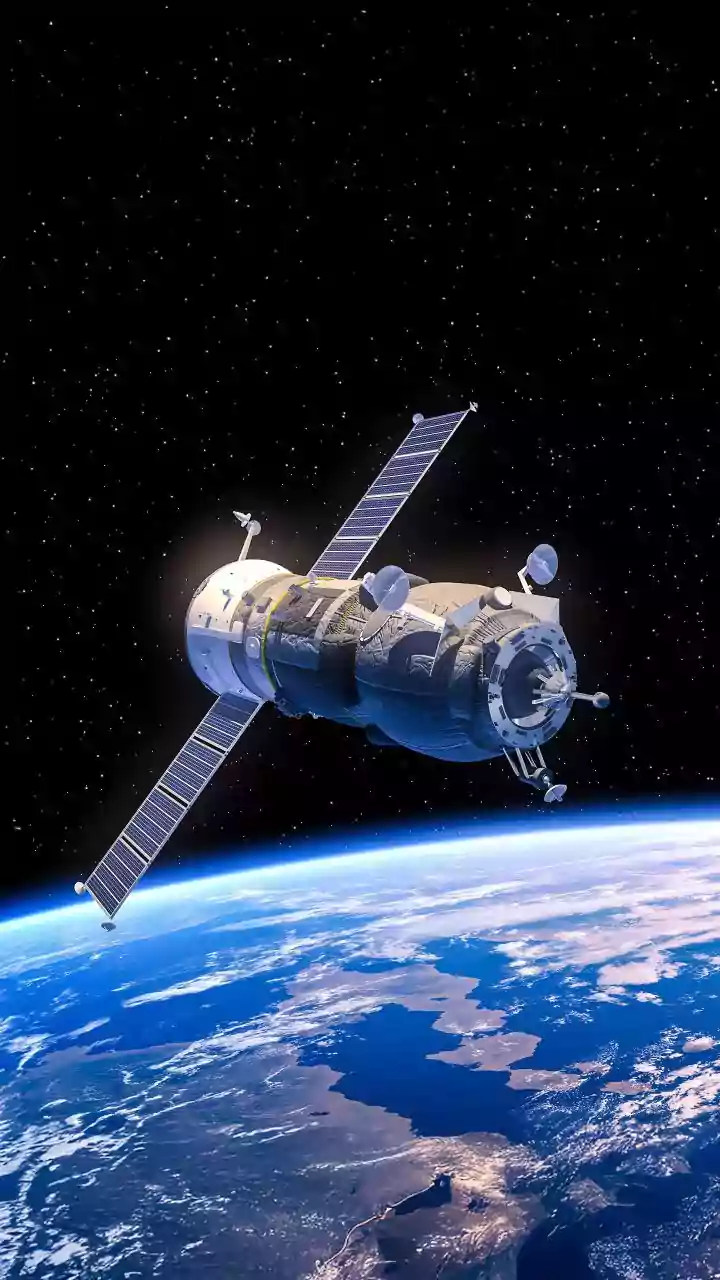
1998, 1998 KY26 is a cosmic spinning top. Recent observations have revealed it to be much smaller than initially thought, at only about 11 metres (36 feet) in diameter—small enough to fit inside a large room. What truly makes it stand out is its dizzying rotation. It completes a full spin in just over five minutes, making it one of the fastest-rotating objects ever studied in our solar system. This near-Earth asteroid is not just a scientific curiosity; it's a destination. The Japan Aerospace Exploration Agency's (JAXA) Hayabusa2 spacecraft, famous for returning samples from the asteroid Ryugu, is now on an extended mission to rendezvous with 1998 KY26 in July 2031. This will be the first time a probe has visited such a minuscule asteroid, offering an unprecedented look at these small celestial bodies.
The Acceleration Anomaly
The central puzzle surrounding 1998 KY26 isn't its speed through space, but a subtle, non-gravitational acceleration that is altering its path. Most asteroids are steered by the predictable pull of gravity from the Sun and planets. However, 1998 KY26 shows an extra push, perpendicular to its orbital plane, that gravity alone cannot explain. This has led scientists to wonder what other forces are at play. Understanding these tiny nudges is critical, as they can significantly alter an asteroid's trajectory over millions of years, a key factor in planetary defense.
The 'Dark Comet' Theory Fades
One popular explanation was that 1998 KY26 is a 'dark comet'. Comets get a propulsive kick when solar heat vaporises their internal ices, creating jets of escaping gas. A dark comet would do this so faintly that it wouldn't have a visible tail, looking just like an asteroid while still experiencing this outgassing push. However, a recent study by researchers at the Georgia Institute of Technology has thrown cold water on this theory. Their thermal models calculated that the asteroid is simply too warm to hold onto buried water ice for long. According to their research, any significant ice deposits would have vanished in just a couple of thousand years, making it an unlikely source for the asteroid's current acceleration.
Sunlight as a Cosmic Engine
With the dark comet theory now in doubt, another explanation is gaining traction: solar radiation pressure. This refers to two related phenomena, the Yarkovsky and YORP effects. The Yarkovsky effect occurs when an asteroid absorbs sunlight and re_radiates it as heat. This thermal emission acts like a tiny, continuous thruster that can alter the asteroid's orbit over long periods. The related YORP effect influences the asteroid's spin. For a small, fast_spinning object like 1998 KY26, these gentle, persistent pushes from sunlight could be enough to account for its strange acceleration. While the new study doesn't definitively prove this, it makes it a leading contender.
Why This Tiny Rock Matters
The mystery of 1998 KY26 is more than just an academic exercise. Understanding the forces that move small asteroids is crucial for accurately predicting their paths and assessing any potential impact threat to Earth. Furthermore, the Hayabusa2 mission's visit will be a major technical challenge, as landing on or even closely observing an object that is so small and spinning so rapidly is incredibly difficult. The data gathered will provide invaluable insights into the composition, structure, and evolution of the smallest building blocks of our solar system. Solving the puzzle of its acceleration will help us understand the forces that shape our cosmic neighbourhood.