






Artemis: A New Blueprint for Lunar Exploration
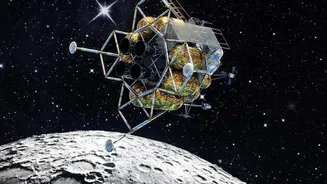
NASA's Artemis program remains its flagship human spaceflight endeavor. Following the successful crewed fly-by of the Moon with Artemis II in April 2026, the agency is now deep into preparations for Artemis III, a demonstration mission in low Earth orbit
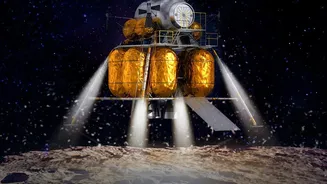
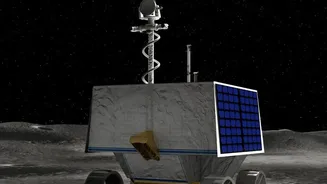
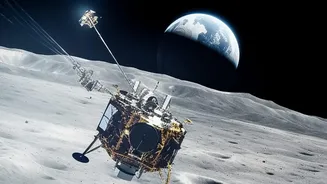
planned for 2027. This mission will test the crucial docking operations between the Orion spacecraft and new commercial human landing systems from partners like Blue Origin and SpaceX. NASA leadership has expressed high confidence in this 2027 timeline, with the first human landing now targeted for 2028 with Artemis IV. For India's space community, the key lesson from Artemis is its architectural approach. It's not just a series of one-off missions, but an integrated plan to build a sustained presence, starting with a 'Moon Base' near the South Pole. As India plans for its Gaganyaan missions and a goal of landing an astronaut on the Moon by 2040, observing Artemis's phased approach to building infrastructure, from landers to a future lunar outpost, provides a valuable strategic roadmap.
The Power of Public-Private Partnerships
A defining feature of modern NASA is its deep and expanding reliance on commercial partners. This is evident in the Artemis program, where companies like SpaceX and Blue Origin are developing the landers that will take astronauts to the lunar surface. Beyond the Moon, this model is being used to advance Martian science; a new partnership will see a private company, Relativity Space, provide the rocket and spacecraft to deliver a suite of NASA science instruments to Mars. This strategy allows NASA to procure services, reduce development costs, and focus its resources on scientific leadership and discovery, while simultaneously fostering a robust commercial space economy. This is perhaps the most critical lesson for India. While ISRO has a strong track record of success, integrating India's burgeoning private space sector more deeply into major national missions could accelerate progress, drive innovation, and unlock new economic opportunities, mirroring the synergy NASA has cultivated.
An Open Invitation for Collaboration
Recent developments underscore a significant shift towards international collaboration. In early August 2026, NASA formally invited ISRO to participate in its Moon Base program, a move that recognizes India's growing stature as a major space power. This invitation builds on India's success with Chandrayaan-3's landing near the lunar South Pole and its signing of the Artemis Accords. The partnership isn't just a future plan; it's already in motion. The NASA-ISRO Synthetic Aperture Radar (NISAR) satellite is a prime example of a major joint scientific project. For India, this presents a strategic choice. Participating in the Moon Base could provide access to advanced technologies and operational experience crucial for its own long-duration human spaceflight goals. It signals that the future of space exploration is not a race between nations, but a collaborative effort where ISRO is seen as a vital partner.
Advancing Science, from the ISS to the Moon
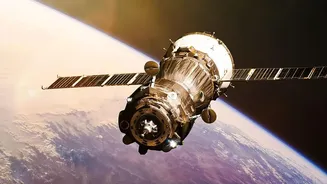
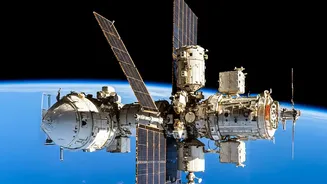
While grand lunar missions capture headlines, NASA's ongoing scientific work continues to yield crucial insights. In recent days, astronauts aboard the International Space Station (ISS) conducted a spacewalk to perform maintenance, a routine but essential part of sustaining a human presence in orbit. This constant habitation and research in microgravity informs future deep space missions. Furthermore, recent NASA research highlighted a fascinating challenge for future lunar explorers: microbes from Earth could potentially survive in the permanently shadowed craters of the Moon's South Pole. This finding has significant implications for planetary protection and the search for ancient lunar chemistry. The lesson for India's space program is the importance of balancing flagship exploration missions with a steady drumbeat of foundational science. As ISRO develops its own capabilities, ensuring a robust scientific research program—both in orbit and on the ground—will be key to maximizing the value of its investments in space.