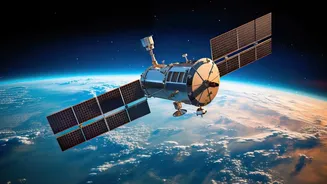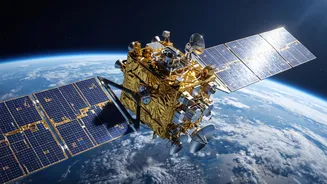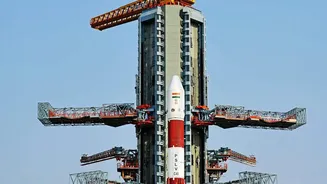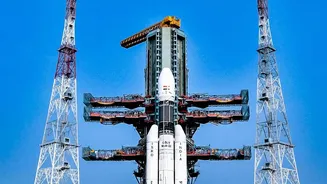







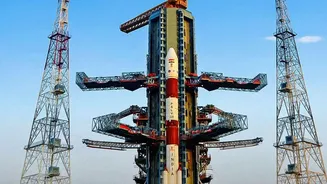
In the quest for technological self-reliance, few systems are as critical as a nation's own satellite navigation network. For India, that system is NavIC, and the recent NVS-03 mission was a crucial step in securing its future and expanding its reach.
What is NavIC?
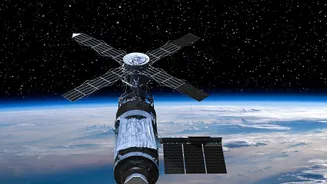
NavIC, which stands for Navigation with Indian Constellation, is India's homegrown alternative to foreign-owned global positioning systems like the US's GPS. Developed by the Indian Space Research Organisation (ISRO), its primary goal is to provide reliable positioning, navigation, and timing services over India and a region extending about 1,500 kilometres beyond its borders. This independence is vital, as reliance on foreign systems carries the risk of service denial or degradation during times of conflict, a lesson India learned during the 1999 Kargil conflict. NavIC provides two types of services: a Standard Positioning Service (SPS) for all users and a restricted, encrypted service for strategic and military applications.
Restoring a Faltering Constellation
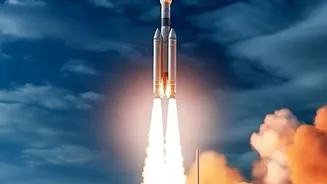
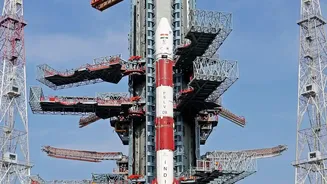
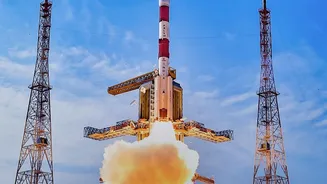
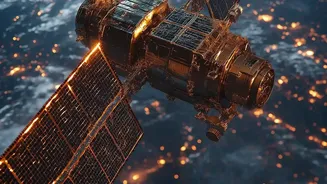
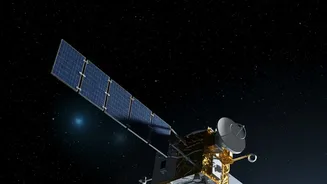
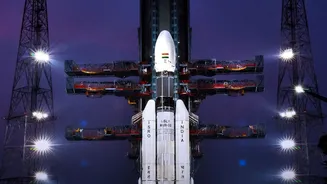
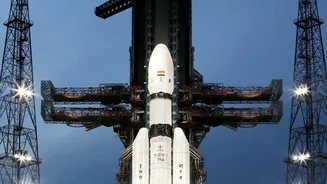
A navigation system's accuracy depends on a constellation of satellites working in unison. A minimum of four are needed to provide standalone positioning services. In the period leading up to late 2026, India's NavIC system was facing a crisis. Failures of imported rubidium atomic clocks on its first-generation satellites, coupled with the loss of the NVS-02 replacement satellite which failed to reach orbit, had reduced the operational fleet to just three. This meant NavIC could not provide its core navigation services independently, though its timing service remained functional. The successful launch of NVS-03 on October 30, 2026, was therefore a mission of restoration, bringing the number of operational satellites back to the critical minimum of four.
A Leap in Self-Reliance: The Indigenous Atomic Clock
One of the most significant upgrades in the NVS-03 satellite is its heart: an indigenously developed rubidium atomic clock. Atomic clocks provide the hyper-precise timekeeping essential for navigation satellites to calculate locations accurately. The frequent failure of imported clocks on earlier satellites was a major vulnerability for the NavIC program. By developing and successfully deploying its own atomic clock, created by ISRO's Space Applications Centre in Ahmedabad, India has taken a massive step toward 'Aatmanirbhar Bharat' in a critical space technology. This homegrown component not only enhances the satellite's reliability and extends its mission life to 12 years but also secures the entire system against foreign supply chain disruptions.
The Game Changer: Adding the L1 Band
Beyond just being a replacement, NVS_03 is a second_generation satellite that introduces a game_changing new capability:_the L1 frequency band. The original NavIC satellites operated on the L5 and S bands. The L1 band,_however,_is the most common frequency used by global navigation systems like GPS and is compatible with the chipsets found in most civilian devices,_from smartphones to smartwatches. The inclusion of this L1 signal is designed to significantly broaden NavIC's adoption for civilian and commercial use. It paves the way for manufacturers to easily integrate NavIC into everyday consumer products,_potentially making 'India's GPS' a common feature for millions of users in the near future.
Strategic and Economic Impact
A fully functional NavIC system,_bolstered by NVS_03,_has profound implications. For the military,_it ensures strategic autonomy,_providing secure and uncompromised navigation for troop movements,_missile guidance,_and naval operations without fear of foreign interference. For the civilian economy,_the applications are vast. It enhances vehicle tracking and fleet management,_provides crucial alerts for fishermen,_aids in disaster management and emergency response,_and provides precise timing synchronization for financial transactions,_power grids,_and telecommunication networks. With the system's accuracy now comparable to GPS within its service area,_its potential for widespread integration is stronger than ever.