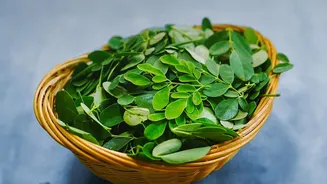






Known as moringa, sahjan, or murungai, drumstick leaves are a nutritional powerhouse hiding in plain sight. This guide will show you how to easily transform this humble green into delicious, healthy, and everyday meals for the whole family.
The Superfood in Your Backyard
For generations,
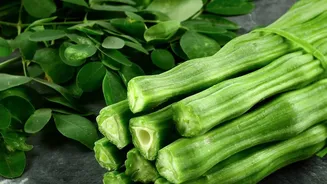
the drumstick tree (Moringa oleifera) has been a staple in Indian households, valued not just for its slender pods but for its vibrant green leaves. Packed with vitamins A and C, calcium, potassium, and protein, these leaves are a true superfood. Often called 'sahjan' in the north and 'murungai' in the south, moringa leaves have a slightly earthy taste that is easy to incorporate into a variety of dishes. Modern science confirms what traditional wisdom has long known: moringa can help support energy levels, immune function, and overall wellness, making it a perfect addition to your daily diet.
Moringa Dal: The Comfort Food Boost
One of the easiest ways to introduce moringa is through dal, the ultimate Indian comfort food. The leaves blend beautifully with lentils, adding a nutritional kick without overpowering the familiar taste. To prepare, simply add a cup of washed and chopped moringa leaves to your usual dal preparation—be it toor, moong, or masoor dal—during the last 5-7 minutes of cooking. For a classic tadka, heat ghee or oil, and splutter mustard seeds, cumin seeds, dried red chillies, and a pinch of asafoetida (hing). Sauté some chopped onions, garlic, and tomatoes before adding it to the cooked dal. The leaves will wilt and integrate, infusing the dal with their goodness.
Quick Sahjan Sabzi: A Simple Stir-Fry
A simple stir-fry, or 'sabzi', is a quick and delicious way to enjoy drumstick leaves as a side dish. Heat a bit of mustard or coconut oil in a pan. Add cumin seeds, chopped garlic, onions, and green chillies. Once the onions turn translucent, add two cups of cleaned moringa leaves. Sauté for a few minutes until the leaves wilt. Be careful not to overcook, as they can become bitter. Finish with a sprinkle of salt and turmeric powder. Some variations include adding boiled and cubed potatoes or freshly grated coconut towards the end for extra texture and flavour. This simple sabzi pairs wonderfully with roti or as a side with rice and dal.
Moringa Paratha: A Nutritious Breakfast
Upgrade your breakfast with nutrient-dense moringa parathas. It's a fantastic way to get picky eaters to consume their greens. To make the dough, simply mix one cup of finely chopped moringa leaves into two cups of whole wheat flour (atta). Add salt, ajwain (carom seeds), a little red chilli powder, and grated ginger. Knead into a firm dough using water, and let it rest for 20 minutes. Roll out the parathas and cook them on a hot tawa with ghee or oil until golden brown on both sides. The leaves give the parathas a lovely green hue and a mild, pleasant flavour.
Moringa Chutney and Podi: Flavourful Condiments
For a concentrated burst of flavour and nutrients, try making a moringa chutney or a dry 'podi' (powder). For a fresh chutney, sauté moringa leaves with onions, garlic, tomatoes, and green chillies until soft. Once cooled, blend this mixture with a little tamarind and salt to create a vibrant green chutney that goes well with dosa, idli, or rice. To make a podi, you need to dryly roast the moringa leaves until they are crisp. Then, separately roast lentils like chana dal and urad dal, along with dried red chillies, sesame seeds, and asafoetida. Grind everything together into a coarse powder. This moringa podi can be mixed with ghee or oil and served with rice.
Cleaning and Cooking Tips
Working with moringa leaves is simple. The key is to strip the small leaves from the tougher central stems. An easy way to do this is to hold the stem and run your fingers down against the direction of leaf growth. Always wash the leaves thoroughly in a large bowl of water to remove any dirt or grit. Since the leaves cook very quickly, it is best to add them towards the end of the cooking process to retain maximum nutrients and prevent them from becoming bitter. Fresh leaves are best, but they can be stored in the fridge for a couple of days.