






The Limits of Lithium
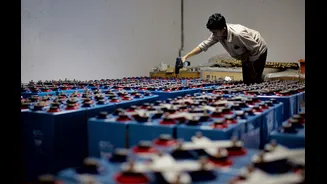
Lithium-ion batteries have revolutionized our world, from smartphones to electric vehicles. However, when it comes to storing massive amounts of energy for a national power grid, they present significant challenges. The materials required, such as lithium,
cobalt, and nickel, are expensive and concentrated in a few countries, creating supply chain vulnerabilities. Furthermore, while excellent for short bursts of power, using lithium-ion batteries to store energy for many hours or even days to back up wind and solar farms can be prohibitively expensive. This economic barrier has sent scientists and engineers searching for alternatives using cheaper, more common materials.
The Molten Salt Approach
One of the leading alternatives is molten salt technology. The concept is straightforward: use renewable electricity when it's plentiful to heat common salts (like sodium chloride) until they melt, storing the energy as immense heat in large, insulated tanks. This heat can then be used directly for industrial processes or to generate steam that drives a turbine, producing electricity when needed. This method is significantly cheaper than lithium-ion for large-scale storage because salt is abundant and inexpensive. The technology is already proven in concentrated solar power (CSP) plants, but it has a key requirement: the salts must be kept at very high temperatures, typically 200 to 600°C, to remain liquid and functional, which consumes some energy.
The Silicon and Carbon Breakthrough
Pushing the temperature limits even further is a new class of thermal batteries that use silicon or its close cousin, carbon. Companies like Antora Energy are developing systems that use electricity to heat blocks of solid carbon to glowing-hot temperatures, well over 1,500°C. Instead of a turbine, they use a breakthrough technology called thermophotovoltaics (TPVs)—specialized cells similar to solar panels that convert the intense light from the hot carbon directly into electricity. Researchers at MIT are working on a similar concept using molten silicon, which can store heat at an incredible 2,400°C. At these temperatures, materials glow white-hot, releasing a massive amount of energy as light for the TPVs to capture.
Abundance Is the Ultimate Advantage
The core appeal of both salt and silicon-based systems is the sheer abundance and low cost of their core materials. Silicon is the second most abundant element in the Earth's crust, found everywhere in sand. Carbon is similarly widespread, and the graphite used in these batteries can be a byproduct of other industrial processes. This frees energy storage from the volatile and geopolitically sensitive supply chains of lithium and cobalt. By using materials that are cheap, safe, and sourced domestically, companies can build massive storage facilities at a fraction of the cost of an equivalent lithium-ion installation, making a fully renewable grid far more achievable.
The Path to a New Energy Grid
These technologies are not just laboratory concepts. Molten salt storage has been in use for years. More advanced thermal batteries are now entering the commercial market. Antora Energy is already shipping its carbon-based batteries from a US gigafactory for industrial projects. These systems are not designed for your phone or car; they are massive installations intended to power factories, data centers, and stabilize entire electricity grids. For a country like India, with ambitious renewable energy goals, having access to affordable, long-duration energy storage is critical. This new generation of batteries offers a promising pathway to store solar and wind power for when it's needed most, ensuring a reliable and clean energy supply for the future.