






The Unforgiving Lunar Night
Exploring the Moon is a tale of two extremes. During the long lunar day, which lasts about two weeks, surface temperatures at the equator can soar to a blistering 120° Celsius. Then, as the sun sets, the environment transforms. With no atmosphere to trap
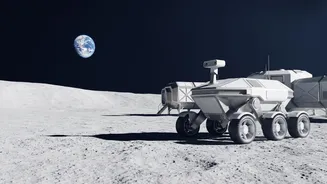
heat, the temperature plummets over a 14-day night to an unimaginable -173° Celsius, and even colder in permanently shadowed craters near the poles. For a solar-powered rover, this means two weeks of no power generation combined with a brutal, relentless cold that can freeze batteries, damage sensitive electronics, and seize mechanical parts. This thermal challenge is one of the single biggest obstacles to long-term lunar exploration, often limiting missions to a single lunar day before the rover freezes to death.
A Warmth Against the Cold
To conquer the lunar night, engineers have developed a brilliantly simple and reliable solution: self-heating power systems. The most common and flight-proven of these are Radioisotope Heater Units, or RHUs. These are not generators that produce electricity, but small, passive devices that consistently generate heat. By placing these compact heaters near critical components like batteries, computers, and scientific instruments, a rover can maintain a minimum operational temperature, allowing it to survive the long, dark, and cold night. Think of it as a tiny, always-on campfire for the rover's most vital organs, ensuring it can wake up and resume its mission when the sun finally rises.
How Radioisotope Heaters Work
The genius of a Radioisotope Heater Unit lies in its simplicity and reliability. Each RHU contains a small pellet of a radioactive material, typically plutonium-238. As this material naturally decays over many years, it releases a steady, predictable amount of heat. A single RHU, often about the size of a C-cell battery, produces about one watt of heat, but this is enough to make a critical difference in the vacuum of space. With no moving parts or complex electronics, RHUs are incredibly robust. The heat is transferred directly to the surrounding components, keeping them warm enough to prevent damage from the extreme cold. This technology has been a cornerstone of deep space exploration for decades, used in missions from the Apollo seismometers left on the Moon to the Mars rovers.
More Than Just Survival
Extending a rover's life beyond a single lunar day is about more than just endurance; it transforms the entire scope of a mission. Surviving the night allows a rover to become a long-term scientific outpost. It can travel greater distances, analyze more samples, and observe changes over time. This capability is crucial for missions targeting the lunar poles, where scientists believe vast quantities of water ice may be trapped in permanently shadowed craters. These dark craters are even colder, making robust heating systems essential for any rover hoping to explore them. By enabling rovers to function for months or even years, instead of just a few weeks, self-heating systems multiply the scientific return on investment for each mission, turning a short sprint into a long-duration marathon of discovery.
The Future of Lunar Power
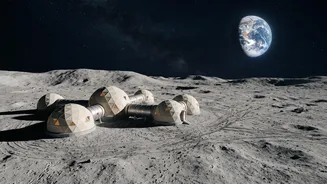
While RHUs are a proven workhorse, engineers are developing a suite of new technologies to meet the demands of future lunar exploration, like the Artemis program. Some concepts involve advanced, highly efficient batteries coupled with sophisticated insulation to retain heat. Others are exploring larger nuclear power sources, such as Radioisotope Thermoelectric Generators (RTGs), which use the same decay heat not just for warmth but also to generate electricity, providing constant power day and night. As ambitions grow from short visits to a sustained human presence on the Moon, these advanced power and heating systems will become the backbone of lunar infrastructure, supporting everything from robotic exploration to the habitats that will house the next generation of astronauts.