









A Sensory Overload
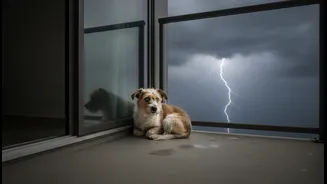
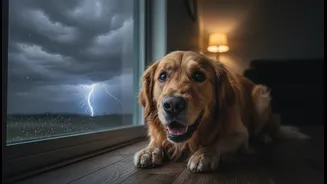
For many dogs and cats, a thunderstorm is a multi-pronged assault on their senses. Their hearing is far more acute than ours, making the low-frequency rumbles and sudden cracks of thunder feel overwhelming. It’s not just the noise; pets can sense the drop
in barometric pressure and the build-up of static electricity in the air even before we know a storm is brewing. Flashes of lightning, the sound of howling wind, and even the smell of rain and ozone can all combine into a terrifying experience, a phenomenon known as trigger stacking, which overwhelms their coping systems. This is why a normally confident pet might suddenly start panting, trembling, and looking for the nearest dark corner.
The Danger of Forcing Them Out
When a pet hides, it’s acting on a powerful survival instinct to find a safe, enclosed space. Forcibly pulling a scared cat from under a bed or dragging a dog from a closet is counterproductive and breaks the trust they have in you. It communicates that their safe space isn't safe at all and that you are a source of stress, not comfort. This can heighten their anxiety, making them more fearful in the long run. A cornered, frightened animal may even resort to aggression, such as scratching or biting, as a last-ditch effort to defend itself. Punishing them for fearful behaviour will only worsen their phobia. Instead, your goal should be to respect their choice of sanctuary while offering support.
How to Create a Safe Haven
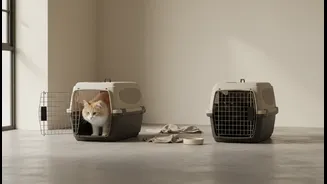
The single most helpful thing you can do is help your pet establish a “safe den” that they can access at all times. This doesn't have to be fancy. A crate covered with a heavy blanket, a closet with their bed inside, or even a small bathroom can serve as a sanctuary. The ideal spot is one that is insulated from sound and has no windows to block out lightning. Make it comfortable with their favourite blankets, toys, and even an item of your clothing that carries your reassuring scent. The key is to let them go there voluntarily. During a storm, you can play calming music or white noise to help mask the thunder.
Your Calm Is Their Calm
Pets are incredibly attuned to our emotions. If you are anxious, frustrated, or stressed about their behaviour, they will pick up on it, which will only validate their fear that something is wrong. Speak in a soothing, low voice and move calmly. Don’t over-coddle or excessively reassure them, as this can sometimes reinforce the idea that there is something to fear. Instead, act normally and project an air of calm confidence to show them that the storm is no big deal. If they emerge from their spot, reward their brave behaviour with a favourite treat or quiet praise. You can also try to distract them with a quiet indoor game or a puzzle toy filled with treats to create a positive association with stormy weather.
Supportive Tools and When to See a Vet
For some pets with more severe phobias, extra help might be needed. Anxiety wraps or compression shirts apply gentle, constant pressure that can have a swaddling, calming effect on many dogs. You can also explore pheromone diffusers for cats and dogs, which release synthetic calming scents. In cases where a pet’s anxiety is extreme—leading to destructive behaviour, self-injury, or intense panic—it's wise to consult a veterinarian or a certified animal behaviourist. They can rule out any underlying medical issues and may recommend specific behavioural therapies or, in some instances, anti-anxiety medication to help your pet cope during this stressful season.