






The Science of a Cold Fridge
A refrigerator doesn’t just magically become cold; it actively removes heat. It works by circulating cold air from the freezer compartment into the main fridge area through a series of vents. This constant airflow is what maintains a consistent and safe
temperature throughout the appliance. Fans push the chilled air from an evaporator coil, usually located in the freezer, into the refrigerator. The warmer air is then drawn back to be re-chilled, creating a continuous cycle. When this circulation is blocked, the entire system struggles. Think of it like a home’s air conditioning system with a blocked vent—the room won't cool evenly, and the unit has to work much harder.
The High Cost of Overcrowding
When you stuff your refrigerator to its absolute capacity, you inevitably block the air vents that are essential for circulation. This obstruction creates several problems. First, it leads to inconsistent temperatures, with warm spots where bacteria can thrive and cold spots that might freeze delicate items like lettuce. Second, it forces the refrigerator's compressor to work overtime to try and maintain the set temperature, which increases your energy consumption and electricity bill. Over time, this added strain can shorten the lifespan of your appliance, leading to costly repairs or a premature replacement. Ultimately, an overstuffed fridge leads to spoiled food, wasted money, and unnecessary wear and tear.
The 'Three-Quarters Full' Rule
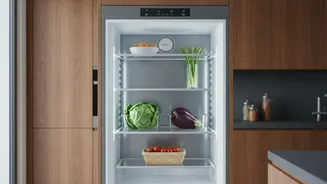
So, what is the ideal fullness for a refrigerator? Most experts agree that a fridge operates most efficiently when it is about three-quarters full. This strikes the perfect balance. Having enough food inside acts as 'thermal mass,' meaning the chilled items help each other stay cold, reducing the work the compressor has to do every time you open the door. However, leaving about 25% of the space free ensures there's ample room for cold air to circulate freely and reach every corner. An almost empty fridge is also inefficient, as there's not enough thermal mass to hold the cold, causing the compressor to cycle on more frequently.
A Zone-by-Zone Storage Guide
Different parts of your fridge have different temperatures. Storing food in the correct zone can extend its life and ensure safety. The door is the warmest part, so it’s best for condiments, juices, and butter—items with natural preservatives. The upper shelves have a more consistent, moderate temperature, ideal for leftovers, drinks, and ready-to-eat foods like yogurt. The middle shelves are great for dairy and eggs. The bottom shelf is the coldest part of the fridge, making it the perfect and safest place for raw meat, poultry, and fish; storing them here also prevents their juices from dripping onto other foods. Finally, the crisper drawers are designed to maintain specific humidity levels—one for fruits (low humidity) and one for vegetables (high humidity).
Practical Tips for Better Airflow
Beyond zoning, a few simple habits can dramatically improve your fridge's performance. First, always be mindful of where the air vents are located—usually on the back or side walls—and keep them clear. Avoid pushing items directly against the back of the refrigerator, as this is a common way to block airflow. Use clear, stackable containers to group similar items, which not only keeps things tidy but allows you to see what you have, reducing the time the door is open. If you have a lot of small items, a lazy Susan can be a great tool for easy access without having to dig through shelves. Finally, try to leave small gaps between items rather than packing them tightly together to create pathways for the cold air to travel.