






The Unquestionable Dynasty
To understand the magnitude of India’s achievement, one must first appreciate the scale of South Korea’s dominance. For nearly half a century, Korean archers have been the gold standard, particularly in the Olympic recurve discipline. Their reign has
been built on a formidable system of early talent identification, relentless training regimes, and a domestic competition so fierce that making the national team is often considered harder than winning an Olympic medal. Since 1998, for example, the South Korean women's recurve team had won seven consecutive gold medals at the Asian Games, a streak that seemed unbreakable. This legacy of perfection has created an aura of invincibility, with Korean archers carrying the weight of national pride and expectation onto every field of play.
A New Challenger Emerges
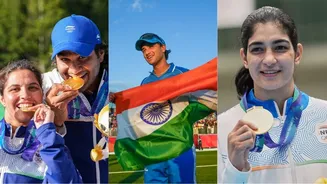
The 2026 Asian Games in Aichi-Nagoya will be remembered as the moment the script was torn apart. While India’s rise has been building, particularly after a record haul at the Hangzhou 2023 games, this was a definitive statement. Indian archers finished with a spectacular tally of nine medals—five gold, two silver, and two bronze—matching their record haul from the previous edition and cementing their status as a new powerhouse. The performance was historic not just for the volume of medals, but for where they were won. India medalled in nine out of ten events, showcasing a newfound depth and consistency across both compound and recurve categories.
The Historic Gold Rush
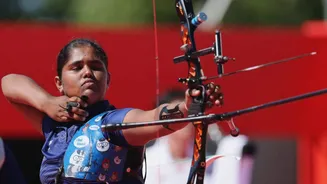
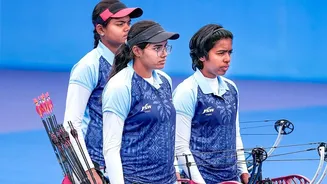
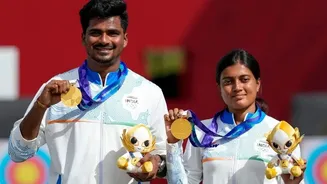
The crowning achievement was the stunning victory in the women’s recurve team event. The Indian trio of Ankita Bhakat, Kirti, and 17-year-old sensation Kumkum Mohod defeated the mighty South Koreans in the final. This win ended Korea's 28-year, seven-edition winning streak in the event and marked India's first-ever gold in the category. Mohod, on her Asian Games debut, was the star of the tournament, later winning the women's individual recurve gold by defeating Korea's Oh Yejin in a tense shoot-off—another first for India. The compound archers continued their world-beating form, securing three team gold medals, with the women's team of Jyothi Surekha Vennam, Chikitha Taniparthi and Prithika Pradeep leading the charge. While the men's recurve team settled for silver against Korea, the overall performance sent a clear message.
An Upset Years in the Making
This success was not accidental. It is the result of a concerted effort to build a world-class archery program. While South Korea has long dominated the recurve bow (the Olympic standard), India has strategically built its strength in compound archery, a discipline set to make its Olympic debut in 2028. This focus paid off handsomely, with compound archers like Jyothi Surekha Vennam and Ojas Deotale becoming dominant forces globally. The breakthrough in the recurve discipline at these Games, however, shows that the system is now producing champions across the board. The emergence of young talents like Kumkum Mohod points to a robust pipeline and a rigorous training and selection process that is finally paying dividends on the biggest stages. India's archers have learned to handle immense pressure, repeatedly delivering crucial shots in high-stakes finals against the world's best.