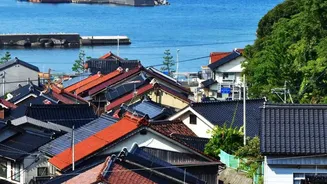








Japan’s Digital Nomad Visa: A Six-Month Sojourn
Japan officially launched its visa for digital nomads in early 2024, designed for a temporary but immersive experience. This visa allows a stay of up to six months. A key detail for Indian applicants is that eligibility is tied to having citizenship in a country
that holds both a tax treaty and a visa exemption agreement with Japan. India has a tax treaty, so applicants must check the latest visa exemption lists on official government sites. The financial requirement is a significant consideration: you must prove an annual income of at least ¥10 million (approximately ₹54-55 lakh). Another non-negotiable is securing private health insurance that provides at least ¥10 million in coverage for medical emergencies. It’s important to note this visa is non-renewable. Once your six months are over, you must exit Japan and wait another six months before you can re-apply. This visa strictly prohibits working for any Japan-based company.
South Korea’s 'Workcation' Visa: A Longer Stay
South Korea’s “Workcation” visa (officially the F-1-D visa) became a permanent program on June 30, 2026, after a successful pilot. It offers a more extended stay of one year, which can be renewed for a total of up to three years, making it one of the longest digital nomad visas in East Asia. The standard income requirement is to earn more than double South Korea's previous year's Gross National Income (GNI) per capita. For 2026, this translates to an annual income of approximately KRW 85-105 million (roughly ₹54-65 lakh), though this figure is updated annually. However, the program offers a significant incentive: the income requirement may be lowered for younger applicants (ages 18-34) who plan to live outside the greater Seoul metropolitan area. To apply, you must have at least one year of work experience in your current field and work for a company based outside Korea. A clean criminal record and private health insurance with at least KRW 100 million (about ₹70 lakh) in coverage are also mandatory.
At a Glance: Japan vs. South Korea
Choosing between Japan and South Korea depends on your personal and professional priorities. Japan's visa is a six-month, non-renewable pass ideal for a focused cultural dive. Its income threshold is fixed at ¥10 million. South Korea, on the other hand, offers a longer-term base with its visa lasting up to three years. Its income requirements are more flexible, especially for younger professionals willing to explore regions beyond Seoul. While both require you to work for a non-local company, South Korea's visa explicitly mentions a one-year work experience prerequisite. Japan also allows you to bring your spouse and children without showing extra income, a major advantage for families. South Korea also permits family accompaniment.
The Application Process for Indians
For both visas, the first step is to gather your documents. This will typically include your valid passport, proof of income (tax returns, employment contracts, bank statements), proof of remote work, and a certificate for your private health insurance policy. South Korea also requires a criminal record check that may need to be apostilled. Applications are submitted at the respective Japanese or South Korean embassy or consulate in India. You will need to fill out the official application form, provide a passport-sized photograph, and pay the associated visa fee. Processing times can vary, so it is advisable to start the application process at least two to three months before your planned travel date. Always check the official embassy website for the most up-to-date forms, appointment procedures, and document checklists.
Beyond the Paperwork: Life as a Nomad
Once approved, life in either country offers incredible rewards but also requires adjustment. Both Japan and South Korea boast some of the world's fastest internet speeds, making remote work seamless. However, the cost of living in major hubs like Tokyo and Seoul can be high, although generally more manageable than in major US cities. Understanding cultural etiquette is crucial for a smooth experience in both nations. A major limitation of the Japan visa is that it doesn't grant a Residence Card, which can create hurdles for opening a bank account or signing a long-term apartment lease. In South Korea, after securing your visa and arriving, you must apply for an Alien Registration Card (ARC) within 90 days, which will serve as your primary local ID. This card is essential for many day-to-day activities, including banking and mobile phone contracts.