





The Monsoon-Samosa Ritual
There's something magical about the connection between monsoon and samosas. It’s a multi-sensory experience: the rhythmic drumming of rain on the windowpane, the earthy smell of petrichor mixing with the scent of hot spices, and that first satisfying
crunch of a perfectly made samosa. Paired with a steaming cup of adrak-elaichi chai, it’s not just a snack; it’s a ritual. For generations, this combination has been the unofficial comfort food of the Indian subcontinent, a delicious punctuation mark to a rainy day. It's a tradition that brings families together, a small, triangular parcel of joy that makes a grey evening feel cosy and bright.
Why Bake, Not Fry?
The love for samosas is pure, but the love for deep-frying can be complicated. The mess, the lingering smell of oil, and the heavy feeling afterwards can sometimes detract from the experience. This is where baking comes in as a brilliant alternative. A baked samosa isn't a compromise; it's a modern evolution. By swapping the kadhai of hot oil for a preheated oven, you achieve a wonderfully crisp and flaky crust without the excessive grease. The result is a lighter samosa that lets the flavour of the spiced filling truly shine. It’s the same soul-satisfying snack, just reimagined for a more conscious, convenient, and equally delicious evening.
The Perfect Potato-Pea Filling
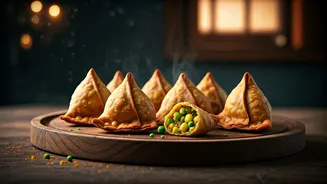
The heart of any samosa is its filling. This classic aloo-matar mixture is all about balance—spicy, tangy, and slightly sweet. **Ingredients:** - 3 medium potatoes, boiled, peeled, and mashed coarsely - 1/2 cup green peas (fresh or frozen) - 1 tbsp oil or ghee - 1 tsp cumin seeds - 1 inch ginger, finely grated - 2 green chillies, finely chopped - 1 tsp coriander powder - 1/2 tsp turmeric powder - 1/2 tsp garam masala - 1 tsp amchur (dry mango powder) - Salt to taste - 2 tbsp chopped fresh coriander **Method:** Heat oil in a pan and add cumin seeds. Once they splutter, add the ginger and green chillies and sauté for a minute. Add all the powdered spices except amchur and salt, and cook for 30 seconds. Add the green peas and a splash of water, cover, and cook until tender. Finally, add the mashed potatoes, amchur, salt, and fresh coriander. Mix everything well and let the filling cool completely before use.
Crafting a Flaky Baked Dough
The secret to a non-fried samosa that doesn't taste like a sad, dry pocket is the dough. It needs enough fat to become flaky and crisp in the oven's dry heat. **Ingredients:** - 2 cups all-purpose flour (maida) - 1/2 tsp ajwain (carom seeds) - 1/2 tsp salt - 1/4 cup ghee or oil, melted - 1/2 cup cold water (approx.) **Method:** In a large bowl, mix the flour, ajwain, and salt. Pour in the melted ghee or oil. Using your fingertips, rub the fat into the flour until the mixture resembles breadcrumbs. This step, known as 'moyan', is crucial for a flaky crust. Now, add the cold water little by little, kneading gently to form a firm, stiff dough. Do not over-knead. Cover the dough with a damp cloth and let it rest for at least 30 minutes.
Assembly and Baking Guide
This is where the magic happens. Divide the rested dough into equal-sized balls. Roll each ball into a thin oval, about 5-6 inches long. Cut the oval in half to create two semi-circles. Take one semi-circle and form a cone, using a drop of water to seal the edge. Fill the cone with about a tablespoon of the cooled potato filling, leaving some space at the top. Apply a little water to the open edge and press firmly to seal the samosa. Repeat with the remaining dough and filling. Preheat your oven to 200°C (400°F). Arrange the samosas on a baking tray lined with parchment paper. Brush them lightly with milk or oil for a golden finish. Bake for 20-25 minutes, or until they are golden brown and crisp, flipping them halfway through. Serve hot with mint chutney or tamarind chutney.