

The Philosophy on a Leaf
At its heart, the Onam Sadhya is a tribute to Kerala's harvest season and the homecoming of the mythical King Mahabali. It is a meticulously planned vegetarian banquet, sometimes featuring up to 64 distinct dishes, designed to showcase a balance of all
six fundamental tastes: sweet, salty, sour, spicy, bitter, and pungent. This isn't just about feeding the body; it’s a representation of prosperity, gratitude, and the different facets of life itself. The preparation is often a communal activity, bringing families and neighbours together to chop, grind, and cook, reinforcing a sense of unity.
Setting the Stage: The Banana Leaf
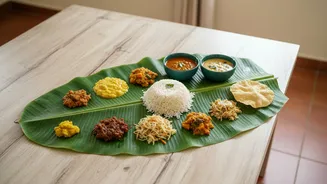
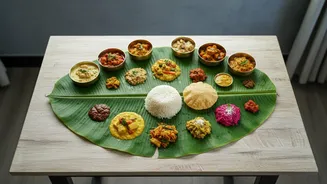
The foundation of the Sadhya is a tender banana leaf, which serves as both plate and platter. Tradition dictates its placement: it should be laid with the narrower, tapered end pointing to the guest's left. This isn't just for aesthetics. The upper half of the leaf is reserved for all the side dishes and accompaniments, while the lower, wider half is for the rice and the main curries that will be poured over it. When warm food is served on the leaf, it is believed to release beneficial compounds and impart a subtle, unique flavour.
An Orchestra of Dishes
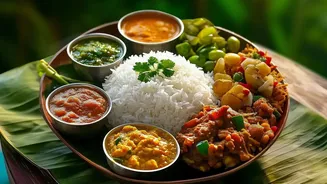
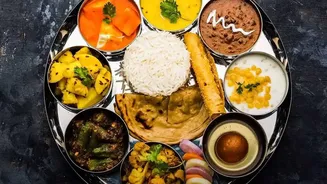
The serving process follows a specific, logical order, starting from the top left corner. First come the small but mighty condiments: a pinch of salt, followed by crispy banana chips (both salted and a sweet, jaggery-coated version called Sharkkara Upperi). Then come the pickles, like tangy mango and sharp lime, alongside Inji Puli, a sweet and sour ginger-tamarind chutney. Next are the Pachadis and Kichadis, yoghurt-based sides often made with pineapple, beetroot or cucumber. The main vegetable dishes are then arranged, including Thoran (a dry stir-fry with coconut), Olan (a delicate ash gourd and coconut milk stew), and the iconic Avial, a thick mix of seasonal vegetables in a coconut and yoghurt gravy.
The Main Event: Rice and Curries
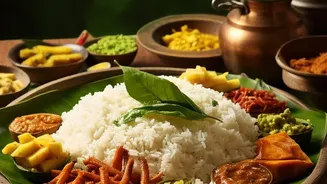
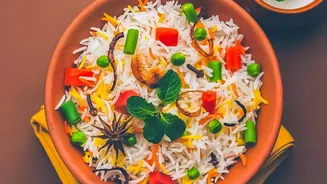
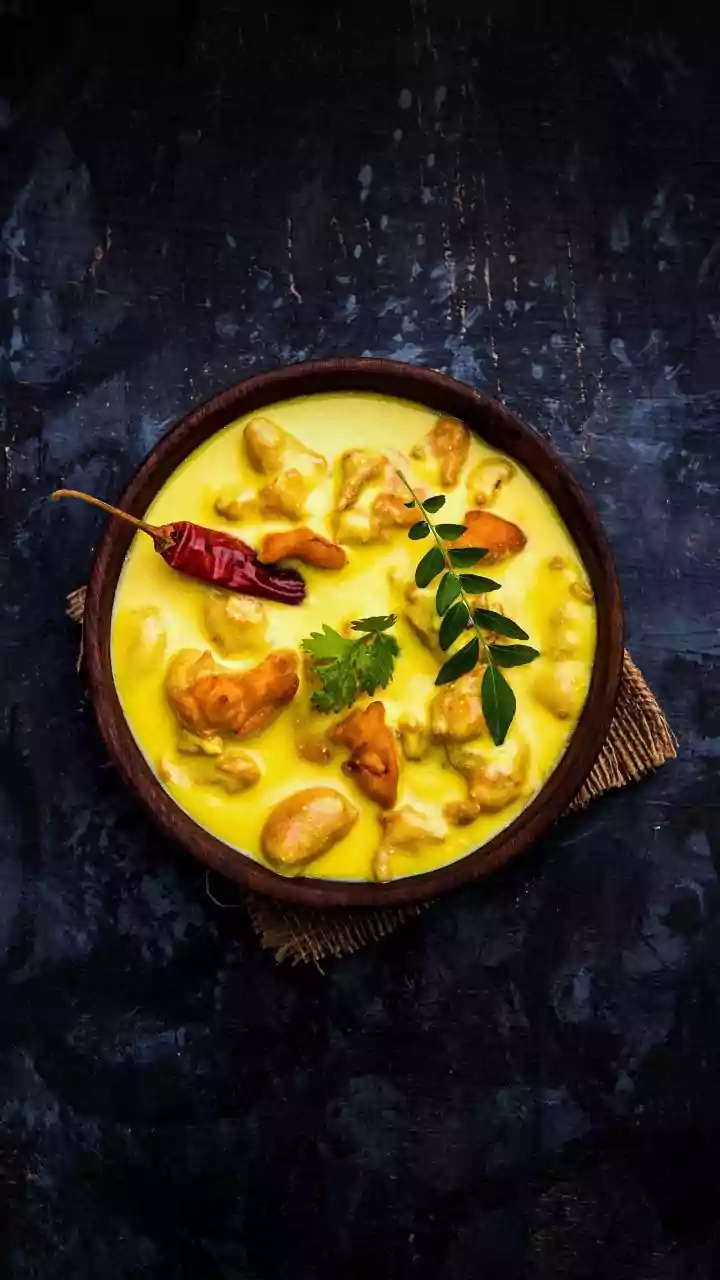
Only after the side dishes are in place is the rice served. A mound of fluffy red Matta rice is placed on the bottom centre of the leaf. The meal unfolds in courses. The first serving of rice is eaten with Parippu, a simple lentil curry, drizzled with a spoonful of ghee. Once that is finished, rice is served again, this time to be eaten with Sambar, a robust vegetable and lentil stew. This is often followed by a third course of rice with Rasam, a thin, peppery broth that aids digestion, or a tangy yoghurt-based curry like Pulissery.
The Sweet Conclusion and Etiquette
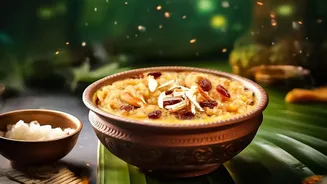
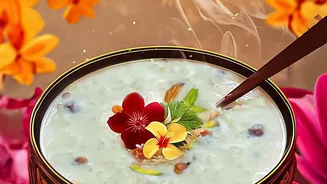
The feast concludes with desserts, collectively known as Payasam. These sweet puddings can be milk-based (Palada Payasam) or made with coconut milk and jaggery (Pradhaman). They are often served directly onto the leaf and eaten mixed with a small, mashed banana. Traditionally, you eat with your right hand, mixing small portions of rice with the different curries and side dishes as you go. At the end of the meal, you fold the banana leaf. Folding it inwards, towards yourself, is a gesture of satisfaction and appreciation for the wonderful meal.