



1983 World Cup Win: The Uprising
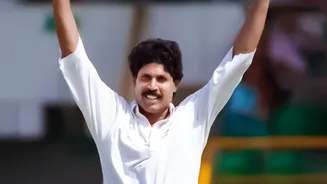
When Kapil Dev’s underdog team faced the mighty West Indies in the 1983 World Cup final, no one gave them a chance. Their victory wasn't just a sporting triumph; it was a cultural reset. It told a nation, still finding its footing on the world stage,
that it could be the best. This moment became the ultimate underdog story, so powerful that it was immortalized in the 2021 film '83, which captured the spirit of that win for a new generation. The image of Kapil Dev lifting the trophy at Lord's became a symbol of national pride, frequently used in advertising to evoke feelings of patriotism and impossible achievement.
1985 Champion of Champions: The Audi
Two years after the World Cup, India defeated Pakistan in the final of the World Championship of Cricket in Australia. The tournament win was significant, but what truly captured the public imagination was Ravi Shastri being named 'Champion of Champions' and winning a brand new Audi 100. In an era of a closed economy, a shiny foreign car was the stuff of dreams. The visuals of the entire team piling onto the car for a victory lap at the MCG became iconic. The moment represented a new, aspirational India. The car itself became a celebrity, a story so enduring that its restoration made headlines decades later.
1998 Desert Storm: The God Mode
Sachin Tendulkar’s back-to-back centuries against Australia in Sharjah, played amid a literal sandstorm, are known as the 'Desert Storm'. These innings were more than just brilliant batting; they were a one-man stand against the world's best team. The term 'Desert Storm' entered the Indian lexicon as a metaphor for a single-handed, dominant performance against all odds. Tendulkar’s heroics cemented his status as a living god for millions, a narrative that advertising agencies and filmmakers would tap into for years. His performance became a cultural touchstone for individual genius and resilience.
2007 T20 World Cup: The Bowl-Out
The inaugural T20 World Cup gave Indian cricket a fresh, youthful identity. The tied group match against Pakistan, decided by a tense and unusual 'bowl-out', was pure drama. Unlike the high-pressure Super Over, this was a simple test of accuracy that felt like a schoolyard game, making it instantly relatable. India hitting the stumps three times while Pakistan missed every attempt became a meme-worthy moment before memes were mainstream. It symbolised a cool-headed approach under pressure, a trait that would define the MS Dhoni era, and is still remembered more vividly than many finals.
2011 World Cup Final: The Six
Ravi Shastri’s commentary line, "Dhoni finishes off in style," is arguably as famous as the moment itself. MS Dhoni’s six to win the 2011 World Cup at home after a 28-year wait is an image seared into the nation's collective memory. That shot was the perfect climax to a story of a small-town boy leading India to glory, a narrative that resonated deeply across the country and was captured in his biopic. The moment, and the bat-twirl that followed, has been endlessly replayed, recreated in ads, and used as the ultimate symbol of finishing a job with confidence and flair.