
The End of an Era, a Race Begins
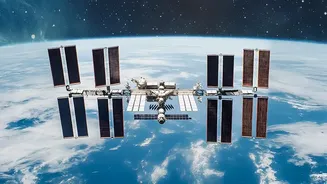
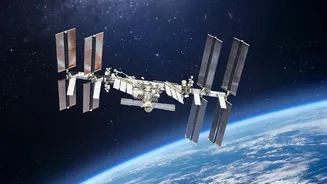
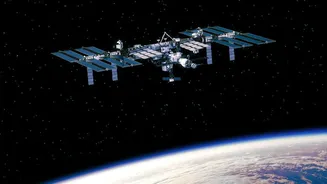
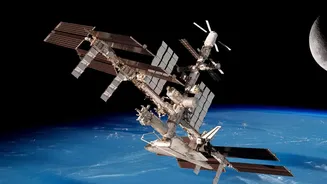
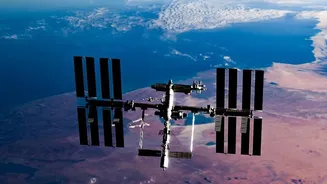
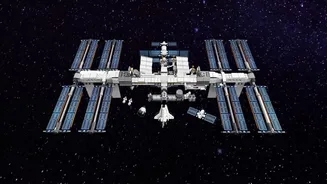
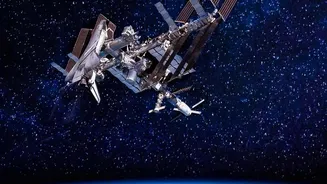
For over a quarter of a century, the International Space Station (ISS) has been humanity's lone orbital outpost, a testament to global cooperation and scientific ambition. But the aging marvel is scheduled for a controlled deorbit around 2030. This looming
retirement has ignited a high-stakes race to ensure the United States doesn't lose its foothold in low-Earth orbit (LEO). A gap in presence would be a significant strategic setback, particularly as China’s Tiangong space station is fully operational and expanding its own international partnerships. To prevent this, NASA has turned to the private sector, sparking a revolution in how we imagine living and working in space.
Meet the New Landlords of LEO
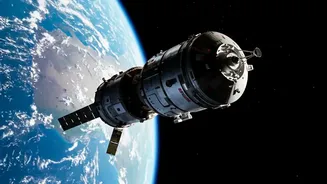
A handful of ambitious companies are at the forefront of this new commercial space race. Axiom Space is taking a unique approach, planning to first attach its privately developed modules to the ISS starting as soon as 2026 before eventually detaching to form its own free-flying Axiom Station. Meanwhile, California-based Vast is aiming to launch Haven-1, the world’s first standalone commercial space station, as early as the first quarter of 2027. Further on the horizon are even more ambitious projects. Blue Origin and Sierra Space are collaborating on Orbital Reef, envisioned as a sprawling "mixed-use business park" in space for science, tourism, and industry. And a joint venture between American firm Voyager Space and European aerospace giant Airbus is developing Starlab, a single-launch habitat and lab focused on advanced research.
The NASA-Private Partnership Model
This commercial boom isn't happening in a vacuum. It is being actively nurtured by NASA through its Commercial Low-Earth Orbit Destinations (CLD) program. Instead of building and owning the ISS’s successor, NASA is acting as a strategic partner and anchor customer. The agency is providing funding and technical expertise to help these companies get their stations off the ground, with the promise of buying services and astronaut time once they are operational. This public-private model reduces the long-term financial burden on taxpayers and is designed to cultivate a competitive, thriving economy in orbit. After a brief period of uncertainty in mid-2026, NASA has recently reaffirmed its commitment to this strategy, clearing the way for the next phase of contracts and development.
More Than Just Replacing the ISS
These next-generation habitats are designed to be much more than simple replacements for the ISS. They represent a significant leap in capability, offering purpose-built environments for cutting-edge science. The ISS is a remarkable all-purpose laboratory, but these new stations are being designed from the ground up with specialized research in mind. Companies are planning facilities dedicated to pharmaceutical development, stem cell research, 3D printing of advanced materials, and manufacturing processes that are only possible in microgravity. For scientists and commercial researchers, this means more frequent access, more power, larger experiment volumes, and facilities tailored to their specific needs, promising to accelerate the pace of discovery. Vast is already actively soliciting research proposals from the scientific community for its upcoming Haven-1 station.
The Commercial Future is Now
This vision of a commercial future in orbit is rapidly becoming a reality. In a powerful signal of international confidence, the French government announced in August 2026 a two-mission agreement with Vast. The deal will send French astronauts to both the ISS and, significantly, to the private Haven-1 station on one of its first crewed missions. These are not abstract plans for the distant future; they are concrete missions being booked today. As these private habitats prepare to open their airlocks for business, they are not just building new destinations in space. They are laying the foundation for a new orbital economy, one where advanced science and commercial enterprise can flourish together, hundreds of miles above the Earth.