

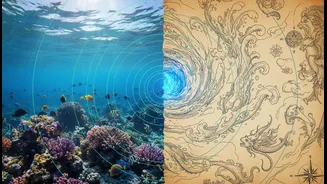
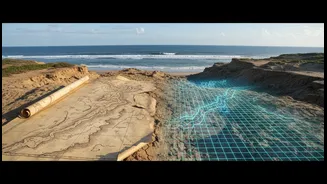


Beyond Datasets and Satellites
For generations, Western science often dismissed Traditional Ecological Knowledge (TEK) as anecdotal or unscientific. This knowledge, passed down through oral histories, represents centuries of direct observation of the environment. It encompasses a deep,
holistic understanding of the relationships between plants, animals, weather patterns, and natural phenomena. Indigenous communities were among the first to notice the subtle, early signs of climate change because their survival has always depended on accurately reading their local surroundings. Today, a growing number of scientists and institutions, including the Intergovernmental Panel on Climate Change (IPCC), recognize that this knowledge is not just valuable, but essential. It provides a crucial, long-term perspective that modern scientific records, which are often only a few decades long, simply cannot match.
Reading the Land and Sea
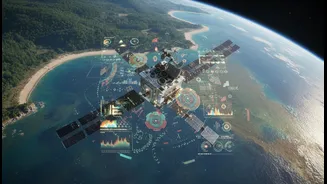
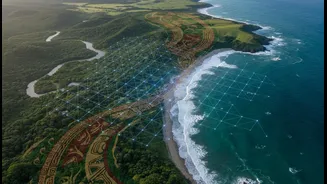
In the Arctic, where warming is happening faster than almost anywhere else, Inuit hunters possess an intricate understanding of sea ice. Their knowledge, built over countless generations, provides detailed insights into ice thickness, safety, and animal behaviour that satellite imagery can miss. This allows for more accurate local predictions and safer travel. Similarly, in Australia, Aboriginal peoples have long practiced 'cultural burning,' a method of using cool, low-intensity fires to manage the landscape. This practice reduces the risk of catastrophic wildfires by clearing out dry undergrowth, while also promoting biodiversity. In Washington state in the US, the Swinomish Tribe, seeing changes in their traditional clam and oyster harvests, created a modern clam garden to restore shellfish populations affected by the warming climate. These are not just historical practices; they are active, evolving strategies for resilience.
A Partnership of Equals
This shift is more than just scientists collecting new data; it represents a fundamental change in approach. For too long, research involving Indigenous communities was extractive, with outside experts taking knowledge without giving back or sharing credit. The new model of collaboration is built on a foundation of respect, equity, and co-production. This means Indigenous communities are treated as equal partners in research, from designing studies to interpreting results and co-authoring publications. Initiatives like the UN Collaborative Partnership on Reducing Emissions from Deforestation and Forest Degradation (UN-REDD) now include Indigenous peoples in their governance with full decision-making power. This ensures that the research serves the community's needs, respects their rights, and integrates their worldview into climate solutions, rather than just extracting information.
From Local Wisdom to Global Solutions
The applications of this collaborative approach are vast. In India's Eastern Himalayas, Indigenous communities use agroforestry and phenological indicators—like the timing of flowers blooming—to guide farming and conserve resources. In Mexico, Maya farmers are adapting their ancient 'milpa' multi-crop farming system to build resilience against drought. These local solutions hold lessons for global challenges. Integrating TEK into scientific models helps fill critical data gaps, links environmental changes to social and cultural impacts, and ultimately leads to more effective and locally relevant adaptation strategies. By combining the quantitative power of Western science with the qualitative, long-term wisdom of Indigenous knowledge, a more complete picture of our changing planet emerges.