







The Slippery Slope of Soil Erosion
For a state where about half the land has slopes between 40 to 100%, holding onto precious topsoil is a monumental challenge. The region's heavy monsoon rains, combined with traditional 'jhum' or slash-and-burn cultivation, have historically led to significant
land degradation. This not only reduces agricultural productivity, posing a threat to livelihoods, but also increases the risk of landslides, which can be devastating for communities and infrastructure. For decades, finding a way to farm the steep hillsides sustainably without losing the fertile soil to the rivers below has been one of the state's most pressing environmental and economic challenges.
A Homegrown, Green Solution
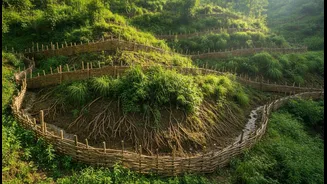
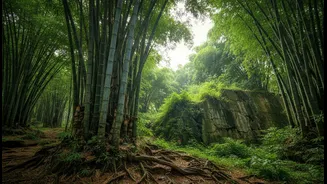
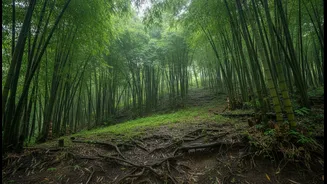
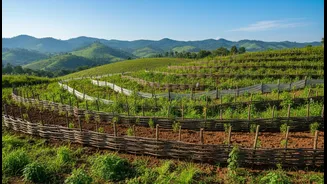
Instead of relying on expensive and often ineffective concrete structures, Mizoram has pioneered a suite of innovative bio-engineering techniques that work with nature, not against it. One highly successful approach is the Mizoram Sloping Agriculture Land Technology (MiSALT). This system cleverly combines the indigenous 'Changkham' practice of using logs and debris to create contour barriers with the Philippines' Sloping Agriculture Land Technology (SALT), which uses nitrogen-fixing trees to enrich the soil. This hybrid model effectively slows water runoff, traps sediment, and improves soil fertility over time. Another key innovation, supported by the World Bank for road projects, involves using locally abundant bamboo for terracing, crib walls, and knitting slopes together, preventing landslides at a fraction of the cost of conventional methods.
From Barren Slopes to Green Terraces
The impact of these nature-based solutions has been transformative. The World Bank noted that on the Mizoram State Roads Project, bio-engineering was used to stabilise over 100 landslide-prone sites, covering 140,000 square meters. This method not only secured the roads but also maintained the productivity of the hillsides, a crucial factor for local farming communities. Farmers adopting the MiSALT system report significant improvements, noting that within a couple of years, the trapped soil becomes visibly nutrient-rich, allowing them to cultivate crops for longer periods on the same plot. This breaks the traditional jhum cycle of constantly clearing new forest areas, thereby also helping to conserve Mizoram's rich biodiversity. The use of bamboo biochar is another technique being promoted to boost soil health and moisture retention.
A Blueprint for the World's Hills
The success of Mizoram's low-cost, high-impact approach has not gone unnoticed. The World Bank, having seen the effective use of bio-engineering in Mizoram, has already begun implementing similar techniques in other hilly regions, such as the Himachal Pradesh State Roads Project. The principles were adapted from knowledge gained in a project in Bhutan, demonstrating a cycle of international learning and adaptation. The Mizoram model provides a powerful case study for other regions across the globe grappling with similar challenges of soil erosion on steep slopes. It proves that effective conservation doesn't always require massive capital investment but can be achieved by blending traditional knowledge with ecological science, using local materials and empowering communities to protect their own land and livelihoods.