






Why Go Low-Chemical This Season?
As the rain sets in, high humidity creates the perfect breeding ground for mould and mildew, which can trigger allergies and respiratory issues. Conventional cleaning products often contain volatile organic compounds (VOCs) that can pollute indoor air,
a real concern when windows are kept shut against the rain. Opting for natural cleaners like vinegar, baking soda, and neem is not only safer for your family and pets but also more budget-friendly and kinder to the environment. These ingredients tackle the root causes of monsoon problems—moisture and germs—without introducing harmful residues into your living space. This approach empowers you to maintain a fresh and healthy home throughout the wet season.
Vinegar: The Ultimate Dampness and Mould Fighter
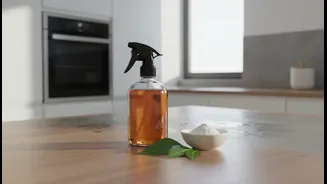
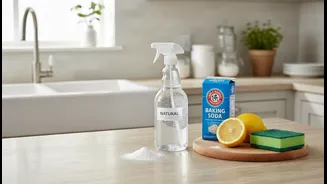
White vinegar is a powerhouse cleaner thanks to its acetic acid content, which has antifungal properties perfect for combating monsoon-related mould and mildew. Its ability to cut through grime and neutralise odours makes it indispensable. For an all-purpose cleaning spray, mix equal parts white vinegar and water in a spray bottle. This solution is excellent for wiping down countertops, tiles, and bathroom surfaces where dampness collects. To tackle existing mould patches, spray undiluted white vinegar directly on the area, let it sit for an hour, and then scrub it clean. Its strong smell, which dissipates as it dries, also helps deter some crawling insects that follow scent trails. However, avoid using vinegar on natural stone surfaces like marble or granite, as the acid can cause damage.
Baking Soda: The Champion of Odour Absorption
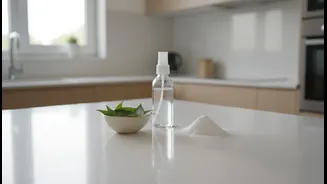
That familiar musty smell in wardrobes and closed rooms is a classic sign of the monsoon. Baking soda is a fantastic natural dehumidifier and odour neutraliser. Simply place an open bowl of baking soda in damp-prone areas like closets, shoe racks, and bathrooms to absorb excess moisture and smells. For carpets and upholstery that feel damp, sprinkle a generous amount of baking soda, let it sit for about 30 minutes to an hour, and then vacuum it up thoroughly. You can also make a gentle scouring paste by mixing baking soda with a little water to clean sinks, tiles, and grimy surfaces without scratching them. This simple powder is a cost-effective way to keep your home smelling fresh and feeling dry.
Neem: Nature’s Answer to Monsoon Pests
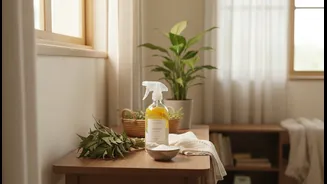
The rainy season often brings an increase in pests like ants, cockroaches, and mosquitoes. Neem has been a traditional part of Indian households for its powerful insect-repellent properties. To create a natural pest control spray, you can boil a handful of neem leaves in water, let the solution cool, strain it, and use it to mop floors or wipe down surfaces. This leaves behind a subtle scent that deters many common insects. Another effective method is to use cold-pressed neem oil. Mix a few drops of neem oil with water and a little mild soap (which acts as an emulsifier) in a spray bottle. Spray this solution in corners, near drains, and around window sills to keep pests at bay. Hanging dried neem leaves in wardrobes and cupboards also helps protect clothes from moisture and insects.
Real Decisions for Renters and Homeowners
Renters often face restrictions on making permanent changes, but effective monsoon cleaning is still within reach. Focus on ventilation by opening windows whenever the rain stops to allow air circulation. Use removable moisture absorbers like bowls of rock salt or charcoal briquettes, which are effective in small spaces. For wall mould, a vinegar or neem spray is a non-damaging solution. Homeowners can take further steps, like ensuring proper drainage on balconies and checking for leaks before the monsoon begins. Regardless of your housing situation, the core principle is to control moisture. Regularly wiping down damp surfaces, avoiding piling wet clothes, and ensuring fabrics are completely dry before storing them are crucial habits for everyone.