




The 14-Day Deep Freeze
A lunar day-night cycle is vastly different from our own. Both the day and the night last for about 14 Earth days. Without a protective atmosphere to trap heat, the transition is extreme. At midday, temperatures can soar to 130°C, hot enough to boil water.
But when darkness falls, the landscape plunges into a cryogenic nightmare, with temperatures dropping to –173°C (–280°F) or even colder in permanently shadowed regions near the poles. This intense cold is lethal for standard electronics and batteries, which rely on chemical processes that slow dramatically or stop entirely at such low temperatures. This has historically limited solar-powered missions to short sprints during the lunar day, forcing them into a deep, and often final, sleep when night arrives. Overcoming this obstacle is considered one of the highest priorities for enabling a sustained presence on the Moon.
An Advanced Coat of Armor
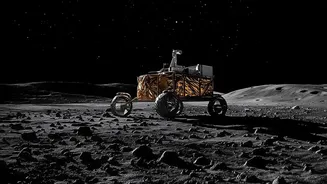
The solution lies in sophisticated thermal management systems (TMS), which act like a rover's personal life support. These systems are designed to perform two opposite functions: dissipate heat during the scorching lunar day and conserve it during the frigid night. Engineers use a combination of technologies, including high-tech insulation like multi-layer blankets and even gold paint to reflect thermal radiation. But the real innovation is in active and passive systems that move heat around. Passive systems are preferred because they improve reliability and reduce the demand for precious electrical power. For every watt of power a rover uses for its survival heaters during the night, it needs to carry an estimated five kilograms of battery mass, a significant penalty on any space mission.
Pipes, Pumps, and Nuclear Options
A leading technology in this field is the Loop Heat Pipe (LHP), which acts like a circulatory system. During the day, a fluid inside the pipes evaporates, carrying heat away from sensitive electronics to radiator panels that release it into space. The challenge is stopping this process at night, preventing the pipes from becoming a pathway for heat to escape. Companies like Advanced Cooling Technologies (ACT), in collaboration with NASA for missions like the VIPER rover, have developed passive thermal control valves. These valves automatically shut down the heat rejection process when temperatures drop, effectively trapping warmth inside the rover's core. Another innovative approach, developed by researchers at Nagoya University, combines LHPs with an electrohydrodynamic pump. This pump uses a small electric field to stop the flow of refrigerant at night, acting as a highly efficient switch with minimal power use. For missions requiring more robust power and heat, agencies are also developing radioisotope heater units (RHUs), which use the natural decay of nuclear material to generate a steady supply of warmth.
Putting the Tech to the Test
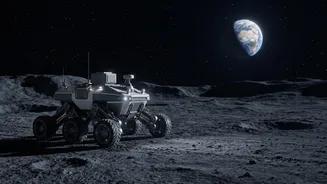
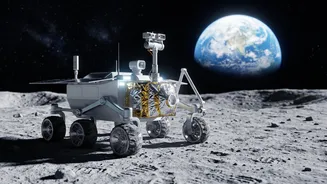
These technologies are not just theoretical; they are at the heart of the next generation of lunar missions. NASA's Volatiles Investigating Polar Exploration Rover (VIPER) was designed with a sophisticated TMS to allow it to operate for a 100-day mission, navigating in and out of permanently shadowed craters at the lunar South Pole. The system, developed with ACT, uses a combination of LHPs, thermal control valves, and specialized radiator panels to survive both extreme heat and extended periods of darkness. Commercial companies are also heavily invested. Astrobotic is working with NASA to develop a full suite of thermal devices for its landers and rovers, aiming to prove their systems can function over multiple day-night cycles. Similarly, Intuitive Machines and Zeno Power are collaborating on a radioisotope power system that could provide both heat and electricity, potentially enabling assets to operate continuously through the lunar night. These missions will serve as crucial testbeds, proving that robotic assets can thrive, not just survive, in one of the solar system's most challenging environments.