
The Most Important Redundancy: A Second Pilot
The most critical safety feature is not a piece of technology, but the person in the other seat. Every commercial flight has at least two fully qualified pilots: the Captain and the First Officer (often called the co-pilot). It’s a common misconception
that the First Officer is a pilot-in-training; in reality, they are a fully certified pilot, capable of flying and landing the aircraft alone. Captains and First Officers typically alternate flying duties from one leg of a journey to the next. One acts as the "pilot flying," handling the controls, while the other serves as the "pilot monitoring," managing communications and checklists. If one pilot becomes incapacitated, the other is trained to take full control, declare an emergency, and divert to the nearest suitable airport.
The Role of the Autopilot and Autoland
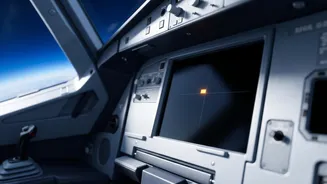
Modern aircraft are equipped with sophisticated autopilot systems that can handle most phases of flight, including maintaining altitude, heading, and speed. However, the fantasy of a plane flying and landing itself with zero human input is not quite accurate. While many modern jets have "autoland" capabilities, the system is not a simple "on" switch. Autoland requires specific ground-based infrastructure at the airport, known as an Instrument Landing System (ILS), and is typically used in low-visibility conditions like dense fog. A pilot must still program and meticulously supervise the entire process. In many situations, especially with crosswinds, a manual landing by a trained pilot is both easier and safer than relying on the autoland system, which has stricter operational limits. So, while the technology is a powerful tool to reduce workload, it doesn't replace the pilot.
The Team on the Ground: Air Traffic Control
A pilot is never truly alone. The moment a pilot declares an emergency, such as by transmitting a "Mayday" call or setting the transponder to the universal emergency code 7700, they become the absolute priority for Air Traffic Control (ATC). Controllers immediately work to clear airspace, providing a direct route to the nearest suitable airport. They coordinate with emergency services on the ground, such as fire and medical teams, to ensure they are ready for the aircraft's arrival. ATC provides the remaining pilot with crucial information on weather, runway conditions, and potential hazards, effectively acting as another crew member from the ground to help manage the immense workload of a single-pilot emergency landing.
Training and Procedure: The Human Factor
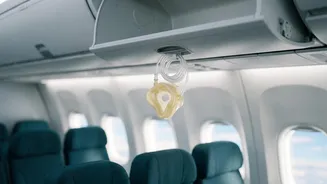
Beyond the technology, the entire system is built on rigorous training and standardized procedures. Pilots routinely practice incapacitation scenarios in simulators. The first priority is always to "aviate, navigate, communicate." This means the remaining pilot's first job is to ensure the aircraft is flying safely. They will then declare an emergency and get help. Procedures are in place for cabin crew to assist, such as moving the incapacitated pilot's seat back and securing them so they cannot interfere with the controls. This disciplined, checklist-driven approach ensures that even under extreme stress, the remaining pilot can manage the situation methodically and bring the flight to a safe conclusion.
Designed for Failure: Aircraft System Redundancy
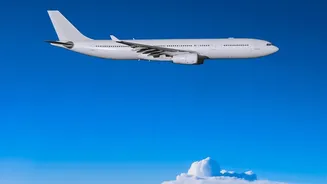
Commercial aircraft are marvels of engineering, designed with the principle of redundancy at their core. This means that critical systems—from electrical and hydraulic power to flight controls—have multiple backups. For example, a modern jetliner may have three independent hydraulic systems; it can fly safely even if two of them fail. Multiple power sources, including the engines, an auxiliary power unit (APU), and sometimes a Ram Air Turbine (RAT), ensure that essential electronics always have power. This philosophy of building in duplicates for every critical component ensures that a single point of failure, whether mechanical or human, does not lead to a catastrophic outcome.