


The Quest for Digital Perfection
For the past few years, the story of generative AI has been one of exponential improvement. Platforms like Midjourney, DALL-E, and Stable Diffusion have been locked in a fierce competition to erase any trace of their artificial origins. The goal? To generate
images so crisp, so detailed, and so realistic they become indistinguishable from photographs. Each new version, from Midjourney’s v5 to DALL-E 3, has boasted fewer artefacts, better lighting, and, crucially, the correct number of fingers on a human hand. The result is a flood of stunningly perfect, hyper-realistic images that can mimic any photographic style with unnerving accuracy. This push for perfection has been a technical marvel, but for a growing number of digital artists and creators, it has also led to a sense of sterile uniformity.
A Rebellion in Low Fidelity
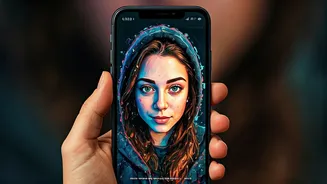
Just as the technology peaked, the pushback began. A new aesthetic started bubbling up on social media feeds: images that were unmistakably AI-generated, and proudly so. These creations feature the very 'flaws' that developers worked so hard to eliminate. Think dreamy, painterly textures, surreal and illogical compositions, warped perspectives, and that classic AI hallmark—the occasional extra finger or oddly blended limb. Some creators achieve this by using older versions of AI models, like Midjourney’s v3 or v4, which were known for their distinct, artistic, and less literal interpretations. Others use specific prompts designed to encourage abstraction and chaos, deliberately steering the AI away from photorealism and towards something more expressive and strange.
Why Imperfection Feels More Authentic
The appeal of this 'lo-fi AI' aesthetic is rooted in a very human reaction to slick, corporate perfection. When an AI image is flawless, it can feel generic, like an upgraded stock photo. It lacks a point of view. The glitches, however, feel like evidence of a process. They are the digital equivalent of a painter's visible brushstrokes or the grain on a roll of film. These imperfections signal that the image is not trying to deceive you; it is openly and honestly an artefact of a human-machine collaboration. In a world saturated with polished and often misleading digital content, this 'weird AI' offers a strange form of authenticity. It bypasses the uncanny valley—that unsettling feeling we get from androids or images that are almost-but-not-quite-human—by embracing its own unique, non-human nature.
Finding Art in the Algorithm's Signature
For artists, these imperfections are not mistakes; they are stylistic signatures. An early-version Midjourney image has a distinct, ethereal quality that is different from the moody, illustrative look of other models. These quirks become part of the creator’s toolkit. By learning to work with, rather than against, the AI's natural tendencies, they can develop a unique visual style. The 'flaws' become a feature, not a bug. It transforms the AI from a simple image-making tool into a creative partner with its own personality and biases. The goal is no longer to get the AI to perfectly execute a pre-conceived vision, but to discover what surprising and beautiful accidents can emerge from the digital chaos. This collaborative spirit is where many creators find the most artistic satisfaction.
The Allure of Digital Nostalgia
This trend also taps into a broader cultural phenomenon: nostalgia for earlier, less-refined versions of technology. It’s the same impulse that drives the popularity of lo-fi music with its warm, crackling imperfections, the resurgence of vinyl records, or the use of apps that add fake VHS static to videos. There’s a romanticism associated with the early, exploratory days of a new medium, before it becomes fully commercialised and streamlined. Embracing imperfect AI is a way of capturing the spirit of a technology in its wild, untamed youth. It’s a snapshot of a fleeting moment in digital history, a time when machines were still learning to dream, and their dreams were wonderfully weird.