




Kolkata is often fondly called the 'London of India', a nickname that evokes images of grandeur and history. But what's behind this comparison? The answer is written in stone across the city's magnificent architectural landscape.
An Imperial Capital's Grand Design
For nearly 140 years,
from 1772 until 1911, Kolkata—then Calcutta—was the formidable capital of British India. During this era, it was transformed into the second city of the British Empire, surpassed only by London itself. The British aimed to build a capital that reflected their imperial power, resulting in a flurry of construction that borrowed heavily from European architectural styles. Grand avenues, stately administrative buildings, and imposing monuments were designed in Gothic, Neoclassical, and Victorian styles, creating a cityscape that mirrored the grandeur of London. This ambition to create a 'City of Palaces' laid the foundation for the enduring comparison between the two metropolises, both of which flourished on the banks of major rivers—the Hooghly and the Thames.
The Crown Jewel: Victoria Memorial
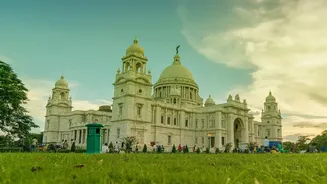
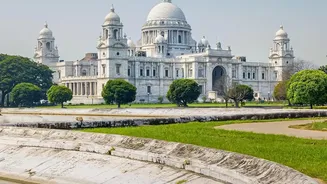
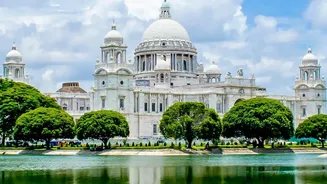
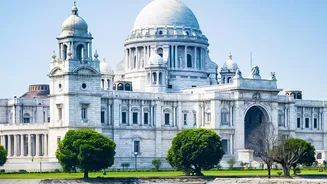
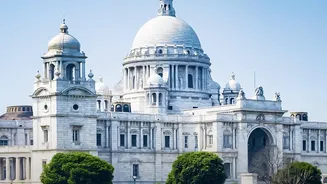
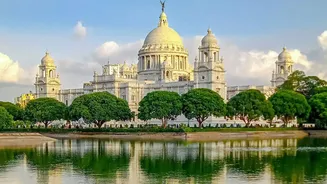
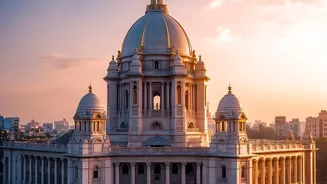
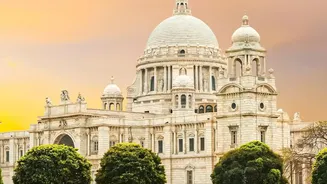
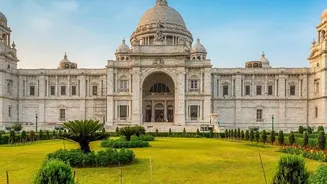
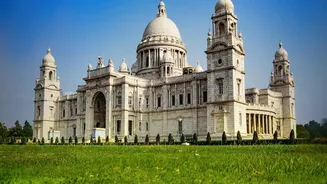
No single structure embodies this colonial legacy more than the Victoria Memorial. Conceived by Lord Curzon after the death of Queen Victoria, this breathtaking monument of white Makrana marble was designed by architect Sir William Emerson and opened in 1921. It is a prime example of the Indo-Saracenic revivalist style, which masterfully blends British and Mughal architectural elements with Venetian and Egyptian influences. Its great central dome, clustered with four smaller domed 'chhatris', echoes the design of the Taj Mahal, while its vast gardens and allegorical sculptures feel distinctly European. This fusion of styles created a monument that was intended not just to honour a monarch, but to symbolise the perceived permanence and power of the British Raj.
Glimpses of Europe Across the City
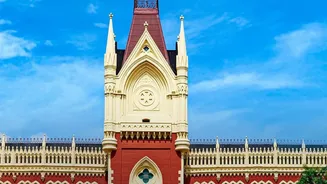
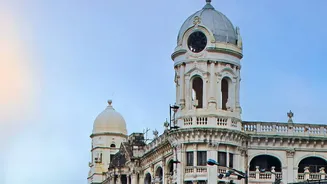
Beyond the Victoria Memorial, Kolkata's streets are a living museum of colonial architecture. St. Paul's Cathedral, completed in 1847, is a magnificent example of 'Indo-Gothic' design, a style adapted for the Indian climate. Its tower was modelled on the Bell Harry Tower of England's Canterbury Cathedral, directly linking it to British ecclesiastical architecture. The Calcutta High Court offers another striking example. Designed by Walter Granville, it is a stunning piece of Gothic Revival architecture modelled after the 13th-century Cloth Hall of Ypres, Belgium. Other structures like the Neoclassical Raj Bhavan (formerly Government House), the Victorian-era General Post Office (GPO), and the Greco-Roman Writers' Building all contribute to the city's European feel.
A Complicated But Cherished Heritage
Today, the nickname 'London of India' is viewed with a mix of pride and complexity. The architectural splendour is undeniable, drawing tourists and history buffs who marvel at the beautifully preserved facades and grand designs. These buildings are not just relics; they are an integral part of Kolkata’s identity, housing government offices, museums, and places of worship. However, they also stand as powerful reminders of a colonial past. While the comparison to London highlights a period of significant architectural and administrative development, modern Kolkata has forged its own unique cultural identity, far removed from its former colonial role. The city's trams, the only network of its kind in India, add another layer to its charming, old-world character that feels reminiscent of a bygone European era. This architectural inheritance is now part of a much larger and richer urban story, one that belongs entirely to Kolkata itself.