



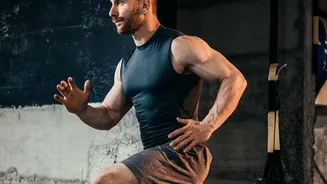
Why These Two Exercises Work
Squats and lunges are powerhouse compound exercises, meaning they work multiple muscle groups at once for maximum efficiency. Their primary targets are the major muscles of your lower body. This includes the quadriceps (the front of your thighs), the hamstrings
(the back of your thighs), and the glutes. While squats build overall lower-body power by working both legs simultaneously, lunges challenge each leg individually. This unilateral movement is excellent for improving balance and coordination, engaging smaller stabilising muscles, and correcting strength imbalances between your legs. Together, they form a complete workout for toned, powerful, and functional leg strength.
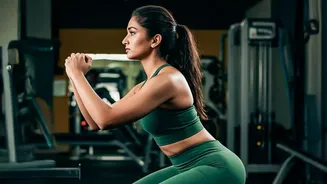
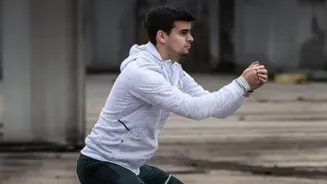
How to Perform the Perfect Bodyweight Squat
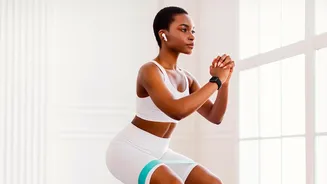
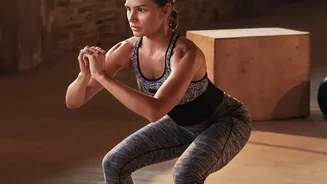
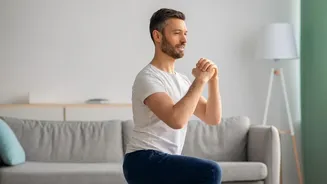
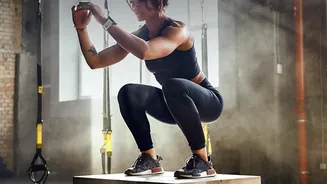
Proper form is crucial for getting results and preventing injury. Start by standing with your feet about shoulder-width apart, with your toes pointing slightly outwards. Keep your chest up and your back straight as you begin the movement by pushing your hips back, as if you're about to sit in a chair. Lower yourself until your thighs are parallel to the floor, ensuring your knees track in line with your toes and don't extend past them. Your weight should feel concentrated in your heels. Pause for a moment at the bottom, then drive through your heels to return to the starting position, squeezing your glutes at the top.
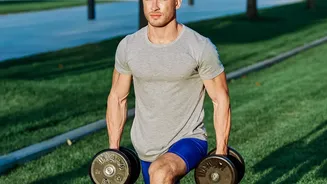
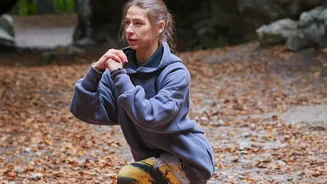
How to Execute a Classic Forward Lunge
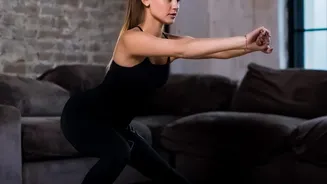
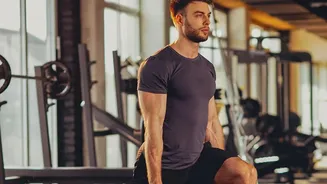
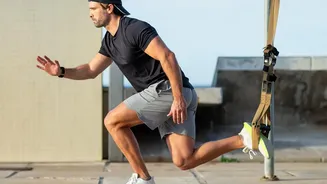
Stand with your feet together and your hands on your hips for balance. Engage your core and take a controlled step forward with your right leg. Lower your hips until both knees are bent at approximately a 90-degree angle. Your front knee should be directly above your ankle, not pushed out over your toes, and your back knee should hover just above the floor. Keep your chest lifted and your posture upright. Push off your right foot to return powerfully to the starting position. Alternate legs with each repetition.
Common Mistakes to Avoid
Even simple exercises can be done incorrectly. For squats, the most common errors include letting your knees cave inward, lifting your heels off the ground, and rounding your lower back. To fix this, think about pushing your knees out and keeping your chest lifted. For lunges, avoid stepping one foot directly in front of the other (like on a tightrope), which creates an unstable base. Instead, imagine you are on train tracks, keeping your feet hip-width apart as you step forward. Also, avoid leaning too far forward or putting too much weight on your back foot.
A Simple Home Routine
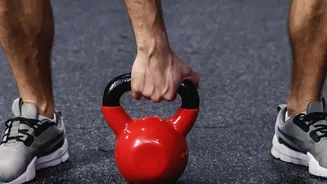
Consistency is key to seeing results. Aim to perform this routine two to three times per week, with at least one day of rest in between. A great starting point is to perform 3 sets of each exercise. For bodyweight squats, aim for 15–20 repetitions per set. For lunges, aim for 10–15 repetitions per leg. As you get stronger, you can increase the challenge. Try holding a weight (like a dumbbell or even a heavy backpack) at your chest for goblet squats, or add a jump at the top of your squat for a plyometric boost. For lunges, you can try reverse lunges, which are often easier on the knees, or walking lunges to add a dynamic component.