




Getting Set for the Stars
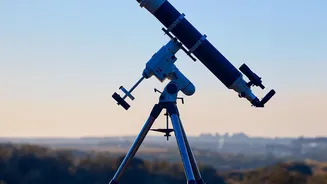
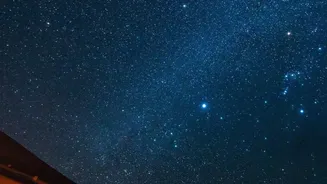
You don't need expensive gear to begin your stargazing journey. The most important tool is your own pair of eyes. Find the darkest spot you can, away from direct streetlights. Turn off the lights in your home to reduce ambient glare and give your eyes about
15-20 minutes to fully adapt to the darkness. This simple step dramatically increases the number of stars you can see. While not essential, a pair of binoculars can enhance the view of planets and star clusters. You can also use a stargazing app on your phone, but be sure to switch it to 'night mode' with a red filter to preserve your night vision. These apps use your location to create a live map of the sky, helping you identify what you're looking at.
The Planet Parade: Saturn Takes Centre Stage
October 2026 is a fantastic month for planet-watchers. The undisputed star of the show is Saturn. On October 4th, the ringed planet reaches 'opposition', meaning it's directly opposite the Sun from our viewpoint on Earth. This makes it visible all night long, rising around sunset and setting around sunrise, appearing as a bright, steady, yellowish-white point of light. It will be at its brightest for the entire year, making it a spectacular sight. If you're an early riser, look to the pre-dawn sky for Mars and Jupiter. The reddish hue of Mars and the brilliant white of Jupiter make them easy to distinguish. A special treat occurs on October 11th, when Mars appears to pass right through the Beehive Cluster, a sparkling collection of stars that looks stunning through binoculars.
Connect the Starry Dots
Constellations can feel intimidating, but you can start by finding a few prominent patterns. This month, look for the 'Great Square of Pegasus'. This huge, four-sided shape is high in the evening sky and serves as a great starting point for navigating the cosmos. Once you've found it, you can try to spot the Andromeda Galaxy, our closest major galactic neighbour. From a dark location, it appears as a faint, elongated smudge of light. To find it, first locate the 'W' shape of the constellation Cassiopeia, then trace a path from one of its bright stars. Seeing a galaxy 2.5 million light-years away with your own eyes is a truly humbling experience. Another easy-to-spot pattern is the Summer Triangle, made of three very bright stars—Vega, Altair, and Deneb—which will be high overhead in the evening.
Catch a Couple of Meteor Showers
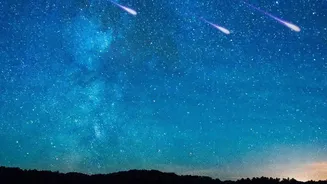
October hosts two notable meteor showers. First are the Draconids, peaking on the night of October 8-9. While a modest shower, the viewing conditions are perfect this year as the Moon will be new, providing dark skies. Look towards the northern sky in the hours after sunset for a chance to see them. Later in the month, the famous Orionid meteor shower, born from the debris of Halley's Comet, peaks on the nights of October 21-22. These meteors are known for being fast and bright. A bright Moon will be in the sky for the first part of the night, but it sets a few hours before sunrise, creating a perfect window of darkness for viewing. For your best chance, set an alarm for the early morning hours, lie back, and look up.