







This Week's Sobering Reality
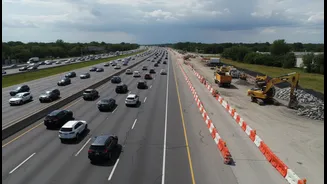
The first week of July 2026 has been a harsh lesson in the power of the monsoon. Across Maharashtra, heavy rains have triggered a cascade of landslides and closures, severely disrupting life and travel. Major arteries like the Mumbai-Pune Expressway and the old
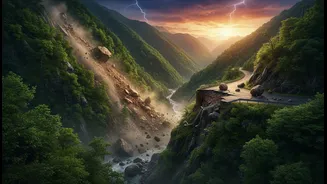
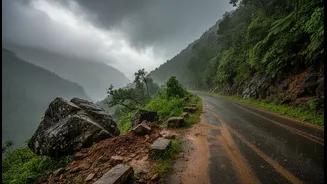
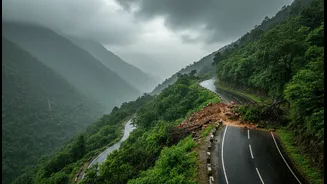
highway have faced closures due to debris and flooding. Landslides were reported in the critical Karjat-Lonavala ghat section, Tamhini Ghat, Parshuram Ghat, and Kasara Ghat, halting road and rail traffic. Authorities, responding to red alerts from the India Meteorological Department, have been forced to shut down popular tourist spots like Sinhagad Fort and restrict traffic on multiple ghat roads to prevent casualties. A person was tragically killed by a falling boulder in Tathawade ghat. These are not isolated incidents; they are an annual, predictable pattern of risk that every traveller must take seriously.
The Unseen Dangers of a Wet Road
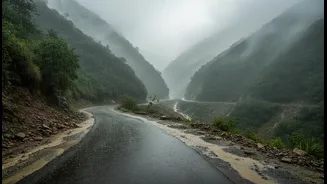
The primary danger on a ghat road during a downpour is the loss of friction. Wet tarmac significantly increases a vehicle's braking distance. Driving too fast, even at speeds that feel safe on a dry road, can lead to hydroplaning—where your tyres lose contact with the road and skim across the water's surface, resulting in a total loss of control. Furthermore, rain and mud obscure the road surface, hiding deep potholes and broken tarmac that can damage your vehicle or cause an accident. The constant spray from larger vehicles ahead can coat your windscreen in grime, and blinding fog can descend without warning, reducing visibility to near zero in seconds.
Gravity Is Not Your Friend
The most catastrophic threat on ghat roads is from landslides and falling rocks. Prolonged, intense rainfall saturates the soil on the hillsides, increasing its weight and reducing its stability. What was once solid ground can suddenly give way, sending tonnes of mud, rock, and debris crashing onto the road below. Unscientific hill cutting for road expansion often exacerbates this problem, creating unstable slopes. These events can happen without warning. The risk is not just to your car; tourist viewpoints and waterfalls become extremely hazardous as the common basalt rock turns incredibly slippery, and water levels in streams can surge unexpectedly.
Your Pre-Drive Safety Ritual
A safe journey begins before you even start the engine. A thorough vehicle check is non-negotiable. First, inspect your tyres. The tread depth must be sufficient (ideally above 3mm) to channel water away and maintain grip; bald tyres are an invitation to disaster. Second, test your brakes. They need to be in perfect working order to cope with the increased stopping distances on wet roads. Third, check your wipers and washer fluid. Worn-out wiper blades that smear water instead of clearing it are a major liability in a downpour. Finally, ensure all your lights are functional—headlights, taillights, and fog lamps. In heavy rain or fog, they are crucial for seeing and, more importantly, for being seen.
Defensive Driving for the Ghats
Once on the road, your driving style must adapt. The golden rule is to slow down and dramatically increase the distance from the vehicle in front. When driving downhill, use engine braking by shifting to a lower gear (second or third) instead of constantly riding the brakes, which can cause them to overheat and fail. On narrow sections and blind curves, always honk to announce your presence. A critical piece of ghat etiquette is to always give way to traffic moving uphill; they have a harder climb and less momentum to recover if they stop. Be patient. Never overtake on a blind curve. It is always better to arrive late than not at all.
The Smartest Move Is Often Not to Go
Ultimately, the best safety decision is sometimes to cancel or postpone your trip. Before setting out, check the latest weather forecasts and traffic advisories from official sources like the IMD and local police. If a red or orange alert is in effect, or if authorities are advising against non-essential travel, listen to them. Avoid driving at night when visibility is even worse. If you encounter a flooded section of road, do not attempt to drive through it. The water can be deeper than it looks and may conceal hidden dangers like open manholes. If conditions deteriorate while you are driving, find a safe spot to pull over and wait. Respecting the monsoon means knowing when the road can be taken and, crucially, when it is time to stay put.