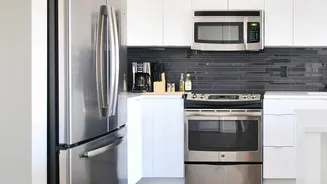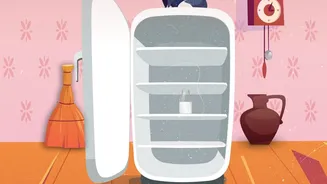







Start with a Conversation, Not Confrontation
The best time to establish fridge rules is when you first move in together, before any issues arise. If that ship has sailed, it’s never too late to have a friendly chat. Frame the conversation around creating a better system for everyone, not about blaming
an individual. Suggesting you organize the space together can make the discussion feel collaborative rather than accusatory. The goal is to agree on a system that feels fair and reduces stress for everyone involved. Start by acknowledging that sharing a small space is tricky and that a few ground rules could make life easier. This approach prevents anyone from feeling defensive and sets a positive tone for finding solutions.
The Shelf Strategy: Divide and Conquer
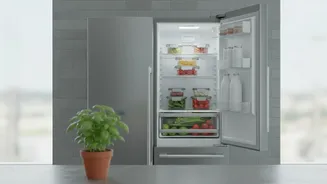
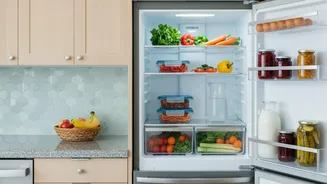
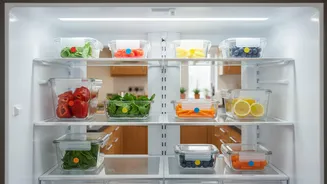
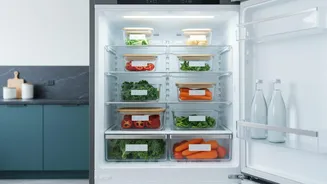
The foundation of any good fridge agreement is a clear division of space. How you do this depends on the fridge's layout and the number of people sharing it. For two people, splitting the fridge down the middle might work. For a larger group, assigning one shelf per person is often the simplest and most effective method. This immediately clarifies ownership and prevents one person’s grocery haul from taking over. Crisper drawers can also be assigned individually. If shelf space is limited, consider using clear, labelled bins for each person’s items. This keeps things tidy and contained. The key is to make the division as visually clear and equitable as possible, so everyone knows exactly where their items belong.
The 'What's Mine is Mine' Rule: Labelling
To prevent accidental (and not-so-accidental) food theft, labelling is your best friend. A simple roll of masking tape and a marker can solve most ownership disputes before they start. Encourage everyone to put their name on items they don’t want to share. This is especially important for duplicates of common items like milk or butter, as well as personal leftovers or special treats. Clear labels remove any guesswork and make it obvious what is off-limits. If you're not a fan of labelling everything, an alternative is to clearly communicate which specific items are not for general consumption.
Establish a Communal Zone
While personal space is crucial, having a designated communal area can reduce clutter and waste. The fridge door is often the perfect spot for shared condiments like ketchup, mustard, and sauces. It can also be useful to have a 'share shelf' for items that someone has bought in excess or wants to offer up to the group. This is also a great place for items nearing their expiry date that you want someone to use up quickly. Deciding together which staple items will be shared—like eggs or milk—can save space and money, but this requires an upfront agreement about how to split costs and replenish them.
The Clean-Up Crew: Scheduling and Spills
A dirty fridge is an unhappy fridge. To avoid the slow creep of mouldy containers and sticky spills, a cleaning schedule is non-negotiable. This doesn't need to be complicated; a weekly or bi-weekly rotation for wiping down shelves and checking for expired food is usually sufficient. Beyond a formal schedule, establish a simple 'you spill it, you clean it' rule. If something leaks or makes a mess, the owner should clean it up immediately. Keeping cleaning supplies easily accessible in the kitchen makes it easier for everyone to do their part. A regular clean-out also prevents the fridge from becoming overstuffed, which can block airflow and stop it from cooling properly.
Leftovers and Expiry Dates
Leftovers are a common source of fridge conflict, either because they get eaten by the wrong person or are left to become a science experiment. Along with labelling, it's helpful to date your leftovers so everyone knows how old they are. Agree on a reasonable timeframe for how long leftovers can stay in the fridge—say, three to four days. After that, they should be tossed by the owner. Regularly purging the fridge of expired food is everyone's responsibility. Don't let your old, unwanted food take up valuable real estate. A weekly check helps keep the space functional and hygienic for all.