






The Science of Staying Cool
Reflective roof coatings, often called 'cool roofs', work on two simple principles: high solar reflectance and high thermal emittance. Think of it like choosing your clothes on a hot day. A black shirt absorbs sunlight and makes you feel hotter, while
a white shirt reflects it and keeps you cooler. Reflective coatings do the same for your building. They are formulated with special pigments, like titanium dioxide, that are excellent at reflecting the sun's rays away from the roof. This ability to reflect sunlight is measured by a value called the Solar Reflectance Index (SRI). A standard black surface has an SRI of 0, while a standard white is 100. High-performance coatings can achieve an SRI of over 100, meaning they are exceptionally good at reflecting solar heat. The second principle, thermal emittance, is the material's ability to release any heat it has absorbed. So, even the small amount of heat that does get absorbed is quickly radiated back into the atmosphere instead of being pushed down into your home.
A Noticeable Drop in Temperature
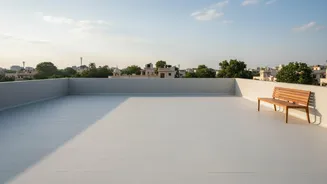
The impact of a cool roof is not just theoretical; it translates into a tangible difference in comfort. On a hot day, a traditional dark roof can reach temperatures far exceeding the ambient air temperature, sometimes by as much as 50°C. A reflective coating can keep that same surface dramatically cooler, often close to the surrounding air temperature. This drastically reduces the amount of heat transferred into the building. Studies and real-world applications in Indian cities have shown that a cool roof can lower indoor temperatures by 3°C to 8°C. For those living in top-floor apartments without air conditioning, this reduction can be the difference between a liveable space and an unbearable one. For those with AC, it means the unit doesn't have to work as hard, leading to significant energy savings. Some estimates suggest annual cooling costs can be reduced by up to 20%, depending on the climate and building.
More Than Just a Cooler Room
While the immediate benefit is a cooler home, reflective coatings offer other important advantages. By shielding the roof from intense solar radiation and reducing the extreme temperature fluctuations that cause materials to expand and contract, these coatings protect the roof itself. This can prevent cracking and deterioration, significantly extending the lifespan of the underlying roofing material and waterproofing. The benefits also extend beyond your own flat. When widely adopted in a neighbourhood or city, cool roofs help combat the 'urban heat island' effect, where clusters of dark roofs and roads create localised 'heat bubbles' that raise ambient temperatures. By reflecting sunlight, these coatings can contribute to a slightly cooler local environment for everyone.
Choosing the Right Coating in India
Reflective coatings come in several types, with acrylic and silicone-based versions being the most common for residential use. These are liquid-applied coatings that can be put on various surfaces, including concrete, metal, and asbestos sheets. In India, many brands now offer high-SRI coatings specifically designed for the climate. The cost of application in India, including labour and materials, can range from approximately ₹28 to ₹45 per square foot, depending on the condition of the roof and the quality of the product chosen. Before application, the roof surface must be thoroughly cleaned to ensure proper adhesion. While some may consider it a DIY project, professional application is often recommended to prepare the surface correctly and apply the necessary coats, including a primer, for a durable finish that can last between five to seven years with proper maintenance.