



The Uncrowned King of Comfort
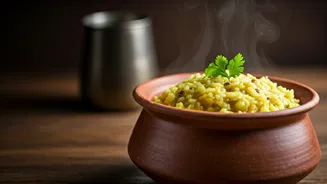
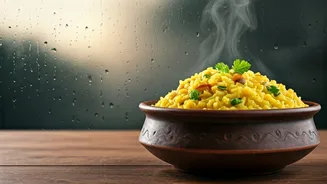
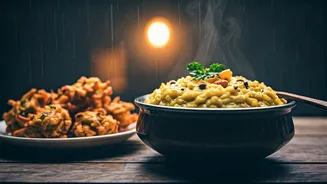
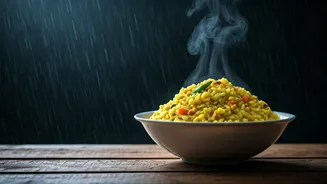
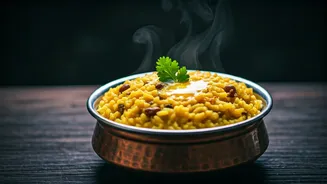
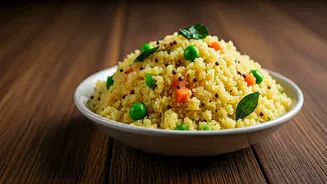
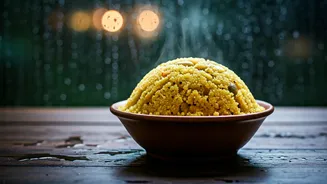
Let’s be honest, when the skies turn grey and a cool breeze offers respite from the summer heat, our hearts and stomachs yearn for one thing: Khichdi. This humble, one-pot meal of rice and lentils is the undisputed champion of monsoon comfort food. It’s
more than just a dish; it’s a warm hug in a bowl. While pakoras and chai have their own rainy-day charm, Khichdi operates on a different level. It’s the food we turn to when we need nourishment for the body and soul, a simple yet profound culinary ritual that connects generations and regions across the country. Its magic lies in its simplicity—a foundation of perfectly cooked grains and legumes that can be dressed up or down, but is always, unfailingly, satisfying.
A History as Rich as Ghee
Khichdi is not a recent fad; its legacy is deeply woven into the fabric of the Indian subcontinent. The dish gets a mention in ancient texts, with Greek ambassador Seleucus Nicator noting during his travels in the 3rd century BCE that a rice-and-pulse dish was immensely popular among the people of the region. The word ‘Khichdi’ itself is believed to have derived from the Sanskrit word ‘khiccā’. It was a staple for common folk and a favourite of emperors. The Mughals, in particular, were fond of it, with Ain-i-Akbari, the 16th-century document recording the administration of Emperor Akbar, listing several versions of the dish, including ones enriched with saffron, spices, and copious amounts of ghee. This historical pedigree proves that its appeal is timeless, a culinary constant through centuries of change.
An Ayurvedic Prescription for the Rains
The love for Khichdi during the monsoon is not just about sentiment; it’s rooted in traditional wisdom. According to Ayurveda, the rainy season is when our ‘agni’ or digestive fire is at its weakest. The increased humidity can make our systems sluggish, making it harder to digest heavy, oily, or complex foods. Khichdi, in its purest form, is the perfect antidote. It is light, easy on the stomach, and provides a balanced profile of carbohydrates and protein. The addition of digestive-friendly spices like turmeric, cumin, and ginger further enhances its benefits. It’s a dish that cleanses and nourishes simultaneously, making it the ideal meal to keep you feeling light and energetic when the weather might tempt you towards lethargy.
A Dish of a Thousand Faces
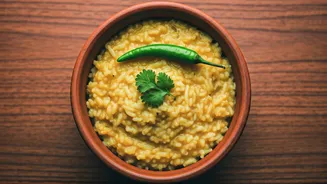
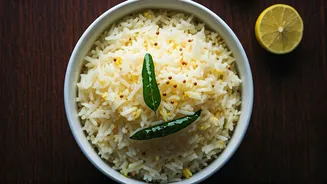
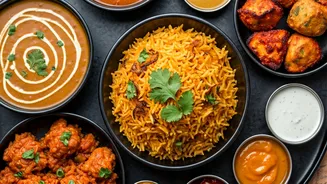
To call Khichdi a single dish is to do it a disservice. It is a culinary template with infinite variations, each reflecting the unique palate of its region. In Bengal, the bhog’er khichuri served during pujas is a flavourful, semi-dry preparation made with roasted moong dal, gobindobhog rice, and a medley of vegetables. Head west to Gujarat, and you’ll find the soupy and spicy Vaghareli Khichdi, often served with a dollop of yoghurt and a side of kadhi. In the South, its cousin Bisi Bele Bath from Karnataka and Pongal from Tamil Nadu are celebrated dishes in their own right. From the hearty bajra Khichdi of Rajasthan to the simple versions made for a sick day, the dish adapts, transforms, and finds a home on every Indian table. This versatility is key to its enduring popularity.
The Perfect Accompaniments
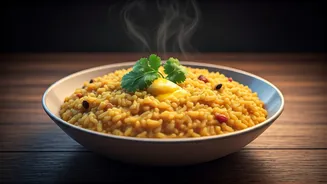
A bowl of Khichdi is rarely served alone. The experience is completed by its entourage of accompaniments, lovingly referred to as the ‘char yaar’ or ‘four friends’ of Khichdi: ghee, dahi, papad, and achaar. A generous spoonful of fragrant ghee melting into the warm rice and dal is non-negotiable for most. The coolness of plain dahi (yoghurt) provides a perfect contrast to the warmth of the dish. A crunchy, roasted papad adds a much-needed textural element, while a sliver of spicy, tangy achaar (pickle) cuts through the richness and elevates the entire meal. Together, they create a symphony of flavours and textures that is simple, balanced, and deeply gratifying.