








Understanding Breath Awareness
Breath awareness is the practice of paying conscious attention to your breathing without trying to change it. It’s a form of mindfulness that anchors you in the present moment. When we're stressed or anxious, our breathing often becomes shallow and rapid,
which can signal to our brain that something is wrong. By intentionally focusing on the breath, you can gently interrupt this cycle. The goal isn't to achieve a perfect state of calm, but to simply notice the physical sensation of air moving in and out, which can help quiet a busy mind and relax the body.
Getting Started: A Comfortable Setup
To begin any breathing exercise, find a comfortable position. You can sit in a chair with your back supported and feet flat on the floor, or lie on your back with your knees bent. Loosen any restrictive clothing. Allow your shoulders, head, and neck to relax. You can close your eyes if it helps you focus, or simply soften your gaze. The key is to be as comfortable as possible so you can turn your attention inward without distraction.
Technique 1: Diaphragmatic or 'Belly' Breathing
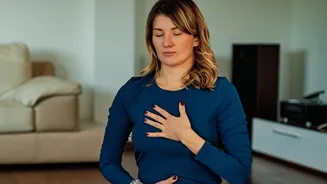
Diaphragmatic breathing is a foundational exercise that encourages the use of your main breathing muscle, the diaphragm, located below your lungs. To practice it, place one hand on your upper chest and the other on your belly, just below your rib cage. Breathe in slowly through your nose, allowing your belly to expand and push your hand outward. The hand on your chest should remain relatively still. Then, exhale slowly through your mouth or nose, feeling your belly fall. This technique promotes fuller, more efficient breaths and can help activate the body's relaxation response.
Technique 2: Box Breathing for Focus
Box breathing, also called square breathing, is a simple and rhythmic technique known for promoting a sense of calm and focus. It involves four equal steps, like the sides of a box. The pattern is easy to remember: 1. Inhale slowly through your nose for a count of four. 2. Hold your breath for a count of four. 3. Exhale gently through your mouth or nose for a count of four. 4. Pause for a count of four before repeating the cycle. The even rhythm gives your mind something steady to focus on, which can be particularly helpful during moments of stress.
Technique 3: Mindful Observation
Perhaps the simplest exercise is to just observe your breath without any attempt to control it. Bring your awareness to the sensation of the air entering your nostrils, filling your lungs, and then leaving your body. Notice the temperature of the air, the slight pause between breaths, and the gentle rise and fall of your chest or belly. When your mind wanders to thoughts or worries—which it naturally will—gently guide your focus back to your breath without judgment. This practice cultivates mindfulness and can be done for just a minute or two anytime you need to ground yourself in the present.
Integrating Awareness into Your Day
The power of breath awareness comes from consistent, gentle practice. You don't need to set aside long periods. Try taking a few mindful breaths before starting your workday, during a short break, or while waiting in line. A few minutes of diaphragmatic breathing before bed can also help you wind down. By integrating these small moments of awareness into your daily routine, you can build a habit of checking in with yourself, fostering a greater sense of balance and ease over time.