

In India, rice is more than a staple; it’s a canvas for culinary creativity. Mastering classic regional rice recipes doesn't require a pantry full of exotic spices. It’s about technique and honouring the power of a few fresh, quality ingredients.
The Art of the Tempering (Tadka)
The secret
to many of India's most beloved rice dishes lies in the 'tadka' or tempering. This is the foundational technique where whole spices, lentils, and herbs are briefly fried in hot oil or ghee to unlock their essential oils and deepest flavours. Mastering the tadka is the first step to mastering flavoured rice. The process is simple but transformative. You heat your oil, add mustard seeds and wait for them to pop, followed by dals like chana and urad for crunch, and finally fragrant curry leaves and chillies. This aromatic mixture is then folded into cooked rice, instantly elevating it from plain to spectacular. It’s a method used across the country, forming the flavour base for countless dishes.
South India’s Zesty Lemon Rice
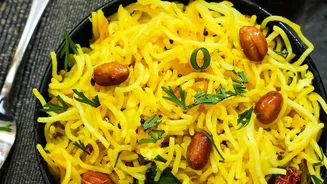
Lemon Rice, known as Chitranna in Karnataka, is the perfect example of creating a vibrant meal with minimal effort. It's a go-to dish for lunchboxes and travel because it tastes wonderful at room temperature. The beauty of this dish is its balance. The tanginess of fresh lemon juice, added at the end to preserve its bright flavour, is complemented by the earthy notes of turmeric and the nutty crunch of peanuts. The tadka is crucial here: mustard seeds, urad dal, chana dal, peanuts, and curry leaves are fried until golden before being mixed with cooked, cooled rice. Using day-old or cooled rice is a key tip, as it prevents the grains from becoming mushy and ensures each one is perfectly coated.
The Tangy and Complex Tamarind Rice
Tamarind Rice, or Puliyogare, is another South Indian classic, often served as 'prasadam' in temples. It offers a more complex, layered flavour profile that is simultaneously sweet, sour, and spicy. While some versions use a pre-made 'puliyogare gojju' (tamarind paste), you can create a stunning version from scratch. The process involves creating a thick sauce from tamarind extract, jaggery for a hint of sweetness, and a freshly roasted spice powder. This powder often includes coriander seeds, chana dal, urad dal, red chillies, and sesame seeds. This rich, dark paste is then mixed with cooked rice. Peanuts are almost always added for a delightful textural contrast.
North India’s Fragrant Vegetable Pulao
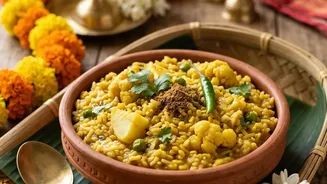
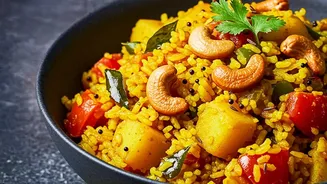
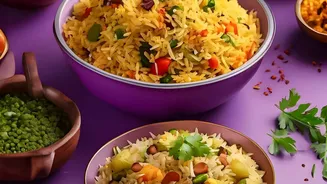
Moving north, the Vegetable Pulao is a one-pot meal that celebrates the fragrance of whole spices and the sweetness of fresh vegetables. Unlike a biryani, which involves layering, a pulao is made by cooking everything together, making it a quick and comforting meal. The process starts by blooming whole spices like bay leaves, cinnamon, cloves, and cardamom in hot ghee or oil. Sliced onions are sautéed until golden, followed by ginger-garlic paste and a mix of seasonal vegetables like carrots, peas, beans, and potatoes. After briefly frying the vegetables, soaked long-grain basmati rice is added, followed by water or a light broth. The pot is then covered and simmered until the rice is fluffy and has absorbed all the aromatic flavours.