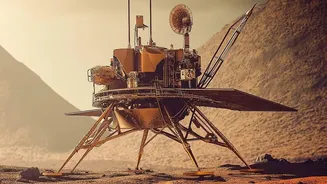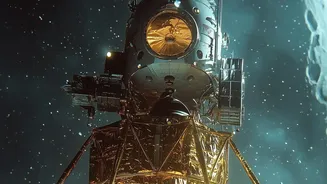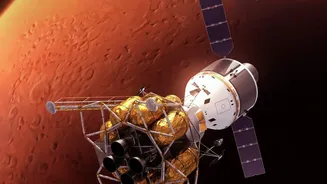

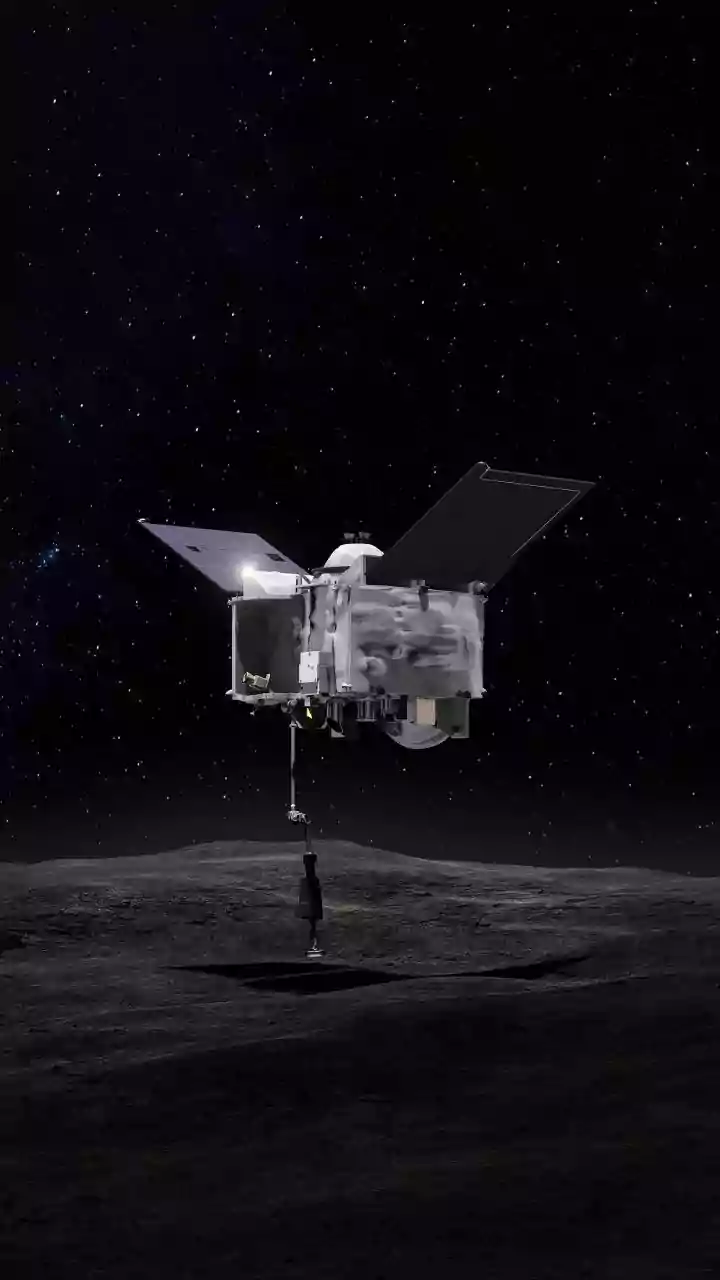

A new era in planetary exploration has begun. The Martian Moons eXploration (MMX) mission is officially underway, commencing a half-decade voyage to solve one of the Red Planet's most enduring mysteries: the origin of its two tiny moons.
An Ambitious New Chapter
Led by the Japan
Aerospace Exploration Agency (JAXA), the MMX mission represents one of the most complex robotic expeditions ever attempted. The spacecraft launched successfully in October 2026 from the Tanegashima Space Center in Japan, beginning its long journey towards Mars. Unlike rovers that explore the Martian surface, MMX has a different, more enigmatic target. The mission’s primary goal is to achieve something unprecedented: land on the larger moon, Phobos, collect a sample of its surface material, and return it safely to Earth. This will be the world's first sample-return mission from the Martian system. The journey there will take about a year, after which the probe will carefully insert itself into orbit around Mars in August 2027, preparing for its extensive survey and daring landing attempt. This initial phase marks the start of a long and patient scientific investigation millions of kilometres from home.
The Five-Year Itinerary
The mission's five-year timeline is a carefully choreographed dance of celestial mechanics. Following its year-long trip, the MMX spacecraft will enter an orbit around Mars and then transition to a quasi-satellite orbit around Phobos. It will spend years conducting detailed observations of both Phobos and the smaller, more distant moon, Deimos. This period is crucial for mapping the surface and identifying a safe landing spot. The mission also includes a small rover named Idefix, contributed by France and Germany, which will be deployed to the surface of Phobos to perform its own science operations. Once a landing site is selected, the main spacecraft will descend to the surface to collect at least 10 grams of 'regolith'—the loose soil and rock. After securing its precious cargo, the probe will conduct flybys of Deimos before firing its engines for the year-long return trip to Earth, with the sample capsule scheduled to land in Australia in 2031.
Solving a Decades-Old Mystery
At the heart of the MMX mission is a fundamental question that has puzzled astronomers for decades: are Phobos and Deimos captured asteroids, or are they remnants from a colossal impact on Mars itself? The two theories point to vastly different histories for the Martian system. If they are captured asteroids, their composition could offer clues about the early building blocks of the solar system. However, if they were formed from a giant impact, the sample MMX brings back would essentially be a piece of ancient Mars, ejected into orbit billions of years ago. By analysing the sample in laboratories on Earth, scientists will be able to determine its composition with a precision impossible for robotic instruments in space. This analysis is expected to provide a definitive answer to the moons' origins and, in doing so, rewrite our understanding of how planetary systems form and evolve.
Why This Sample Is So Important
The significance of returning a physical sample from the Martian system cannot be overstated. While rovers and orbiters provide invaluable data, the analytical power of terrestrial labs is unmatched. The sample from Phobos could hold clues not just about Mars, but about the delivery of key ingredients for life, like water and organic compounds, to the inner solar system. Some scientists theorise that material ejected from Mars over billions of years covers the moons, so the sample could provide insight into the Red Planet's history. This makes MMX a mission not just about Martian geology, but about astrobiology and the conditions for the emergence of life. The mission builds on JAXA's previous successes with its Hayabusa missions, which returned samples from asteroids, cementing Japan's leadership in this highly specialised field of space exploration.