






The Latest on Cyclone Akvan
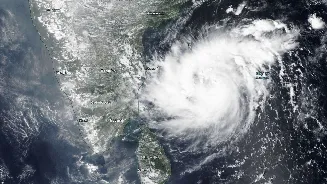
The India Meteorological Department (IMD) has confirmed the formation of Cyclonic Storm 'Akvan' over the Bay of Bengal. According to bulletins issued on November 18, 2026, the storm is currently moving slowly northwards and is expected to intensify significantly.
Projections indicate it will become a Severe Cyclonic Storm later today and further strengthen into a Very Severe Cyclonic Storm by November 19. The forecast track suggests a potential landfall along the Andhra Pradesh coast, somewhere between Nellore and Visakhapatnam, around noon on November 20. At the time of crossing the coast, the storm is predicted to have maximum sustained wind speeds of 120-130 kmph, with gusts reaching up to 145 kmph. An 'Orange' alert, signifying a call to 'be prepared', has been issued for the coasts of Andhra Pradesh and adjoining south Odisha.
Why the IMD Is the Only Authority
In the age of social media, forecasts and warnings from unverified sources can spread panic and misinformation. The IMD is India’s national weather agency, established in 1875, and operates under the Ministry of Earth Sciences. Crucially, it is one of only six Regional Specialised Meteorological Centres (RSMCs) in the world, designated by the World Meteorological Organization. This means the IMD has the sole mandate to name and issue warnings for tropical cyclones in the North Indian Ocean basin, which includes the Bay of Bengal and the Arabian Sea. Its forecasts are based on sophisticated satellite imagery, doppler weather radars, and advanced numerical models. Relying on IMD bulletins ensures you receive accurate, science-backed information directly from the official source responsible for tracking the storm.
Decoding the IMD's Warnings
The IMD uses a clear, staged warning system to help the public and authorities prepare. It begins with a 'Pre-Cyclone Watch' issued 72 hours in advance. This is followed by a 'Cyclone Alert' (Yellow message) at least 48 hours before potential impact. As the storm gets closer, a 'Cyclone Warning' (Orange message) is issued 24 hours ahead, providing more specific details on landfall location and timing. Finally, a 'Post-Landfall Outlook' (Red message) comes 12 hours before, detailing the expected conditions as the storm moves inland. The agency also categorizes the storm's intensity based on wind speed, ranging from a 'Cyclonic Storm' (62-88 kmph) to a 'Super Cyclonic Storm' (222 kmph or more). Akvan is forecast to reach the 'Very Severe Cyclonic Storm' category (118-166 kmph).
Separating Fact from Rumour
During weather events, it is common to see dramatic videos or conflicting reports online. The name 'Akvan', for example, was circulating on social media even before the IMD officially named the storm. While it was the correct next name on the list contributed by Iran, its use before official confirmation can cause confusion. Always verify information by checking the latest bulletins on the IMD's official website (mausam.imd.gov.in) or its social media handles. News reports from credible media outlets will almost always cite the IMD as their source. Avoid sharing forwards or posts from unofficial weather bloggers or pages that claim to have inside information. Sticking to official sources is the safest way to stay informed.
How to Stay Prepared
With an 'Orange' alert in place, preparation is key. The IMD and the National Disaster Management Authority (NDMA) advise residents in coastal areas to take specific precautions. Secure your home by checking for loose tiles, doors, and windows. Remove any objects from your yard that could become projectiles in high winds, such as garbage cans or loose lumber. Prepare an emergency kit with essentials like drinking water, non-perishable food, a first-aid kit, torches, and extra batteries. Keep your mobile phones charged and have a power bank ready. Most importantly, listen to the advice of local authorities. If evacuation orders are issued for your area, follow them promptly. Fishermen have already been advised to return from the sea and avoid venturing out until the storm has passed.