





The Engine of the Monsoon
To understand Spiti's dryness, we first need to appreciate the sheer power of the Indian monsoon. Every summer, the vast Indian subcontinent heats up, creating a massive low-pressure area. This acts like a giant vacuum, pulling in moisture-laden winds
from the cooler Indian Ocean and the Arabian Sea. These winds, loaded with water vapor, travel northwards, destined to bring life-giving rain to millions. As they move across the country, they cause the familiar downpours, transforming dry landscapes into lush, vibrant ones. This seasonal wind reversal is the engine that powers India’s agriculture and defines its climate, but its journey is not unobstructed.
The Great Himalayan Barrier
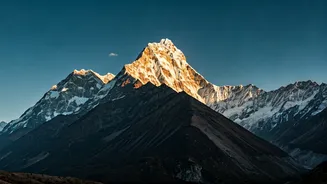
The northward march of the monsoon clouds comes to a dramatic halt at the foot of the Himalayas. This colossal mountain range, the highest in the world, acts as a formidable wall. When the moisture-heavy winds arrive, they are forced to rise dramatically. This process is known as orographic lift. As the air ascends, it expands and cools, and cooler air cannot hold as much moisture. Consequently, the water vapor condenses into clouds and then falls as heavy rain on the southern, windward slopes of the mountains. This is why foothills and regions south of the main Himalayan crest receive such intense rainfall. The mountains effectively squeeze the water out of the clouds like a giant sponge.
The Rain Shadow Explained
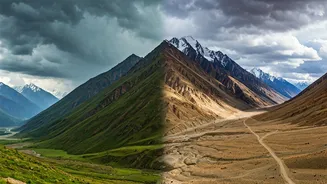
Once the air has crossed over the highest peaks of the Himalayas, it has lost most of its moisture. As this now-dry air descends on the other side—the leeward side—it warms up and compresses. This warming process further prevents cloud formation and rainfall. This dry area on the leeward side of a mountain range is called a rain shadow. Spiti Valley is located deep within this rain shadow. It isn't just one mountain range protecting it; it's a series of them. The monsoon clouds first hit the Pir Panjal range and then the Great Himalayan Range, each one stripping away more moisture before the winds can reach the high-altitude plateau of Spiti.
Life in a Cold Desert
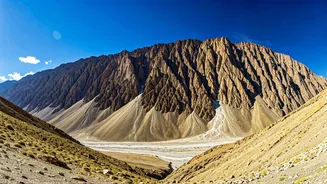
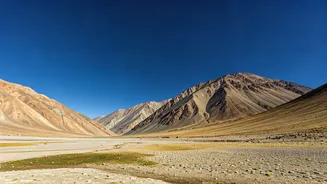
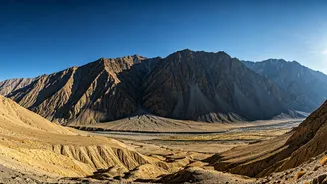
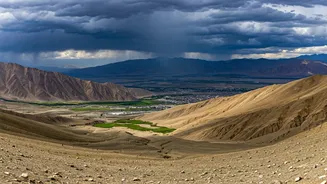
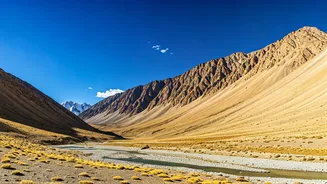
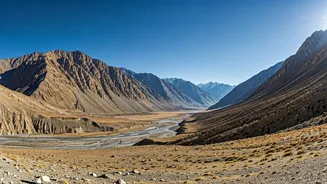
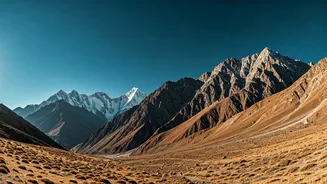
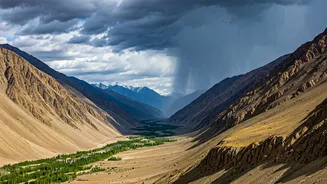
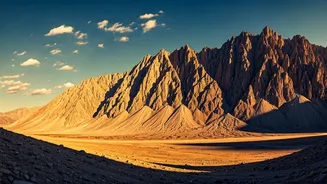
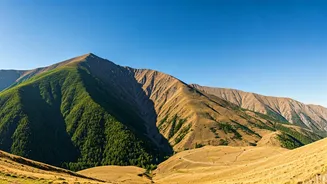
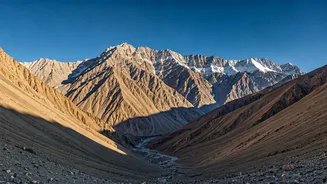
The result of this geographical isolation is a stark and stunningly beautiful cold desert. Spiti receives less than 50 mm of rainfall annually, making it one of the driest places in India. The landscape is arid, with barren mountains, deep gorges, and a sky that is often a piercing shade of blue. The air is thin and dry, and temperatures can swing dramatically. But life, incredibly, thrives here. The region's flora and fauna are adapted to these extreme conditions, with species like the snow leopard and Himalayan blue sheep making this their home. Human life has also adapted over centuries; villages are built near glacial streams, and agriculture depends on intricate irrigation channels fed by snowmelt, not rain.
A Changing Climate
While the rain shadow effect has defined Spiti for millennia, the region is not immune to the impacts of climate change. Residents and experts have observed worrying trends, including receding glaciers, more erratic and reduced winter snowfall, and a general warming trend. Since the entire agricultural system is dependent on snowmelt, these changes threaten the fragile balance of life. While Spiti remains a dry haven during the monsoon, these larger climatic shifts are a reminder that even the most isolated places are connected to the global environment.