

The Sun’s Unseen Temper
When we think of weather, we picture rain, wind, and sunshine. Space weather, however, is an entirely different phenomenon, driven by the Sun's turbulent activity. The Sun constantly releases a stream of charged particles called the solar wind. But sometimes,
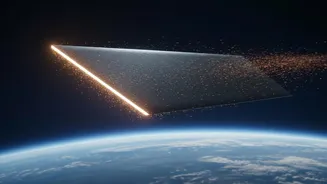
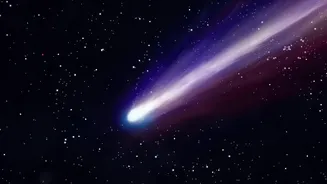
it unleashes much more intense bursts of energy. These events, known as solar flares and coronal mass ejections (CMEs), send massive clouds of plasma and magnetic fields hurtling through space. If Earth is in the path of one of these eruptions, it can have significant consequences for our technology-dependent world.
Satellites in the Firing Line
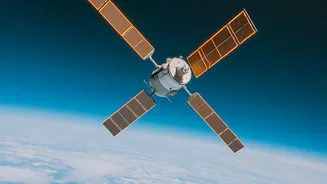
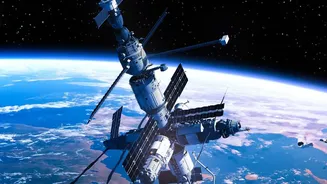
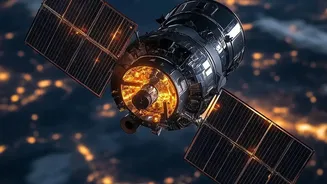
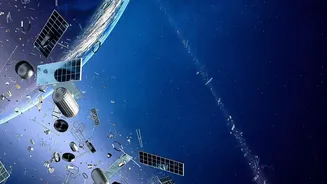
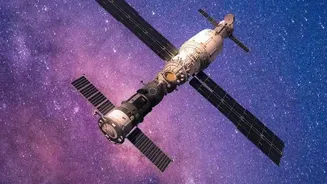
Modern life would be unrecognisable without the thousands of satellites orbiting our planet. They are essential for GPS navigation, global communications, financial transactions, and even weather forecasting on Earth. Unfortunately, these high-tech workhorses are directly in the firing line of solar storms. Energetic particles from a solar event can damage or destroy a satellite's sensitive electronics. The influx of energy can also heat the Earth's upper atmosphere, causing it to expand. This increases the atmospheric drag on satellites in low-Earth orbit, which can alter their trajectory and even cause them to re-enter the atmosphere prematurely. One 2022 solar storm was blamed for the loss of dozens of newly launched satellites, a financial loss estimated between $50 million and $100 million.
Disrupting Signals from Above
Even when satellites aren't physically damaged, space weather can severely disrupt the signals they send. Solar storms disturb the ionosphere, a layer of Earth's atmosphere that radio and GPS signals must pass through. This disturbance can delay, distort, or completely block signals. For GPS systems, this ionospheric interference can reduce positioning accuracy from metres to tens of metres, or cause a total loss of signal. This isn't just an inconvenience for your car's navigation; it affects critical industries like aviation, shipping, precision agriculture, and high-frequency financial trading that rely on precise timing and location data. Communication blackouts can also occur, affecting long-range radio used by airlines and emergency services.
The Challenge of Looking into the Sun
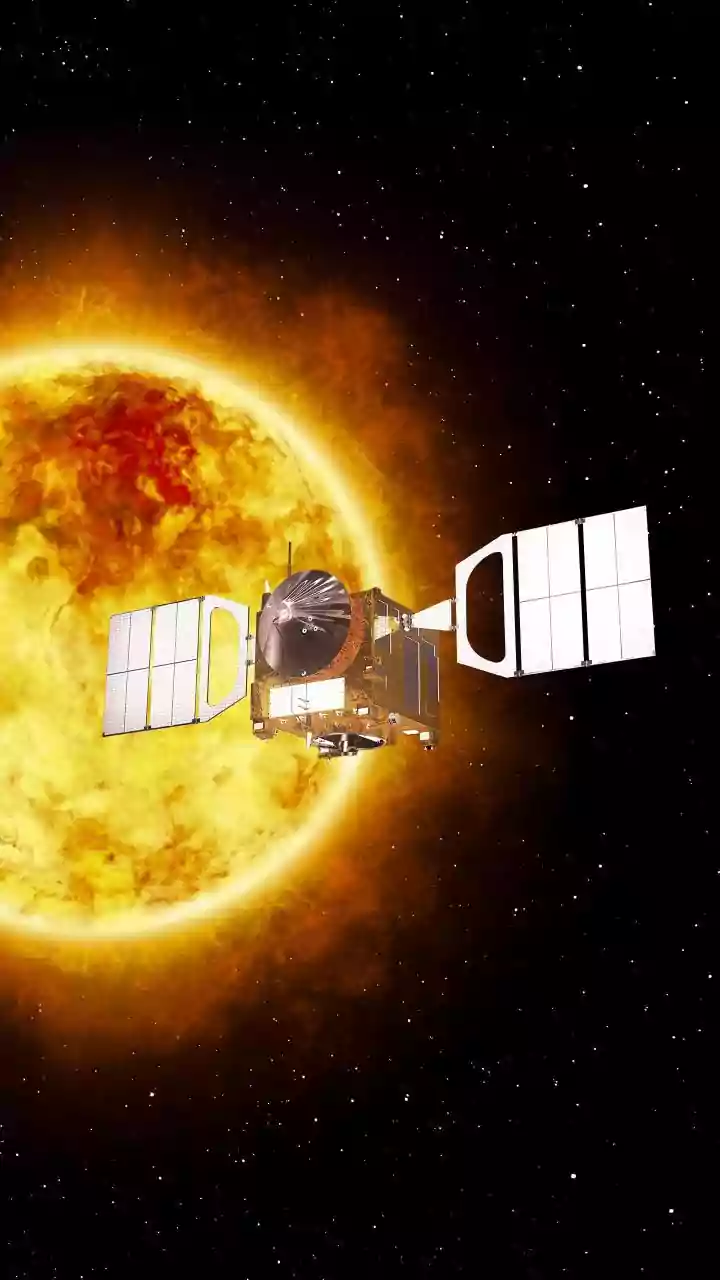
The core problem is that our ability to predict these events is still limited. Most of our dedicated space weather monitoring spacecraft are positioned at a point about 1.5 million kilometres from Earth, which sounds far but provides a very short warning time. For the fastest and most powerful CMEs, this translates to just 15 to 60 minutes of advance notice before the storm hits Earth. This is barely enough time for satellite operators and power grid managers to take protective measures. A key challenge is that we can only measure the crucial magnetic orientation of a CME—which determines its potential severity—when it is already close to our monitors. It’s like getting a tsunami warning only when the wave is already visible from the shore.
The Dawn of Better Predictions
Recognising the growing risk, scientists and space agencies are racing to develop the next generation of forecasting tools. A major leap forward involves using Artificial Intelligence (AI) and machine learning. By training AI models on vast datasets from solar observatories, researchers can teach them to recognise the complex patterns that precede a solar eruption. AI is already showing promise in improving the accuracy of CME arrival time predictions, potentially cutting error windows by half. Another strategy involves placing new warning systems much farther from Earth. Missions like the European Space Agency's HENON, set to launch in 2027, will carry instruments to measure the solar wind 15 million kilometres away, potentially extending our warning time from minutes to hours.
A More Secure Digital Future
A few hours of reliable warning could make a world of difference. It would give satellite operators time to put their spacecraft into a safe mode, power down sensitive components, and adjust orbits to minimise drag. It would allow power grid operators to reconfigure their networks to better withstand geomagnetically induced currents that can damage transformers. For industries like aviation, it provides the opportunity to reroute flights away from polar regions where radiation exposure and communication loss are greatest during a storm. Ultimately, better space weather forecasting is about building resilience into our increasingly connected global infrastructure. The economic cost of a severe solar storm is estimated to run into hundreds of billions, or even trillions, of dollars. Investing in better forecasting is a critical insurance policy against that threat.