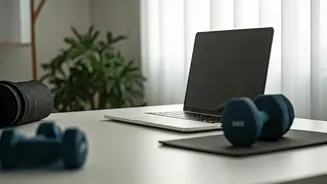









The Five-Minute Fitness Fix
First, let's define our terms. A 'micro workout' isn't about squeezing in a 30-minute HIIT session between Zoom calls. It’s much smaller and more spontaneous. Think ten push-ups after sending a big email, a two-minute plank while code compiles, or a quick
set of squats and lunges while waiting for the microwave. These are bursts of activity, lasting anywhere from one to ten minutes, designed to break up long periods of sitting. The goal isn't to replace a traditional workout but to supplement it by peppering movement throughout the day. For desk-bound professionals, this approach counteracts the metabolic slowdown and physical stiffness that come from being sedentary for eight-plus hours, improving blood flow and mental clarity without requiring a change of clothes or a major time commitment.
Inside the Indian Tech Pressure Cooker
So, why is this trend gaining such a foothold specifically among tech workers in cities like Bengaluru, Hyderabad, and Pune? The context is key. India's IT sector is a high-stakes, high-pressure environment. Post-pandemic, remote and hybrid models have blurred the already thin line between work and home life. Many employees report working longer hours than they did in the office, tethered to their laptops by the demands of global teams across different time zones. Combined with compact urban living spaces that may not be ergonomically optimized, this has created a perfect storm for physical and mental fatigue. The micro workout has emerged as a practical coping mechanism—a small act of rebellion against the 'always-on' culture and a way to reclaim a few minutes for personal well-being without disrupting a packed schedule.
More Than Just Burning Calories
While the physical benefits are obvious, the psychological impact of micro workouts is just as significant. In a day filled with back-to-back digital tasks, these short physical breaks serve as a mental 'reset button.' Stepping away from the screen for just a few minutes to focus on your body can reduce screen fatigue, alleviate stress, and boost focus upon returning to work. For many Indian tech professionals, it's a strategy for managing burnout. It's a tangible way to punctuate the day with moments of personal agency, proving that even in a demanding job, you can exert control over your time and health. It transforms passive waiting time—like waiting for a file to download—into active, productive personal time, fundamentally changing the rhythm of the remote workday from a marathon slog into a series of manageable sprints.
A Blueprint for the Global Remote Worker
While the trend is particularly visible in India's tech hubs, the problem it solves is universal. American remote workers face the same challenges: digital exhaustion, isolation, and the physical toll of a sedentary lifestyle. The principles behind the micro workout are easily adaptable for anyone feeling glued to their home office chair. The key is to reframe your idea of what 'exercise' is. It doesn't have to be an hour-long, pre-planned event. It can be opportunistic. Keep a kettlebell by your desk. Do calf raises during a phone call. Take three minutes to stretch between meetings. By integrating these small bursts of movement, you can combat the inertia of remote work and build a more sustainable, healthier routine. The lesson from India's tech scene isn't about a specific set of exercises; it's about a mindset shift toward making movement a constant, accessible part of the workday.