




Explore the Bonedi Bari Pujas
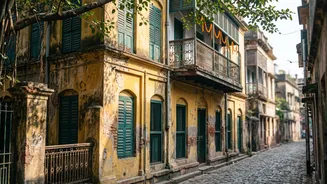
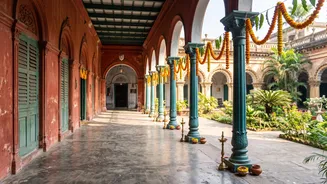
To find the soul of the festival, start with the 'Bonedi Baris'—the ancestral homes of Kolkata's old aristocratic and zamindar families. These private pujas, some of which are centuries old, offer a glimpse into a world of preserved traditions, unique
family rituals, and heirloom idols. Unlike the massive community pandals, these celebrations are more intimate and deeply connected to the city's history. Many of these heritage houses in areas like North Kolkata open their 'thakur dalans' (courtyards) to respectful visitors. Visiting a Bonedi Bari, such as the Sovabazar Rajbari or the Sabarna Roy Chowdhury family home—which started its puja in 1610—is like stepping back in time.
Embrace the Para Spirit
Every Kolkata neighbourhood, or 'para', has its own small-scale Durga Puja. These are the true community-run festivals, organised and funded by local residents. While they may lack the jaw-dropping scale of the famous theme pandals, they make up for it with warmth and a genuine sense of belonging. Wandering through the lanes of a para, you'll hear the rhythmic beats of the 'dhak' (traditional drums), see neighbours chatting at makeshift food stalls, and feel the collective joy of the celebration. This is where the adda (leisurely conversation) happens and where the festival feels less like a public exhibition and more like a massive family gathering.
Savour the Community Bhog
One of the most essential local experiences is partaking in the 'bhog'—the food offered to the goddess and then distributed to devotees. Most para pandals serve a simple but soulful community lunch, typically on Ashtami. The meal usually consists of khichuri (a rice and lentil dish), labra (a mixed vegetable curry), beguni (fried eggplant fritters), and a sweet chutney or payesh (rice pudding). Sharing this meal, often served on a banana leaf or a simple plate while sitting alongside hundreds of others, is a core part of the Puja's spirit of togetherness.
Participate in the Rituals
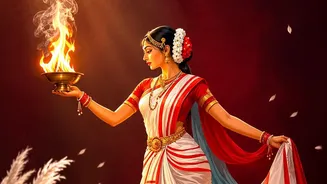
A local experience is about participation, not just observation. Try to engage with the daily rituals. Wake up early for 'Pushpanjali' on Ashtami morning, an offering of flowers to the goddess that is open to everyone in community pandals. In the evenings, witness the 'Sandhya Arati', a mesmerising lamp ceremony accompanied by the energetic 'dhunuchi naach', a dance performed with smoking earthen incense burners. On Dashami, the final day, observe the poignant 'Sindoor Khela', where married women bid farewell to the goddess by applying vermilion to her and each other before the idol's immersion.
Go on a Street Food Crawl
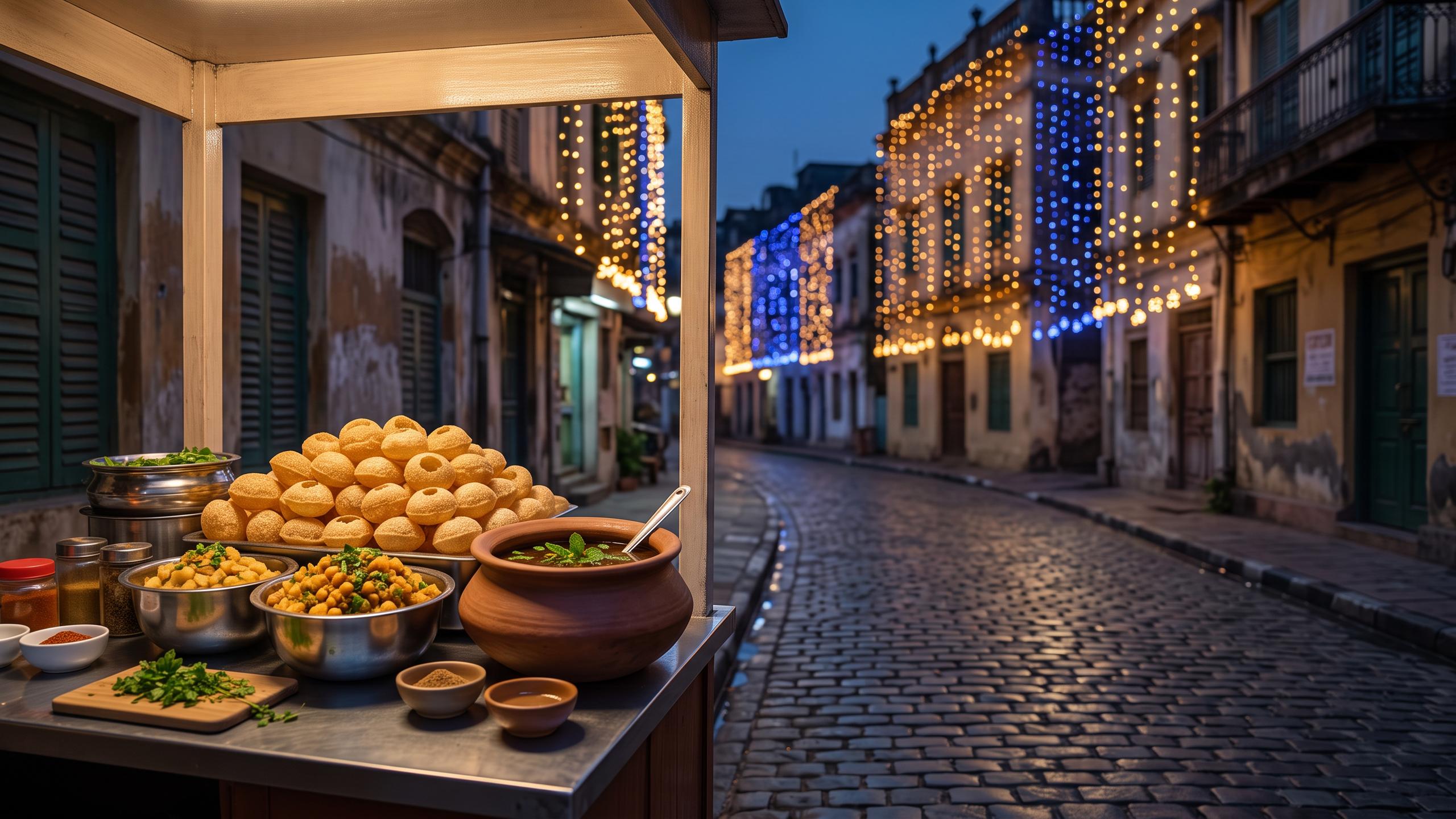
While the rest of the country might be fasting during Navratri, Kolkata feasts. The streets come alive with food stalls selling an incredible variety of snacks perfect for pandal-hopping. Don't miss out on classics like phuchka (the Bengali version of pani puri), kathi rolls (parathas with fillings like chicken or egg), and various deep-fried chops and cutlets served with tangy kasundi mustard. Indulging in these street-side treats is a fundamental part of the Puja experience for any local.
Dress for the Occasion
Durga Puja is a time when everyone wears their finest new clothes. To blend in and feel a deeper connection to the festivities, consider wearing traditional attire. For men, a simple kurta is perfect. For women, a classic Bengali saree, perhaps the iconic white with a red border ('laal paar shada saree'), is a beautiful way to embrace the cultural aesthetic. It’s not just about clothing; it's about participating in a shared cultural expression that is central to the festival's identity.