


An Easy Starting Point: The Summer Triangle
One of the most recognisable patterns in the summer sky is the Summer Triangle. It's not a constellation, but an asterism, a prominent pattern formed by three bright stars from three different constellations. Look high overhead after dusk for Vega, Deneb,
and Altair. Vega, in the constellation Lyra, is the brightest of the three and the fifth-brightest star in the entire night sky. Altair, in Aquila the Eagle, and Deneb, in Cygnus the Swan, complete the large triangle. This celestial landmark is so bright it’s visible even from moderately light-polluted cities, making it the perfect starting point for any beginner. In August, it appears high overhead in the evenings, serving as a trusty guidepost to navigate the cosmos. Once you spot it, you're well on your way to exploring the star-filled expanse above.
The Evening Planets: Venus and Saturn
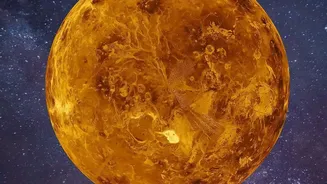
Planets are rewarding to spot because, unlike distant stars that twinkle, they shine with a steady, unwavering light. This August, two planets are putting on a fine show. Super-bright Venus will dominate the western sky in the early evening, visible just after sunset. Its brilliance makes it unmistakable. As the evening deepens, turn your gaze to the east to find yellowish Saturn. The famous ringed planet rises in the evening and will be high in the sky before dawn. While you'll need a telescope to see its iconic rings, its bright, steady glow is easily visible to the naked eye. In late August, it provides a calming, majestic presence throughout the night. Spotting a planet for the first time is a memorable experience, connecting you directly to our solar system's grand tour.
The Morning Planets: Mars and Jupiter
If you are an early riser, the pre-dawn sky has its own treats. Reddish Mars can be found in the east before sunrise. Its distinct colour sets it apart from the surrounding stars. Later in the month, very bright Jupiter will also begin to rise low in the east shortly before dawn. Around August 12, there will be a large alignment of six planets across the morning sky, but for naked-eye observers, Mars and Saturn will be the easiest to see clearly. Finding Mars is a great way to start your day, a ruddy point of light that has fascinated humanity for millennia.
Catching the Last of the Perseids
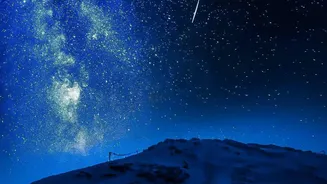
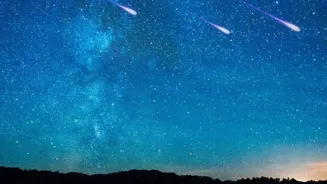
The famous Perseid meteor shower peaks around August 12-13. While the peak offers the most action, the shower remains active until about August 24. This means you still have a chance to see a 'shooting star' in late August. These streaks of light are caused by debris from Comet Swift-Tuttle burning up in our atmosphere. While the rate of meteors will be lower than at the peak, a late-night session could still reward you with a few bright trails. For the best chance, find a dark location away from city lights after midnight. Lie back, let your eyes adjust for about 20-30 minutes, and look towards the northeast. The main challenge in India during August is monsoon cloud cover, but if you get a clear night, the wait can be well worth it.
Southern Treasures: Scorpius and Sagittarius
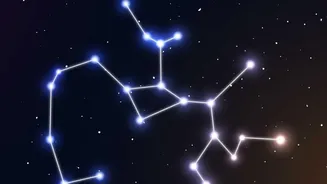
Looking towards the southern horizon reveals two magnificent constellations that are hallmarks of the summer sky: Scorpius (the Scorpion) and Sagittarius (the Archer). Scorpius is one of the few constellations that actually resembles its namesake, with a curving body and a distinct stinger. Its brightest star is the reddish Antares. Just to the east of Scorpius lies Sagittarius, whose brightest stars form the shape of a teapot. This region of the sky is particularly special because the centre of our own Milky Way galaxy lies within Sagittarius. On a very clear, dark night, far from city pollution, you might see the faint, milky band of our galaxy stretching up from the horizon right through this area. It’s a humbling and awe-inspiring sight.