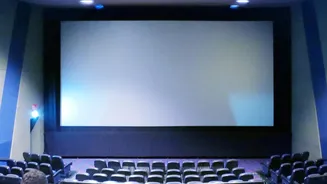








The Roar of a United Audience
The solitary experience of watching a film on a laptop, with headphones isolating you from the world, is the polar opposite of a Bollywood blockbuster's first-day-first-show. In an Indian cinema hall, the audience is an active participant. They don't
just consume the film; they engage with it, shouting advice at characters, erupting in whistles for a hero's entry, and roaring with laughter at a shared joke. This participatory viewing style transforms a passive screening into an energetic, communal dialogue between the screen and the seats. The collective gasps during a plot twist or the unified cheers during a triumphant moment create a feedback loop, amplifying the on-screen drama and forging a temporary community in the dark.
A Planned Social Spectacle
Going to the movies in India is often a planned event, a social ritual far removed from the spontaneity of clicking 'play' on a streaming app. It involves coordinating with friends or family, the journey to the theatre, the buzz of the lobby, and often, a meal together afterwards. This entire practice frames the film not just as content to be consumed, but as the centerpiece of a social outing. Historically, cinema halls were among the first truly public spaces where people from diverse class and caste backgrounds shared a simultaneous experience, contributing to a unique public culture. Even today, that sense of a shared journey to a common destination makes the theatrical experience a cherished form of socialising.
An Amplifier for Emotion
Bollywood films are engineered for emotional highs and lows—soaring romance, heart-wrenching tragedy, and cathartic action. These emotions are magnified when experienced in a crowd. The collective silence during a poignant scene makes it more powerful, just as shared laughter makes a comedy sequence more hilarious. This phenomenon turns the theatre into an emotional echo chamber. You are not just reacting to the film but also to the energy of hundreds of others around you. This is something streaming, by its very nature, cannot reproduce. The lonely tear shed at home feels different from the wave of emotion that sweeps through a packed hall during a film's climax.
The Single-Screen Soul
While multiplexes in malls offer a standardized, modern viewing experience, it's often the single-screen theatres, especially in tier-2 and tier-3 towns, that are the true heartlands of this social phenomenon. These venues are often socio-cultural landmarks, and their audiences are known for even more fervent and uninhibited reactions. Here, the connection between the audience and the stars is palpable, with fans sometimes throwing coins at the screen in appreciation or celebrating a film's release like a festival. This intense, localized fan culture underscores how deeply intertwined cinema is with community life, an experience far more raw and unfiltered than the polished environment of a mall 'malltiplex'.
Why the Couch Can't Compete
Streaming offers undeniable convenience, affordability, and an incredible variety of global content. It has changed viewing habits, exposing audiences to new kinds of stories and making entertainment more accessible than ever. However, it remains a fundamentally individualised and often distracted experience. The phone buzzes, the doorbell rings, you pause to grab a snack—the immersion is constantly broken. The theatre, by contrast, demands your undivided attention in a space designed for collective focus. It's this deliberate act of setting aside distractions and joining a crowd that preserves the almost sacred, shared dream-state of cinema.