




An Industry of Unmatched Scale
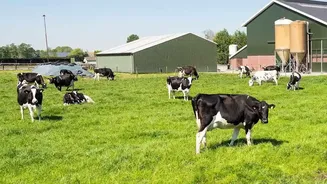
India's dominance in the global dairy market is undisputed. The country produces nearly a quarter of the world's milk, with an output reaching approximately 248 million tonnes in 2024-25. This massive industry is not just about numbers; it is the primary
source of income for over 80 million rural households, many of them small and marginal farmers. Dairy contributes a significant 5% to the national economy, making its stability crucial for the country's financial health and the livelihoods of a vast population. Any disruption in this sector, therefore, sends ripples far beyond the farm gate.
The Science of Heat Stress
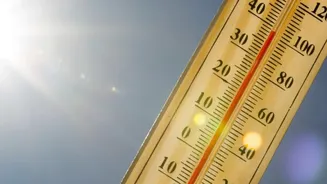
Cattle, especially high-yielding crossbred varieties and buffaloes, are highly sensitive to their environment. They have a specific temperature comfort zone, and once the Temperature-Humidity Index (THI) rises, they begin to experience heat stress. In response, an animal's body diverts energy away from milk production to focus on cooling itself down. This leads to increased panting, reduced appetite, and dehydration. Buffaloes are particularly vulnerable as their darker skin absorbs more heat and they have fewer sweat glands compared to cattle, hindering their ability to cool down naturally.
Falling Yields and Farmer Distress
The most immediate consequence of heat stress is a drop in milk production. Farmers report that yields can plummet by 20-30% during peak summer months. One farmer in Uttar Pradesh noted his daily output dropped from 200 to 150 litres during a heatwave. This isn't just a loss of volume; the quality of the milk also suffers, with a decrease in fat and protein content that lowers its market price. For the millions of smallholder farmers, this translates directly into lower income. The problem is compounded by rising costs for fodder and increased veterinary bills for treating heat-stressed animals.
Economic Projections and Consumer Impact
The economic fallout is substantial. Studies estimate that India is already losing over 3 million tonnes of milk annually due to heat stress, valued at around ₹2,661 crore. Projections indicate this could worsen dramatically, with potential losses reaching 15 million tonnes by the 2050s if effective adaptation measures are not taken. One study warned that milk production in India's arid regions could be slashed by 25% by 2085. Such a sharp decline in supply would inevitably lead to higher prices for consumers, impacting household budgets and threatening the nutritional security that the dairy sector has helped build over decades.
The Search for Solutions
Addressing this challenge requires a multi-pronged approach. On the farm, low-cost solutions like providing adequate shade, installing fans, and using sprinklers or misters to cool animals can make a significant difference. Ensuring constant access to clean, cool water is also critical. Nutritionally, adjusting feed to be more energy-dense and providing mineral supplements can help animals cope. In the long term, experts are also focused on promoting indigenous cattle breeds like the Sahiwal, which are naturally more resilient to heat, and implementing thermo-tolerant breeding programs.