





The Relentless Threat From the Sea
For the hundreds of thousands of fisherfolk living along the Bay of Bengal, a cyclone warning is not an abstract threat; it is a direct danger to their lives, homes, and livelihoods. States like Odisha, Andhra Pradesh, and Tamil Nadu are particularly
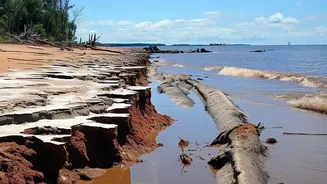
vulnerable to intense cyclonic storms that bring not just high-speed winds but also devastating storm surges—walls of seawater pushed inland. These surges can flood entire villages, destroy boats and nets, salinate agricultural land, and erase decades of progress in minutes. While concrete seawalls are an option, they are expensive and can disrupt coastal ecosystems. Facing this repeated devastation, many communities are now looking past engineered solutions and back to nature’s own coastal defender.
Nature's Resilient Green Wall
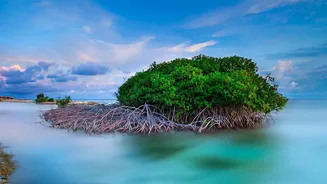
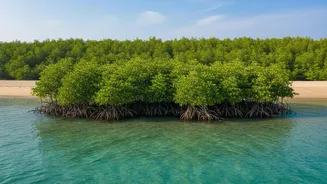
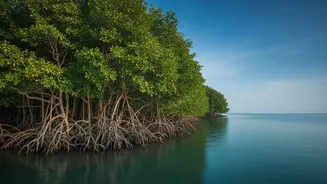
A mangrove bio-shield is more than just a line of trees; it's a complex, living defence system. Mangroves are unique trees and shrubs that thrive in the saline, intertidal zones where land meets sea. Their dense, tangled root systems, including sturdy stilt roots and pneumatophores, anchor the shoreline and act like a natural breakwater. When a storm surge hits, this intricate network dissipates the wave's energy, reducing its height and velocity before it can crash ashore. Scientific studies have shown that a healthy mangrove forest can significantly reduce the impact of cyclones. For instance, during the 1999 super cyclone in Odisha, villages sheltered by the Bhitarkanika mangroves experienced demonstrably less damage than those that were exposed.
From Victims to Coastal Guardians
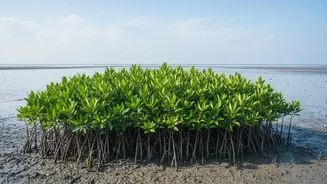
The most powerful aspect of these projects is that they are driven by the communities themselves. Instead of waiting for outside intervention, fisherfolk are becoming the primary custodians of their own safety. Organisations like the M. S. Swaminathan Research Foundation (MSSRF) have been instrumental, working with villages along the coasts of Andhra Pradesh and Tamil Nadu since the 1990s. In places like the Krishna and Godavari deltas, and the coastal districts of Tamil Nadu, local people, including women, are trained in everything from raising mangrove saplings in nurseries to digging channels that facilitate tidal flow, which is crucial for the plants' survival. In Odisha, projects facilitated by groups like Action for Protection of Wild Animals (APOWA) have seen women-led Village Mangrove Councils successfully restore degraded forest patches. These residents, who once depended on the mangroves for firewood, now protect them for survival.
More Than Just a Barrier
The benefits of a thriving mangrove ecosystem extend far beyond storm protection. These forests are vital nursery and spawning grounds for numerous species of fish, crabs, and shrimp, directly boosting the catch and livelihood of the fishing communities. This creates a virtuous cycle: the more the community invests in the mangroves, the more the mangroves support their economic well-being. Furthermore, these dense forests are incredibly effective carbon sinks, capturing and storing several times more carbon per hectare than many terrestrial tropical forests, making them a crucial tool in the fight against climate change. This combination of ecological security and livelihood security is at the heart of the community-led model's success.
The Path to a Resilient Coastline
The journey of restoring these bio-shields is not without its challenges. Success isn't just about planting saplings; it requires long-term monitoring, ensuring the right species are planted in suitable locations, and managing issues like land rights and freshwater flow. Community leaders like Sankar in Muthupet, Tamil Nadu, have worked for decades, mobilising people to dig thousands of canals to restore the delicate balance of fresh and saltwater that the mangroves need to flourish. These local champions, supported by scientific organisations and government departments, demonstrate that when communities are empowered with knowledge and ownership, they can build a more resilient future. Their work provides a powerful blueprint for coastal protection, one sapling at a time.