







The First Rule: Fly The Plane
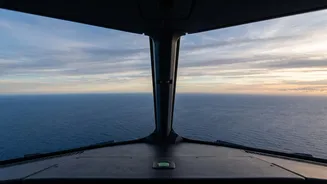
The moment an emergency is detected, pilots adhere to a golden rule: Aviate, Navigate, Communicate. The absolute first priority is to fly the aircraft. One pilot, the “pilot flying,” takes full control to stabilize the plane, while the other, the “pilot monitoring,”
diagnoses the problem by working through specific checklists. Whether it's an engine issue, depressurization, or a medical crisis, maintaining stable flight is paramount before any other action is taken. This calm, systematic approach ensures that the situation is managed without panic. Only after the aircraft is under control do they move to the next steps.
There's Always a Place to Land
Contrary to how it may feel, a plane is never truly in the middle of nowhere. International flight paths, especially over vast oceans like the Atlantic or Pacific, are governed by a system called ETOPS (Extended-range Twin-engine Operations). This regulation ensures that a twin-engine aircraft is always within a specific flying time of a suitable diversion airport, even on one engine. Before a long-haul flight even takes off, pilots and dispatchers have already mapped out several potential emergency landing spots along the route. These aren't just tiny airstrips; they are capable airports in places like Gander in Newfoundland, the Azores islands in the Atlantic, or even remote military bases like Diego Garcia in the Indian Ocean.
The 'Driftdown' Maneuver
One of the most concerning scenarios for passengers is an engine failure. Modern jets are designed with immense redundancy and can fly perfectly safely on a single engine. If an engine fails at cruising altitude, the aircraft might not be able to stay that high. In this case, pilots initiate a “driftdown” procedure. This is not a sudden drop, but a slow, controlled descent to a lower altitude where the plane can fly efficiently on the remaining engine. This new altitude is calculated based on the aircraft's weight and weather conditions. While descending, the crew works through checklists to see if the engine can be restarted. If not, they proceed towards their chosen diversion airport.
Communicating from the Void
When far from land, standard VHF radio may not reach ground control. This is where other technologies come in. Pilots use High Frequency (HF) radios or satellite communication systems to stay in contact with air traffic control (ATC). They will declare an emergency, using the distress call “Mayday” for life-threatening situations or “Pan-Pan” for less urgent but serious issues. They also set a special transponder code, like 7700, which immediately alerts every radar controller in range to the emergency. ATC then gives the emergency aircraft priority over all other traffic, clearing paths and coordinating the response on the ground at the diversion airport.
Handling Medical and Other Crises
Emergencies are not always technical. For a serious medical event, the cabin crew, who are trained in first aid, will respond immediately and seek assistance from any medical professionals on board. Pilots are briefed by the lead flight attendant and make a decision based on the severity of the situation. They will consult with medical experts on the ground via satellite phone to determine if a diversion is necessary. If it is, they will divert to the nearest airport with adequate medical facilities. For issues like cabin depressurization, the pilots' first action is to descend to a safe altitude where everyone can breathe without oxygen masks.