






The Strategic Need for Minerals
From the smartphone in your pocket to the electric vehicle you might soon drive, modern life runs on critical minerals. These elements—like lithium, cobalt, nickel, and rare earth elements—are the essential building blocks for high-tech manufacturing,
renewable energy infrastructure, and advanced defence systems. For India, securing a steady supply is a matter of strategic importance. Currently, the nation is heavily reliant on imports for many of these minerals, facing supply chains dominated by a handful of countries. This dependency creates economic and geopolitical risks, making the push for self-reliance, or Atmanirbhar Bharat, more crucial than ever. The government has identified a list of 30 critical minerals to focus on, aiming to bolster domestic capabilities and reduce its massive import bill.
Urban Mining: A New Frontier
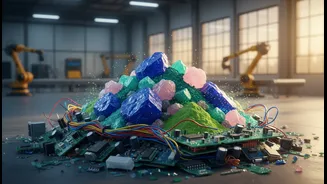
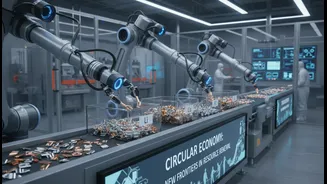
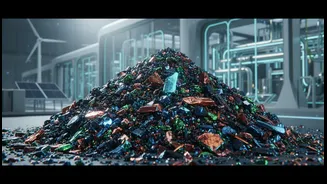
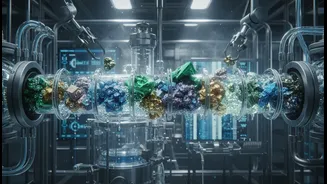
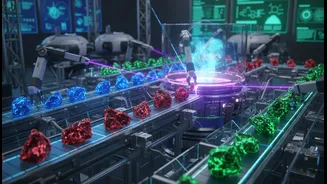
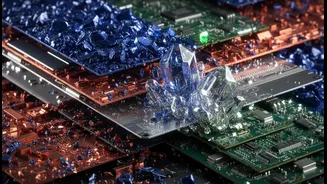
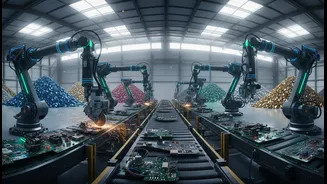
The solution may not lie deep in the earth, but in our cities. The concept of “urban mining” is gaining traction, which involves recovering valuable materials from end-of-life products. India generates enormous amounts of electronic waste, spent lithium-ion batteries, and other industrial scraps that are rich in critical minerals. Instead of ending up in landfills, this waste can be processed to extract the very minerals India is currently importing. This approach is a cornerstone of the circular economy, a model that shifts away from the traditional “take-make-dispose” system to one where resources are kept in use for as long as possible. By creating a robust recycling ecosystem, India can turn a significant liability into a sustainable domestic resource.
Government Fuels the Change
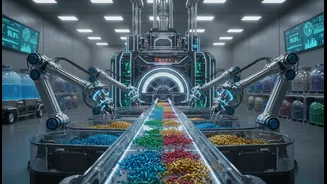
Recognising this immense potential, the Indian government has launched the National Critical Mineral Mission (NCMM) to spearhead this transformation. A key component of this mission is a substantial incentive scheme designed to promote the recycling of critical minerals. With an outlay of ₹1,500 crore, the scheme aims to develop significant domestic recycling capacity by providing financial support for capital expenditure on new plants and machinery. The goal is to build a full value-chain ecosystem, moving beyond simple waste collection to sophisticated refining that produces high-purity, battery-grade materials suitable for advanced manufacturing. This policy push is attracting significant industry interest and investment, laying the groundwork for a new economic sector.
The Emerging Job Market
This new industry is poised to become a significant source of employment, creating a diverse range of career tracks. The government estimates that the push could generate around 70,000 direct and indirect jobs. These roles will span the entire skill spectrum. At the high-skill end, there will be a demand for metallurgists, chemical engineers, and research scientists to develop and refine extraction technologies. The industry will also need data scientists to optimise reverse logistics and processing efficiency. On the technical front, jobs will emerge for plant operators, e-waste dismantling specialists, and supply chain managers who can handle the complex logistics of collecting and transporting waste materials. Furthermore, it will create thousands of jobs in collection, sorting, and pre-processing centres, offering opportunities for semi-skilled and entry-level workers and integrating the informal sector into a more formal, organised framework.
Building a Complete Ecosystem
Creating new career paths requires more than just building recycling plants. It necessitates a holistic approach that includes skill development, technology transfer, and infrastructure development. Initiatives like the Skill Council for Green Jobs (SCGJ) are working to prepare a workforce for roles in sustainable manufacturing and waste management. The government is also supporting the establishment of Critical Minerals Processing Parks in states like Maharashtra, Gujarat, and Odisha, which will integrate recycling into larger industrial hubs. For this vision to be fully realised, continued investment in research and development is crucial to improve the efficiency and commercial viability of recycling technologies. As India's recycling infrastructure matures, it will not only secure its own material needs but also position itself as a potential global leader in the circular economy.